Are there any good variable swing mod kits and/or tutorials for new style surface mount 29 LTD NW/PC78XL?

You are using an out of date browser. It may not display this or other websites correctly.
You should upgrade or use an alternative browser.
You should upgrade or use an alternative browser.
-
You can now help support WorldwideDX when you shop on Amazon at no additional cost to you! Simply follow this Shop on Amazon link first and a portion of any purchase is sent to WorldwideDX to help with site costs.
Surface mount Cobra/Uniden swing mod help
- Thread starter fastfreddie1269
- Start date

Thanks for your response! Here's a few pictures (sorry, they are kinda crappy!) of the Uniden PC78XL circuit board, I'm currently running the Cobra 29 LTD NW in my car, I can probably post a picture of it in the next couple days...got a picture of the PC board?
LC
Attachments
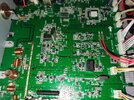
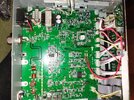
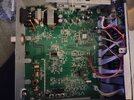
ok if this board is the same as the one in your 29LTD, then look for D404.
its that big black rectifier diode right next to the modulation transformer.
Since all the part numbers are different as well as the board layout, we should confirm that it's actually the right diode.
We can do this by testing for continuity (the beep setting on your multimeter) from the banded end of D404 to the metal mounting tab of the final which in your radio is Q591. that tab is the collector of the final, and you should see continuity.
once you confirm we have the right diode, carefully desolder D404 from the board.
you are going to need to get some 1N4003 diodes. get at least 5 of them as we don't know how many you are going to need.
what you are going to do is make a string of diodes all in series, with the banded ends all facing the same way.
Like this: ---I>---I>---I>---I>---
the idea is that each additional diode you add in series with D404 will lower the voltage going to the driver and final by about .6 volts.
less voltage going to the collectors of the driver and final means less deadkey wattage.
Its going to take a bit of trial and error to get the right number of diodes for the deadkey you want so be careful with your soldering heat and just temporarily tack the diode string in place while you figure it out.
lets say it takes 4 diodes to take your deadkey from 4 watts to 2 watts.
now you can make a compact little "string" of diodes by soldering them together like this:
/\/\/\/\ making sure that all the banded ends are facing the same way.
now solder your diode bundle back in place where D404 was and test the radio.
if you have the desired deadkey now, you can move on, if not, add or remove a diode to get it where you want it.
last step is to peak the final tuning coil using a modulated carrier.
you can find youtube videos that are just a 1khz tone being played, and hold your phone in front of your mic. its much more consistent than trying to use speech.
using your wattmeter, and the modulated carrier, peak L208 (right in front of the final) for max modulated wattage.
it won't take much turning so go slow.
you need to use a non-metallic tool for this. for two reasons, one, metal will interfere with the adjustment, and second, it can crack the ferrite slug.
there's usually some wax holding these slugs in place, and you can heat a nail or something and hold it on that ferrite slug for a couple of seconds to loosen up the wax, making it easier to turn the slug.
just be careful!
because of the way this diode functions, it will lower the deadkey but will allow max swing through, so you should end up with a radio that keys 1 or 2 watts, and swings up to max. (usually 16-20 watts).
hope this helps!
LC
EDIT:
I just noticed you said variable, and while im sure it's still possible, i can't tell without a schematic which resistor/trace needs to be modified to put the variable in.
honestly as long as ive been doing this, ive just not seen people needing to constantly adjust their deadkey and its much more convenient to just set it where you want it and leave it.
you can incorporate a switch that jumps out one or more of the diodes if you need two levels of deadkey.
lastly, i noticed that your modulation pot is RT401. a bit in front of the modulation transformer.
this is best adjusted with a scope, but you can try turning it up a bit. turning it up all the way will most likely make you sound terrible so be sure to get a trusted source to confirm you haven't gone too far.
its that big black rectifier diode right next to the modulation transformer.
Since all the part numbers are different as well as the board layout, we should confirm that it's actually the right diode.
We can do this by testing for continuity (the beep setting on your multimeter) from the banded end of D404 to the metal mounting tab of the final which in your radio is Q591. that tab is the collector of the final, and you should see continuity.
once you confirm we have the right diode, carefully desolder D404 from the board.
you are going to need to get some 1N4003 diodes. get at least 5 of them as we don't know how many you are going to need.
what you are going to do is make a string of diodes all in series, with the banded ends all facing the same way.
Like this: ---I>---I>---I>---I>---
the idea is that each additional diode you add in series with D404 will lower the voltage going to the driver and final by about .6 volts.
less voltage going to the collectors of the driver and final means less deadkey wattage.
Its going to take a bit of trial and error to get the right number of diodes for the deadkey you want so be careful with your soldering heat and just temporarily tack the diode string in place while you figure it out.
lets say it takes 4 diodes to take your deadkey from 4 watts to 2 watts.
now you can make a compact little "string" of diodes by soldering them together like this:
/\/\/\/\ making sure that all the banded ends are facing the same way.
now solder your diode bundle back in place where D404 was and test the radio.
if you have the desired deadkey now, you can move on, if not, add or remove a diode to get it where you want it.
last step is to peak the final tuning coil using a modulated carrier.
you can find youtube videos that are just a 1khz tone being played, and hold your phone in front of your mic. its much more consistent than trying to use speech.
using your wattmeter, and the modulated carrier, peak L208 (right in front of the final) for max modulated wattage.
it won't take much turning so go slow.
you need to use a non-metallic tool for this. for two reasons, one, metal will interfere with the adjustment, and second, it can crack the ferrite slug.
there's usually some wax holding these slugs in place, and you can heat a nail or something and hold it on that ferrite slug for a couple of seconds to loosen up the wax, making it easier to turn the slug.
just be careful!
because of the way this diode functions, it will lower the deadkey but will allow max swing through, so you should end up with a radio that keys 1 or 2 watts, and swings up to max. (usually 16-20 watts).
hope this helps!
LC
EDIT:
I just noticed you said variable, and while im sure it's still possible, i can't tell without a schematic which resistor/trace needs to be modified to put the variable in.
honestly as long as ive been doing this, ive just not seen people needing to constantly adjust their deadkey and its much more convenient to just set it where you want it and leave it.
you can incorporate a switch that jumps out one or more of the diodes if you need two levels of deadkey.
lastly, i noticed that your modulation pot is RT401. a bit in front of the modulation transformer.
this is best adjusted with a scope, but you can try turning it up a bit. turning it up all the way will most likely make you sound terrible so be sure to get a trusted source to confirm you haven't gone too far.
Last edited:

Thank you SO MUCH for your response! The information you provided is awesome and I can't wait to "dig in"! It'll be a week or so as I have a project ahead of this one, but I'll post how it came out Thanks again!ok if this board is the same as the one in your 29LTD, then look for D404.
its that big black rectifier diode right next to the modulation transformer.
Since all the part numbers are different as well as the board layout, we should confirm that it's actually the right diode.
We can do this by testing for continuity (the beep setting on your multimeter) from the banded end of D404 to the metal mounting tab of the final which in your radio is Q591. that tab is the collector of the final, and you should see continuity.
once you confirm we have the right diode, carefully desolder D404 from the board.
you are going to need to get some 1N4003 diodes. get at least 5 of them as we don't know how many you are going to need.
what you are going to do is make a string of diodes all in series, with the banded ends all facing the same way.
Like this: ---I>---I>---I>---I>---
the idea is that each additional diode you add in series with D404 will lower the voltage going to the driver and final by about .6 volts.
less voltage going to the collectors of the driver and final means less deadkey wattage.
Its going to take a bit of trial and error to get the right number of diodes for the deadkey you want so be careful with your soldering heat and just temporarily tack the diode string in place while you figure it out.
lets say it takes 4 diodes to take your deadkey from 4 watts to 2 watts.
now you can make a compact little "string" of diodes by soldering them together like this:
/\/\/\/\ making sure that all the banded ends are facing the same way.
now solder your diode bundle back in place where D404 was and test the radio.
if you have the desired deadkey now, you can move on, if not, add or remove a diode to get it where you want it.
last step is to peak the final tuning coil using a modulated carrier.
you can find youtube videos that are just a 1khz tone being played, and hold your phone in front of your mic. its much more consistent than trying to use speech.
using your wattmeter, and the modulated carrier, peak L208 (right in front of the final) for max modulated wattage.
it won't take much turning so go slow.
you need to use a non-metallic tool for this. for two reasons, one, metal will interfere with the adjustment, and second, it can crack the ferrite slug.
there's usually some wax holding these slugs in place, and you can heat a nail or something and hold it on that ferrite slug for a couple of seconds to loosen up the wax, making it easier to turn the slug.
just be careful!
because of the way this diode functions, it will lower the deadkey but will allow max swing through, so you should end up with a radio that keys 1 or 2 watts, and swings up to max. (usually 16-20 watts).
hope this helps!
LC
EDIT:
I just noticed you said variable, and while im sure it's still possible, i can't tell without a schematic which resistor/trace needs to be modified to put the variable in.
honestly as long as ive been doing this, ive just not seen people needing to constantly adjust their deadkey and its much more convenient to just set it where you want it and leave it.
you can incorporate a switch that jumps out one or more of the diodes if you need two levels of deadkey.
lastly, i noticed that your modulation pot is RT401. a bit in front of the modulation transformer.
this is best adjusted with a scope, but you can try turning it up a bit. turning it up all the way will most likely make you sound terrible so be sure to get a trusted source to confirm you haven't gone too far.