

Had some requests for an upgrade kit to replace the relay in the Browning 180 base linear. It was legal for Browning to sell, because their 1960s radios were type accepted for a business license. No joke.
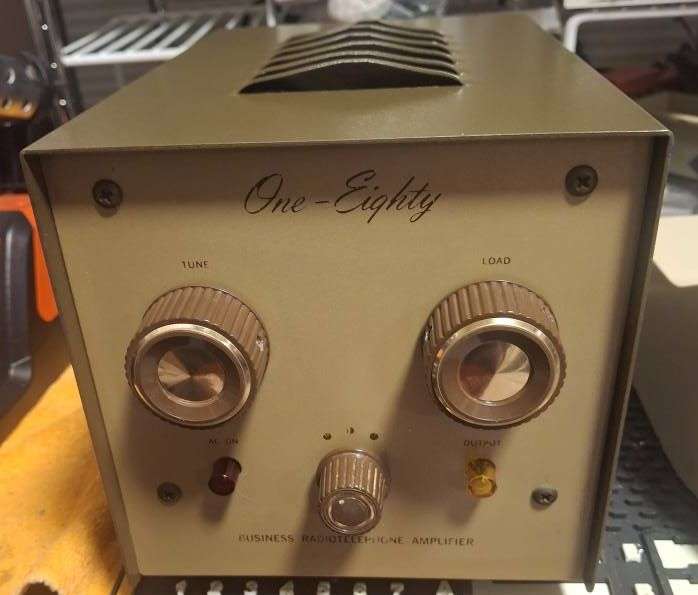
Had one customer in 1975 that was licensed for 27.320 MHz. Had a Browning Mark 2 base and 3-channel mobile radios in his plumbing trucks. He's the only customer I remember ever to have a fixed-channel crystal in a Browning receiver. The next year 40 channels came around and he ditched the CB stuff for a Motorola land-mobile FM radio system.
The original relay is long extinct.
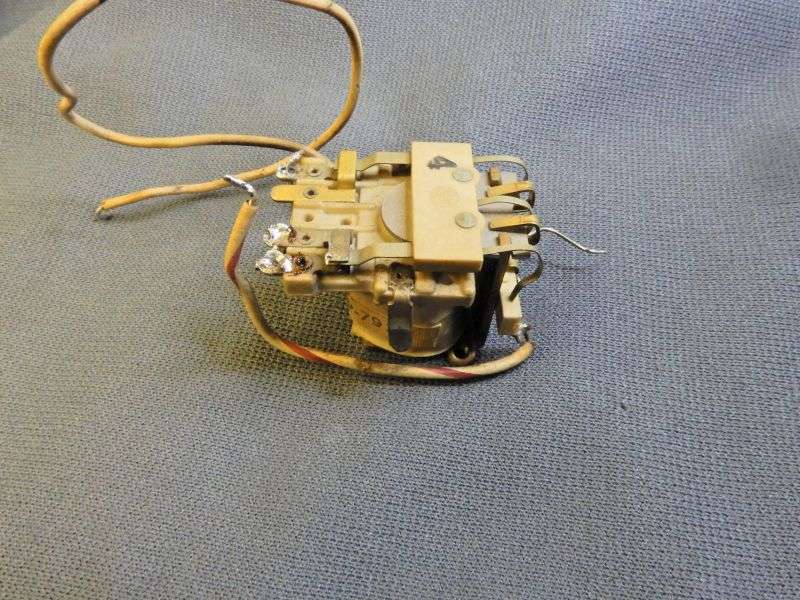
It gets activated by a 6BQ5 tube, so the coil is rated for 10,000 ohms, about 110 Volts DC. And no, a relay with a 120-Volt AC coil won't substitute. AC is not DC.
For years now we have used a 12-Volt DC relay with the keying circuit pc board I sell on Ebay.
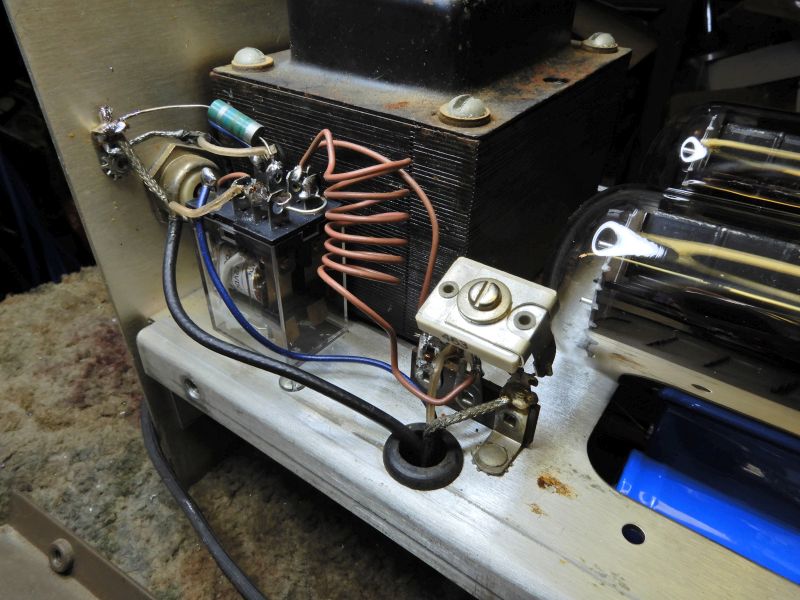
One obstacle, no source of 12 Volts DC. That gets added by haywiring a half wave voltage doubler, using the keying-tube socket for tie points.
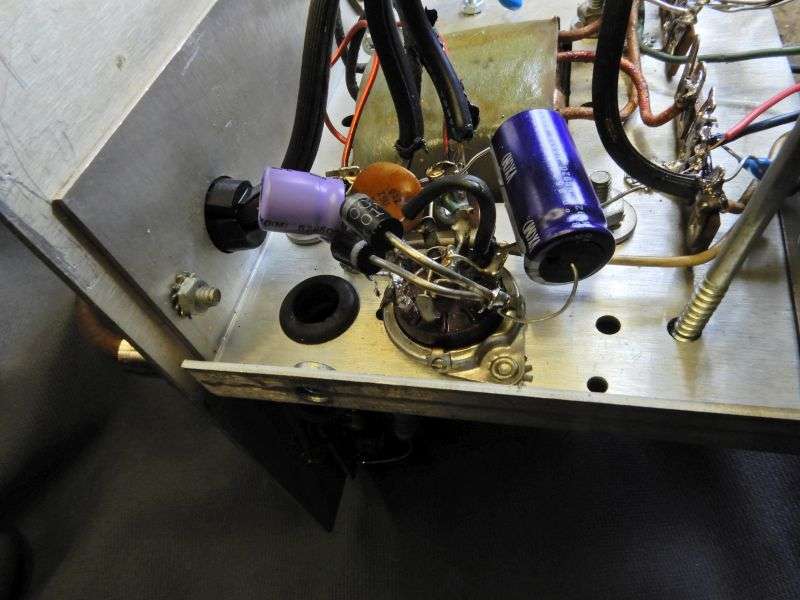
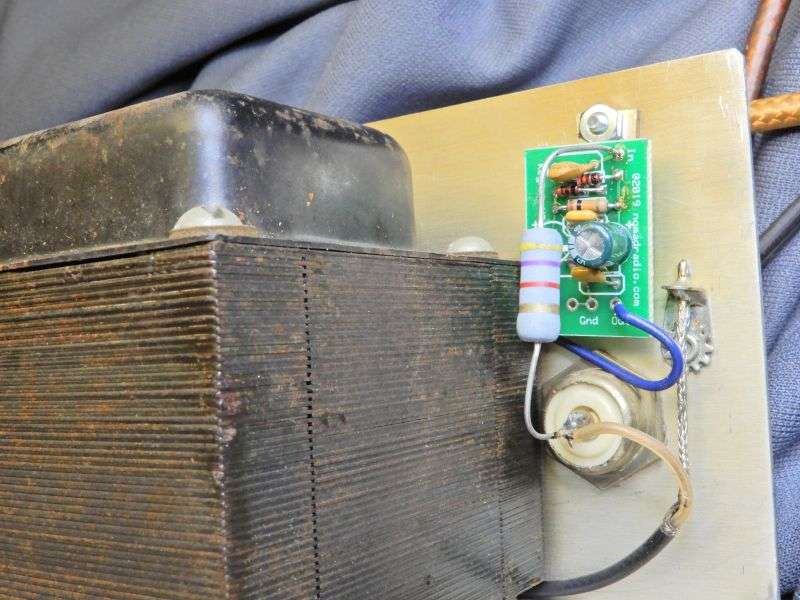
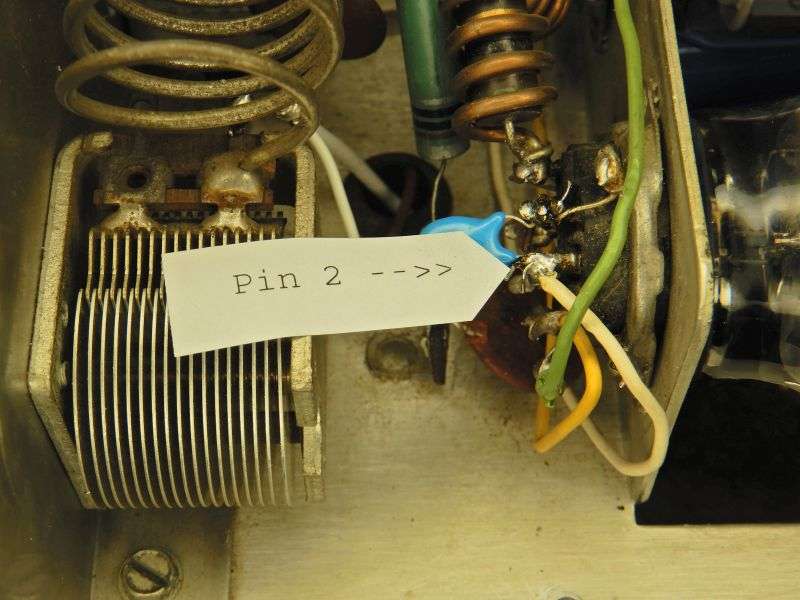
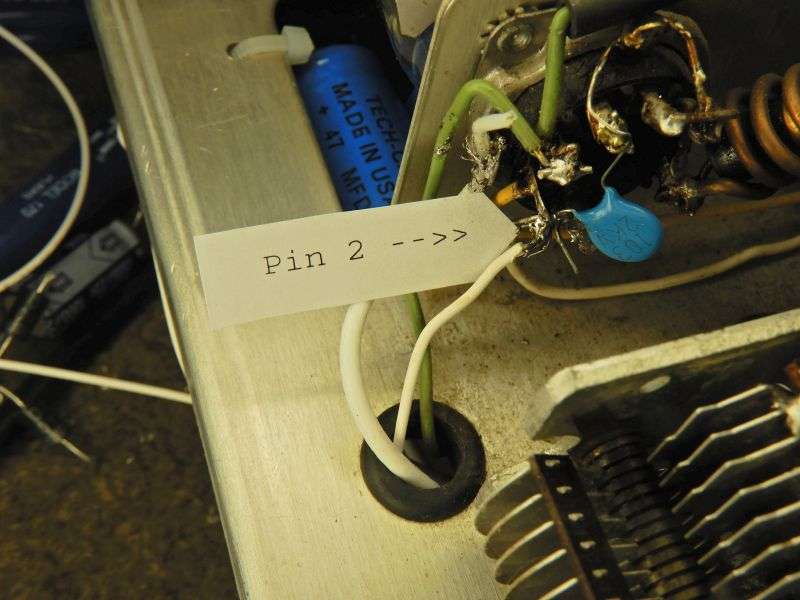
But that's not all. The tubes need a source of negative DC fixed bias voltage. Sounds counter-intuitive, but unless the radio drives it with at least a 3 Watt carrier, the tubes will overheat. That carrier gets rectified inside the tube, produces a negative DC voltage inside the tube to control the tube's current draw. Just one problem. Too little carrier, too little negative bias voltage. The old keying tube prevented this by refusing to hold the relay keyed with less than about 2 or 3 Watts of carrier. But the new transistor keying circuit is stable down to a quarter Watt or less. Creates a hazard. The fix is to rectify the tube's 6.3 Volt AC heater supply. The control-grid pin on each tube socket is unsoldered from ground. A bypass disc cap on each grid pin keeps the grid grounded for the RF signal, but not for DC voltage. A resistor to ground is still necessary from the grid pins. We haywired this bias setup on the tube sockets for years, but this looks like too much challenge to succeed as a DIY kit.
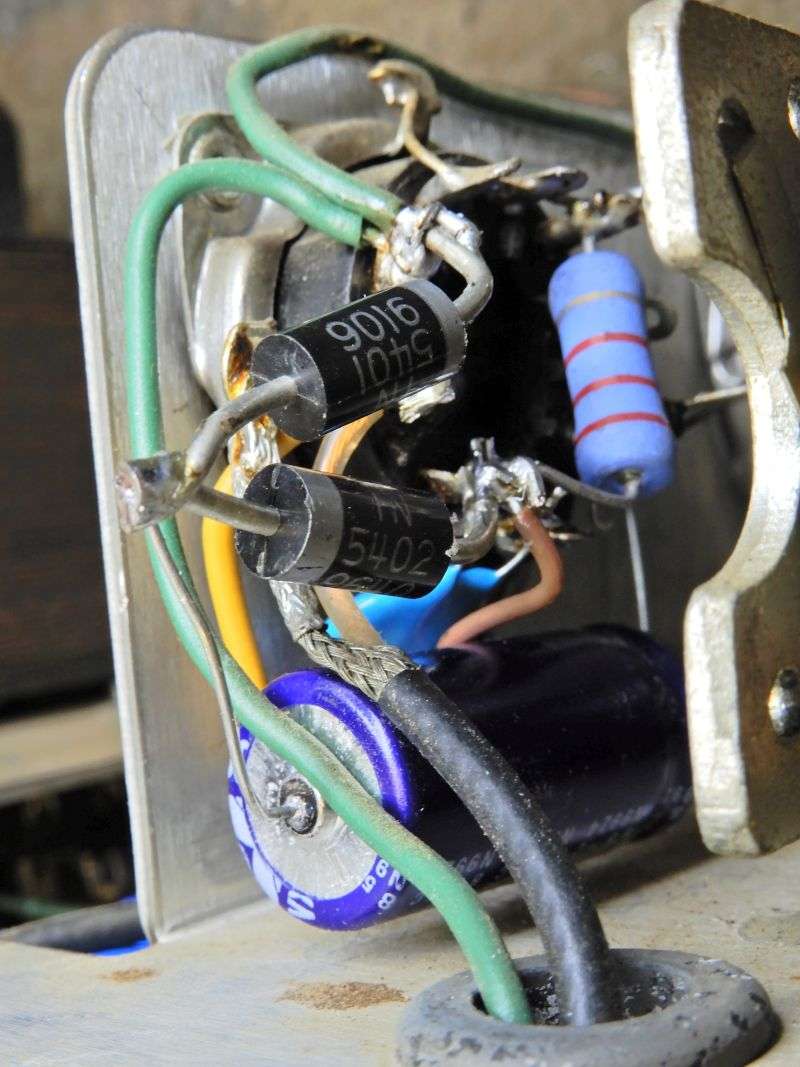
The first step to simplify this is to move the two rectifier/filter circuits onto a printed circuit board. It bolts to one of the power transformer mounting studs at the rear.
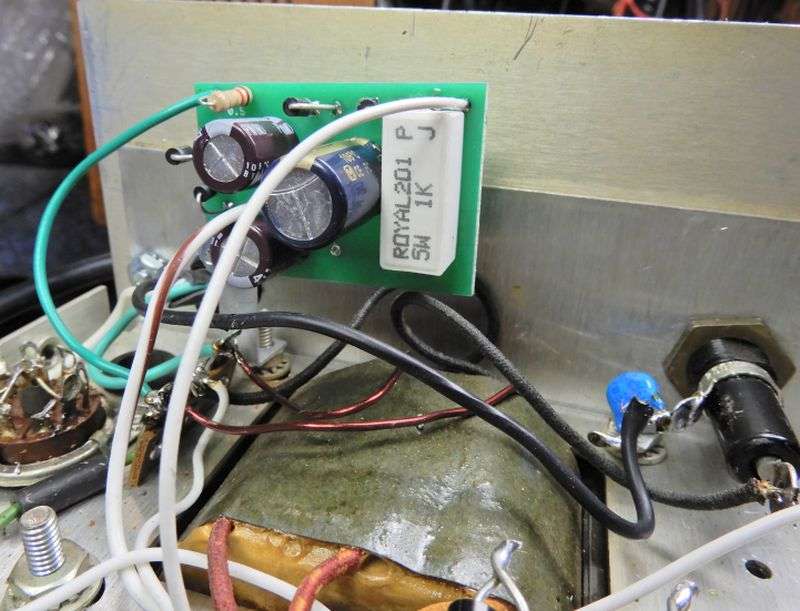
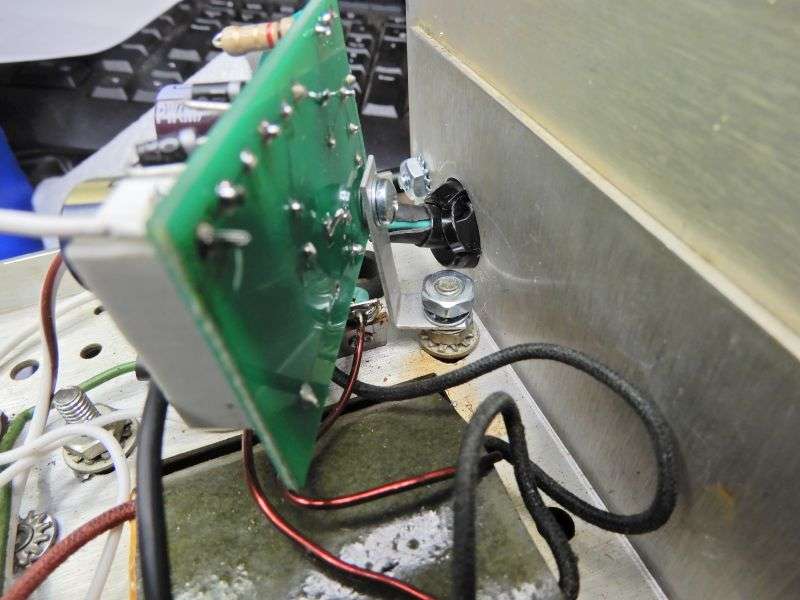
This will simplify the wiring mods on the two tube sockets.
The kit will include two 500-Volt filter caps. The more-common 450-Volt type will just blow up. The power supply puts 900 Volts more or less onto the two baldy tubes. Gotta have some margin between operating voltage and breakdown rating.
No way one of these with original filter caps will be trustworthy.
This setup should be simplified enough for the exprienced weekend warrior to handle without too many opportunities for confusion or errors.
Not ready for prime time. The layout on that tiny circuit board is the first approximation. Not too fond of it. Could be I'm overestimating how many of this amplifier are still out there to constitute a market for this kit.
With any luck I'll find out.
Some time later.
73
Had one customer in 1975 that was licensed for 27.320 MHz. Had a Browning Mark 2 base and 3-channel mobile radios in his plumbing trucks. He's the only customer I remember ever to have a fixed-channel crystal in a Browning receiver. The next year 40 channels came around and he ditched the CB stuff for a Motorola land-mobile FM radio system.
The original relay is long extinct.
It gets activated by a 6BQ5 tube, so the coil is rated for 10,000 ohms, about 110 Volts DC. And no, a relay with a 120-Volt AC coil won't substitute. AC is not DC.
For years now we have used a 12-Volt DC relay with the keying circuit pc board I sell on Ebay.
One obstacle, no source of 12 Volts DC. That gets added by haywiring a half wave voltage doubler, using the keying-tube socket for tie points.
But that's not all. The tubes need a source of negative DC fixed bias voltage. Sounds counter-intuitive, but unless the radio drives it with at least a 3 Watt carrier, the tubes will overheat. That carrier gets rectified inside the tube, produces a negative DC voltage inside the tube to control the tube's current draw. Just one problem. Too little carrier, too little negative bias voltage. The old keying tube prevented this by refusing to hold the relay keyed with less than about 2 or 3 Watts of carrier. But the new transistor keying circuit is stable down to a quarter Watt or less. Creates a hazard. The fix is to rectify the tube's 6.3 Volt AC heater supply. The control-grid pin on each tube socket is unsoldered from ground. A bypass disc cap on each grid pin keeps the grid grounded for the RF signal, but not for DC voltage. A resistor to ground is still necessary from the grid pins. We haywired this bias setup on the tube sockets for years, but this looks like too much challenge to succeed as a DIY kit.
The first step to simplify this is to move the two rectifier/filter circuits onto a printed circuit board. It bolts to one of the power transformer mounting studs at the rear.
This will simplify the wiring mods on the two tube sockets.
The kit will include two 500-Volt filter caps. The more-common 450-Volt type will just blow up. The power supply puts 900 Volts more or less onto the two baldy tubes. Gotta have some margin between operating voltage and breakdown rating.
No way one of these with original filter caps will be trustworthy.
This setup should be simplified enough for the exprienced weekend warrior to handle without too many opportunities for confusion or errors.
Not ready for prime time. The layout on that tiny circuit board is the first approximation. Not too fond of it. Could be I'm overestimating how many of this amplifier are still out there to constitute a market for this kit.
With any luck I'll find out.
Some time later.
73
Last edited:
