

The two-pin mike socket on the Browning base-station transmitters is becoming an expensive proposition. The 80MC2M plug has a flaw worse than the high price. A tendency for the ground connection to come loose from the cord.
The factory straight cord had a shield that was as thick as you find on mini-8 coax. It gets trapped between turns of the plug's spring and gets soldered. It's robust and won't fray or come loose easily.
Just one problem. Modern mike cords don't have a thick braid like that.
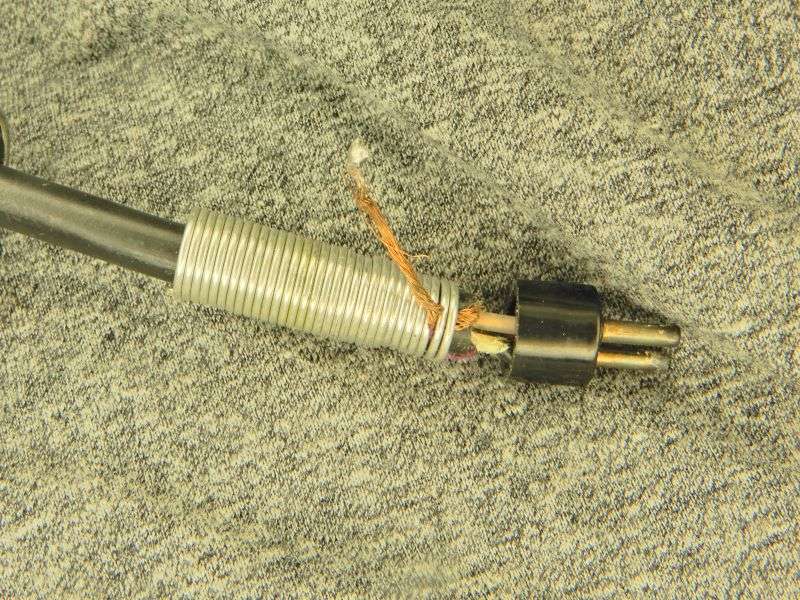
Coil cords just can't have a shield braid stout enough to hold up for long attached to this style plug.
This one wasn't soldered, but you get the idea. This braid will come loose before it's been pulled on more than a few times.
And when that happens, big-time shock hazard. The transmit wire on a Browning tranmsitter has roughly 300 Volts DC on it. When you key the mike, a 20k resistor in series with the relay coil gets 200 Volts and the 10k relay coil gets 100.
But if the shield breaks, a mike with a metal body now has 300 Volts on the surface when you key it.
Now if you touch grounded metal with one hand and key the mike with the other, 300 Volts travels across your chest cavity. The relay won't go "click", but you will.
Bad juju, even if you don't already have a history of cardiac trouble.
Replacing the mike socket with a standard 4-pin socket is fairly easy. Fits the same size hole. Some folks point to the shock hazard the exposed pin 3 creates if you poke your pink uninsulated finger up against that socket while it's powered up.
Yeah, but why is the transmitter turned on with no mike plugged in? Simple fix for this hazard. Just plug in the mike.
There is an odd "gotcha" with this mod. It's tempting to connect pin 1 of the new socket to a wire, and ground the wire to a handy tie strip next to the socket. This invites feedback squeal problems. Don't ask me why. Seems like it should work. But frequently it doesn't work like it should.
The cure is to ground pin 1 of the new 4-pin socket directly to the rim of the socket's body.
Just like the original socket did.
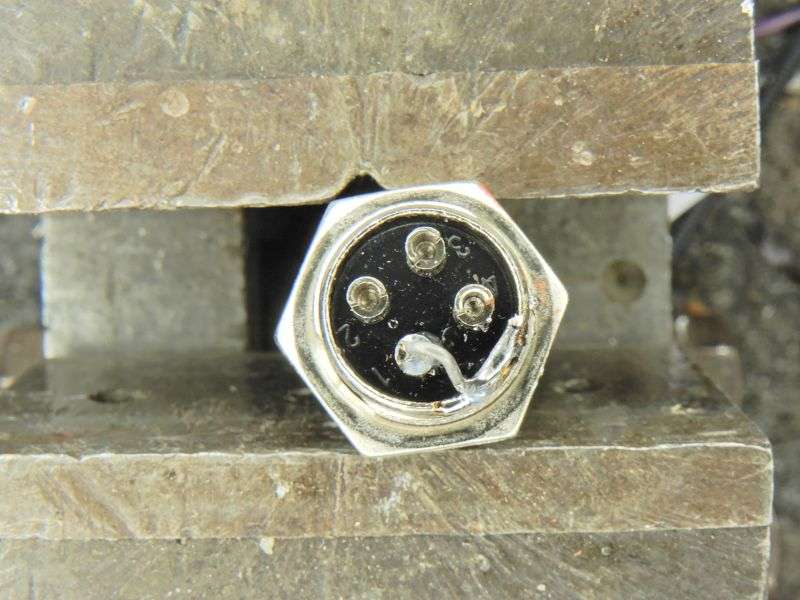
Just don't make the solder glob protrude and interfere with the mounting nut. This maintains the same ground circuit as the factory mike socket. You don't need a pic of the inside showing the 47k resistor soldered to pin 2 and the yellow wire on pin 3.
I prefer the socket type they call the "front load". As in, you load it into the hole from the front and the nut is on the inside. The "back load" version is a lot more popular, with the nut on the outside. YMMV, but I like this one better.
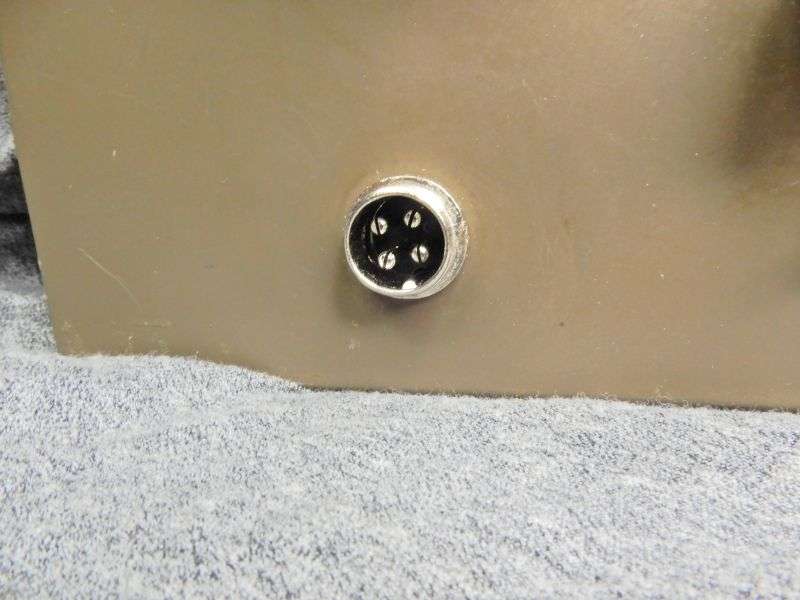
Looks more like the original. Used to get them from MCM before they went away.
Turns out gargle is your friend. And mine. Newark still has this MCM part listed.
https://www.newark.com/mcm/27-720/mic-connector-4-pin-jack/dp/50B5157
The question isn't will the 4-pin socket be a shock hazard. The question is which solution is the bigger shock hazard. An original-type 80-MC2M plug with a wimpy ground shield? Or a socket with 300 Volts on a exposed pin number 3? Just plug a mike into it, and it's no longer exposed.
73
The factory straight cord had a shield that was as thick as you find on mini-8 coax. It gets trapped between turns of the plug's spring and gets soldered. It's robust and won't fray or come loose easily.
Just one problem. Modern mike cords don't have a thick braid like that.
Coil cords just can't have a shield braid stout enough to hold up for long attached to this style plug.
This one wasn't soldered, but you get the idea. This braid will come loose before it's been pulled on more than a few times.
And when that happens, big-time shock hazard. The transmit wire on a Browning tranmsitter has roughly 300 Volts DC on it. When you key the mike, a 20k resistor in series with the relay coil gets 200 Volts and the 10k relay coil gets 100.
But if the shield breaks, a mike with a metal body now has 300 Volts on the surface when you key it.
Now if you touch grounded metal with one hand and key the mike with the other, 300 Volts travels across your chest cavity. The relay won't go "click", but you will.
Bad juju, even if you don't already have a history of cardiac trouble.
Replacing the mike socket with a standard 4-pin socket is fairly easy. Fits the same size hole. Some folks point to the shock hazard the exposed pin 3 creates if you poke your pink uninsulated finger up against that socket while it's powered up.
Yeah, but why is the transmitter turned on with no mike plugged in? Simple fix for this hazard. Just plug in the mike.
There is an odd "gotcha" with this mod. It's tempting to connect pin 1 of the new socket to a wire, and ground the wire to a handy tie strip next to the socket. This invites feedback squeal problems. Don't ask me why. Seems like it should work. But frequently it doesn't work like it should.
The cure is to ground pin 1 of the new 4-pin socket directly to the rim of the socket's body.
Just like the original socket did.
Just don't make the solder glob protrude and interfere with the mounting nut. This maintains the same ground circuit as the factory mike socket. You don't need a pic of the inside showing the 47k resistor soldered to pin 2 and the yellow wire on pin 3.
I prefer the socket type they call the "front load". As in, you load it into the hole from the front and the nut is on the inside. The "back load" version is a lot more popular, with the nut on the outside. YMMV, but I like this one better.
Looks more like the original. Used to get them from MCM before they went away.
Turns out gargle is your friend. And mine. Newark still has this MCM part listed.
https://www.newark.com/mcm/27-720/mic-connector-4-pin-jack/dp/50B5157
The question isn't will the 4-pin socket be a shock hazard. The question is which solution is the bigger shock hazard. An original-type 80-MC2M plug with a wimpy ground shield? Or a socket with 300 Volts on a exposed pin number 3? Just plug a mike into it, and it's no longer exposed.
73
