
You are using an out of date browser. It may not display this or other websites correctly.
You should upgrade or use an alternative browser.
You should upgrade or use an alternative browser.
-
You can now help support WorldwideDX when you shop on Amazon at no additional cost to you! Simply follow this Shop on Amazon link first and a portion of any purchase is sent to WorldwideDX to help with site costs.
-
The Winners of the three Retevis radios 16 Anniversary giveaway are announced!! Click Here to find out if you won!
Cobra 138XLR question.
- Thread starter dss56
- Start date

TP1 is the collector of the final. 1nF is 5.9ohm at 27MHz. Not only would that likely fry the counter, it would introduce an impedance mismatch in the output network.
This is a tricky thing to do for receive. The radio does not generate 27MHz when in RX. Radios that have counters send the IF signal to the counter and the counter programmatically converts that to the RX frequency. There is no 27MHz in your radio to count during RX. In RX, all you got is the IF to work with. If that is a true counter and not one that was designed for CB radio IF stages, the best you will do is TX display. And if you do,, don't do it at TP1 unless you got a jar ready to catch the smoke in. We need a datasheet on that counter first lol
This is a tricky thing to do for receive. The radio does not generate 27MHz when in RX. Radios that have counters send the IF signal to the counter and the counter programmatically converts that to the RX frequency. There is no 27MHz in your radio to count during RX. In RX, all you got is the IF to work with. If that is a true counter and not one that was designed for CB radio IF stages, the best you will do is TX display. And if you do,, don't do it at TP1 unless you got a jar ready to catch the smoke in. We need a datasheet on that counter first lol
it isn't even worth it because a 6 digit counter is more of a channel indicator than a counter with only 100Hz resolution. And since the counters are running on an IF signal anyhow, the accuracy of the counter depends on all of the oscillators being spot on, not just the counter oscillator, so its only as good as your alignment, for however long that holds.
On AM, a channel number is close enough, on SSB, an ear is close enough, and in all modes, a counter is just something fun to look at unless you got a 40 up and down switch.
On AM, a channel number is close enough, on SSB, an ear is close enough, and in all modes, a counter is just something fun to look at unless you got a 40 up and down switch.
its one of the 6 digit counters from china the ones sold on ebay here is a pdf of the meter.TP1 is the collector of the final. 1nF is 5.9ohm at 27MHz. Not only would that likely fry the counter, it would introduce an impedance mismatch in the output network.
This is a tricky thing to do for receive. The radio does not generate 27MHz when in RX. Radios that have counters send the IF signal to the counter and the counter programmatically converts that to the RX frequency. There is no 27MHz in your radio to count during RX. In RX, all you got is the IF to work with. If that is a true counter and not one that was designed for CB radio IF stages, the best you will do is TX display. And if you do,, don't do it at TP1 unless you got a jar ready to catch the smoke in. We need a datasheet on that counter first lol
it isn't even worth it because a 6 digit counter is more of a channel indicator than a counter with only 100Hz resolution. And since the counters are running on an IF signal anyhow, the accuracy of the counter depends on all of the oscillators being spot on, not just the counter oscillator, so its only as good as your alignment, for however long that holds.
On AM, a channel number is close enough, on SSB, an ear is close enough, and in all modes, a counter is just something fun to look at unless you got a 40 up and down switch.
Attachments
TP8 is the one you're looking for.
its in the PLL section of the radio.
you'll have to set the offset inside the counter so you will need to find the instructions for that. should be easy to find.
You'll notice that the freq will read off by a bit on both USB and LSB and this is just something you'll have to get used to.
it will also read off by a bit in TX, and again, there's no changing it.
it's also going to be noisy.
LC
its in the PLL section of the radio.
you'll have to set the offset inside the counter so you will need to find the instructions for that. should be easy to find.
You'll notice that the freq will read off by a bit on both USB and LSB and this is just something you'll have to get used to.
it will also read off by a bit in TX, and again, there's no changing it.
it's also going to be noisy.
LC

Thanks Loosecannon I will try that and report back here with an update.TP8 is the one you're looking for.
its in the PLL section of the radio.
you'll have to set the offset inside the counter so you will need to find the instructions for that. should be easy to find.
You'll notice that the freq will read off by a bit on both USB and LSB and this is just something you'll have to get used to.
it will also read off by a bit in TX, and again, there's no changing it.
it's also going to be noisy.
LC
Cool. It actually has IF options. I was not expecting that! And it can shift for better resolution, very cool. Forget my "its not worth it" spoiler. Now I want one lol.
The datasheet was not too clear about programming it (could be me, just woke up) but I dd catch a part stating you should use the smallest coupling cap possible and increase it until reliable operation occurs, they recommend starting at 20pF and they say 100pF should be enough in most cases.
Edit: can be done with upper and lower buttons.
The datasheet was not too clear about programming it (could be me, just woke up) but I dd catch a part stating you should use the smallest coupling cap possible and increase it until reliable operation occurs, they recommend starting at 20pF and they say 100pF should be enough in most cases.
Edit: can be done with upper and lower buttons.
Last edited:
Would you know where tp-8 is on the 138xlr. I have searched for a service manual or board layout and nothing.TP8 is the one you're looking for.
its in the PLL section of the radio.
you'll have to set the offset inside the counter so you will need to find the instructions for that. should be easy to find.
You'll notice that the freq will read off by a bit on both USB and LSB and this is just something you'll have to get used to.
it will also read off by a bit in TX, and again, there's no changing it.
it's also going to be noisy.
LC
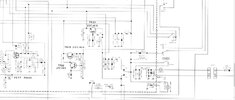
Thanks Brandon i did have an old copy of the board layout for tp8 and a real bad copy but i did see the basic location and you just verified the area. thanks again for the helpSchematic shows it at the secondary of L16.
Here is another problem that has arisen on the cobra 138xlr.
Radio was receiving and transmitting great no problems when I first tried the radio.
then a 3amp fuse blew. I replaced the fuse again it blew.
So I checked the diode in back and its good.
Finals are good.
relay click when in receive and transmit even though it wont transmit with the 2sc1419 disconnected.
I checked a few caps around where the dc power comes in all good.
I noticed a transistor on the back chassis with a 3 wire connector to it. A 2sc1419> to220 transistor. Thinking a regulator so I disconnected it and powered up the radio and it stayed on no blown fuse receive great but no transmit. The minute i connected the 3 wire connector the fuse blows again. I looked up the 2sc1419 its a power transistor as listed and a TP29A is a better replacement.
I did check the transistor and read good no shorts.
I did order 2 from ebay and will see if that is the problem.
I have a horrible copy of a schematic and it shows 2 of these 2sc1419 in the radio but this one on the wall out of circuit will let the radio be on and receive.
the picture below is suppose to be a 138xlr from cbtricks showing the 2 transistors.
Any suggestions on why the radio is blowing fuses?
And the fuse takes about 3 seconds then blows, its not instant blowing the fuse.
Radio was receiving and transmitting great no problems when I first tried the radio.
then a 3amp fuse blew. I replaced the fuse again it blew.
So I checked the diode in back and its good.
Finals are good.
relay click when in receive and transmit even though it wont transmit with the 2sc1419 disconnected.
I checked a few caps around where the dc power comes in all good.
I noticed a transistor on the back chassis with a 3 wire connector to it. A 2sc1419> to220 transistor. Thinking a regulator so I disconnected it and powered up the radio and it stayed on no blown fuse receive great but no transmit. The minute i connected the 3 wire connector the fuse blows again. I looked up the 2sc1419 its a power transistor as listed and a TP29A is a better replacement.
I did check the transistor and read good no shorts.
I did order 2 from ebay and will see if that is the problem.
I have a horrible copy of a schematic and it shows 2 of these 2sc1419 in the radio but this one on the wall out of circuit will let the radio be on and receive.
the picture below is suppose to be a 138xlr from cbtricks showing the 2 transistors.
Any suggestions on why the radio is blowing fuses?
And the fuse takes about 3 seconds then blows, its not instant blowing the fuse.
TR24 appears to be the 9v regulator and TR25 is the pass through regulator. It would make sense that TR25 is the one on the heat sync.
Some datasheets for the 1419 show the tab is connected to the collector. Something warm up and make contact? Verify there is no conductivity between the tab and the heat sync (with the power unplugged!)
Edit: Transformer shorted would show up as a short at the tab too. Might explain the delay too.
Some datasheets for the 1419 show the tab is connected to the collector. Something warm up and make contact? Verify there is no conductivity between the tab and the heat sync (with the power unplugged!)
Edit: Transformer shorted would show up as a short at the tab too. Might explain the delay too.
BrandonTR24 appears to be the 9v regulator and TR25 is the pass through regulator. It would make sense that TR25 is the one on the heat sync.
Some datasheets for the 1419 show the tab is connected to the collector. Something warm up and make contact? Verify there is no conductivity between the tab and the heat sync (with the power unplugged!)
I was cleaning up my tools from 1 bench and putting them back to the bench I usually work at. Now I cant find the 2sc1419 transistor, LOL so Ill have to wait until a replacement show up.
Been there, lol Sometimes I find missing transistors in my LCR/transistor tester. Sometimes the dog finds them (he don't eat them, just moves them under the table).Brandon
I was cleaning up my tools from 1 bench and putting them back to the bench I usually work at. Now I cant find the 2sc1419 transistor, LOL so Ill have to wait until a replacement show up.
BrandonBeen there, lol Sometimes I find missing transistors in my LCR/transistor tester. Sometimes the dog finds them (he don't eat them, just moves them under the table).
I found the transistor, I mounted it back on the back with the insulator .
Then put my fluke ohms meter from tab to the chassis and get a reading of 2.334 mega ohms.
Does it blow in SSB? If not, suspect the transformer. If it also blows in SSB, I would suspect the electrolytic by the finals, C179.
dxChat
- No one is chatting at the moment.