

You are using an out of date browser. It may not display this or other websites correctly.
You should upgrade or use an alternative browser.
You should upgrade or use an alternative browser.
-
You can now help support WorldwideDX when you shop on Amazon at no additional cost to you! Simply follow this Shop on Amazon link first and a portion of any purchase is sent to WorldwideDX to help with site costs.
-
The Winners of the three Retevis radios 16 Anniversary giveaway are announced!! Click Here to find out if you won!
Equipment advice
- Thread starter kaos513
- Start date
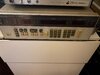

Well, Function generator, depending on type, can generate the two tone most would need to align - but in the one above, if the frequency can be tested and shown accurate - you have a lot of uses for it.
Although - you cannot use it to "profile" a radios' Mic Audio path, but you can use the device to send a modulated signal in to the Receiver side and adjust, tune the audio response within the RF signal as the radio will decode to the final AF stage from it's own internal IF.
But if you wanted to "Tune The Audio" and "Listen in on a Receiver" - you'd need the AF generator.
But, AF generator can also be just a simple "feedback" squeal between the carrier of one radio being detected and blaring out of the Receiver of another - is about the same as the above - only it's just between two radios and the Function Generator is not really needed - just the tones developed in the feedback squeal.
And in the detection and regeneration of the squeal, you can use that "Threshold" to help you determine if the Mic's Audio drive level as well as the receivers own frequency response limitations and the noises from the detection can also be heard between the two as you adjust volume of one to the Mic Gain of the other and hear the different results.
The only "gap" in this is the missing AF generator for the "sweep" of into the Mic amp, Audio processing of the TX Strip of the Radio under test to check it's performance.
Or a simple Table Radio...
Although - you cannot use it to "profile" a radios' Mic Audio path, but you can use the device to send a modulated signal in to the Receiver side and adjust, tune the audio response within the RF signal as the radio will decode to the final AF stage from it's own internal IF.
- So in a way, you have a means to add in an AF generator, but it's limited to Generated envelope in RF
But if you wanted to "Tune The Audio" and "Listen in on a Receiver" - you'd need the AF generator.
But, AF generator can also be just a simple "feedback" squeal between the carrier of one radio being detected and blaring out of the Receiver of another - is about the same as the above - only it's just between two radios and the Function Generator is not really needed - just the tones developed in the feedback squeal.
And in the detection and regeneration of the squeal, you can use that "Threshold" to help you determine if the Mic's Audio drive level as well as the receivers own frequency response limitations and the noises from the detection can also be heard between the two as you adjust volume of one to the Mic Gain of the other and hear the different results.
- During the process, if you use two SSB radios - they can be Heterodyned together and you can then listen for the subtle differences in tonal tuning response that is somewhat adjustable when two radios of similar caliber and quality platform are used together to be tuned the same way.
- I'm referring to the 10.7~10.695 IF of a typical AN612 Balanced Modulator - where the Audio arriving to be mixed with the Radios 10.7MHz mixing for final TX merge with the radios own 16~17MHz Local Oscillator product to make the 27MHz (or similar for any radio really) you can shift the peak response to offset the tonal differences that exist between the two sidebands to equalize the tone between the two radios.
If you don't have SSB...
- You don't need a "squeal" you can use an ordinary table radio t produce a low-volume "noise source" as a talk radio program or even music for the fidelity portions of your test - you can place the Mic handset near the table radios' speaker and check response that way...
The only "gap" in this is the missing AF generator for the "sweep" of into the Mic amp, Audio processing of the TX Strip of the Radio under test to check it's performance.
Or a simple Table Radio...


An AF generator simply generates an audio tone. A function generator simply generates various wavesforms of audio tones such as sinewave, squarewave, sawtooth, etc. You really need an RF generator to generate the various frequencies needed to align a radio right from the incoming signal thru the various IF stages. Most RF generators will have the ability to modulate that signal as well. Truthfully yoyu need both an RF generator and an AF generator.
Well, Function generator, depending on type, can generate the two tone most would need to align - but in the one above, if the frequency can be tested and shown accurate - you have a lot of uses for it.
Although - you cannot use it to "profile" a radios' Mic Audio path, but you can use the device to send a modulated signal in to the Receiver side and adjust, tune the audio response within the RF signal as the radio will decode to the final AF stage from it's own internal IF.
So if you wanted to "Tune a Receiver" but "Can't send a Carrier" - use that for this purpose.
- So in a way, you have a means to add in an AF generator, but it's limited to Generated envelope in RF
But if you wanted to "Tune The Audio" and "Listen in on a Receiver" - you'd need the AF generator.
But, AF generator can also be just a simple "feedback" squeal between the carrier of one radio being detected and blaring out of the Receiver of another - is about the same as the above - only it's just between two radios and the Function Generator is not really needed - just the tones developed in the feedback squeal.
And in the detection and regeneration of the squeal, you can use that "Threshold" to help you determine if the Mic's Audio drive level as well as the receivers own frequency response limitations and the noises from the detection can also be heard between the two as you adjust volume of one to the Mic Gain of the other and hear the different results.
- During the process, if you use two SSB radios - they can be Heterodyned together and you can then listen for the subtle differences in tonal tuning response that is somewhat adjustable when two radios of similar caliber and quality platform are used together to be tuned the same way.
- I'm referring to the 10.7~10.695 IF of a typical AN612 Balanced Modulator - where the Audio arriving to be mixed with the Radios 10.7MHz mixing for final TX merge with the radios own 16~17MHz Local Oscillator product to make the 27MHz (or similar for any radio really) you can shift the peak response to offset the tonal differences that exist between the two sidebands to equalize the tone between the two radios.
If you don't have SSB...So yes , you have a device that can replace the Transmitter - but in only a limited degree. You can't send AF thru the Mic to test its' quality thru the Radios' TX strip, using it. But you can send the Audio from that Mic into the unit (Thru a pre-amp into the Function Generator) to hear the detectors' processing of it on a receiver.
- You don't need a "squeal" you can use an ordinary table radio t produce a low-volume "noise source" as a talk radio program or even music for the fidelity portions of your test - you can place the Mic handset near the table radios' speaker and check response that way...
The only "gap" in this is the missing AF generator for the "sweep" of into the Mic amp, Audio processing of the TX Strip of the Radio under test to check it's performance.
Or a simple Table Radio...
You and I obviously have different standards when it comes to aligning a radio.

You and I obviously have different standards when it comes to aligning a radio.
Especially when you have to stand there and listen to the customer rant only later to find out they had the work done at another shop - it's us that has to undo that mess, to recreate the original condition, and then repair it from there...
So, yeah, different standards, but to each ear - their own...
There's a Murphys Law in there somewhere...

My way of thinking is that an alignment is to bring it back to spec not to simply ballpark it. That's all I meant with my comment. Lord knows I have ballparked enough radios in the past with less than adequate gear however they have all been my own and were later properly aligned using the right gear.
There ya go...
Just didn't want @kaos513 to skip over some of the good stuff that thing has...
Funny thing about radio - they want the "frequency" EXACTLY on - Drift? NEVER!
But they don't always look at the Audio side - HiFi? Direct Inject?
I'm just trying to keep those poor chaps from sounding AWFUL...
Just didn't want @kaos513 to skip over some of the good stuff that thing has...
Funny thing about radio - they want the "frequency" EXACTLY on - Drift? NEVER!
But they don't always look at the Audio side - HiFi? Direct Inject?
I'm just trying to keep those poor chaps from sounding AWFUL...
Wow, you did not read my 1 response to your post, the answer I gave was...
Hence the "table radio" - reference...
The Unit can generate an RF SIGNAL and even use EXTERNAL AF to modulate it...
But it is not a SOURCE for AF only RF.
Although - you cannot use it to "profile" a radios' Mic Audio path, but you can use the device to send a modulated signal in to the Receiver side and adjust, tune the audio response within the RF signal as the radio will decode to the final AF stage from it's own internal IF.
Hence the "table radio" - reference...
The Unit can generate an RF SIGNAL and even use EXTERNAL AF to modulate it...
But it is not a SOURCE for AF only RF.
dxChat