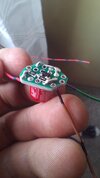
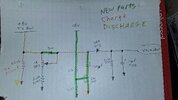
Played around a little more and made this circuit:
Here is the wiper voltage as the TX rail turns on and off when the wiper is set to 7v
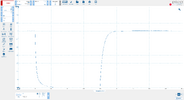
and here is the wiper voltage with the wiper set to 5v
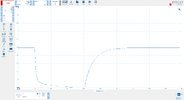
This suggests that with a 1000uF cap, the windup duration could last anywhere from 1 second to 3 seconds depending on where the wiper needs to be when aligned. This is why I am curious about the windup duration and your wiper voltage when aligned properly.
Those were with the mosfet gate tied to 8v constant. This is with the mosfet gate line tied to the TX rail
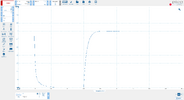
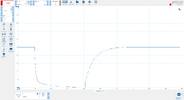
In the 5v case, it sped up a little. Not much happening in the 7v case. Nothing we can't change swapping caps, so doing this means we don't need a separate wire to the constant 8v regulator. Pretty sure the difference in time is due to the cap not discharging fully. When the TX rail goes below the voltage the mosfet needs to turn on, it disconnects the cap. The next time it turns on, there is residual voltage on the cap which decreases the charge time. This straight part is where it is already charged.
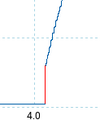
The part that bothers me is the exponential settle decay. It would be nice if the first 4.5 of the 5 RC time constants went like that and it then a hit a defined stop. Get the sound effect but not the long wait to be right on freq again. I'm thinking about isolating that entire circuit from the TX rail so the windup can be applied to the supply itself instead of the wiper so that a zener can clip the top of the decay off like this blue line before it even goes to VR7.
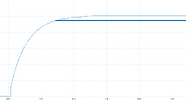
This is fun and I'm glad thats an SSB radio, but what I don't understand is why people install these in AM radios? Nobody gonna hear it unless it rides in on someone else's carrier.



 .
.