
Hi Jim, you've go a good team on this forum! Interesting topic. After 40 years in radio, I'm still learning too!
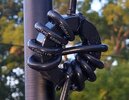
To expand on one topic, use of chokes. I always use a 1:1 baluns (or choke) at the feed point to my antennas. In fact, I also use current baluns on my radio, to reduce noise. They are very handy.
The balun/choke will isolate the coax feedline from the antenna. With it, there is no need to have an exact length of coax to your antenna when you use an analyzer or SWR meter. As Crawdad said, the balun will remove any effects the cable might have on your antenna pattern (side lobes). They are easy to make also!
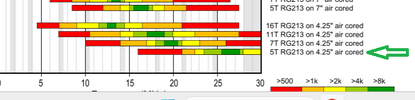
From Crawdad's link, **5 Turns of RG-213 4.25" diameter** would be the best for you application. (You'll need RG-213 for your high-power application)
After installing, if you are still having some strange SWR values, then you know the root cause is somewhere on antenna side. This is a cheap way to isolate portions of your system for better debug.
Just Curious, have you raised the antenna up in the air and checked the SWR?
Good luck
To expand on one topic, use of chokes. I always use a 1:1 baluns (or choke) at the feed point to my antennas. In fact, I also use current baluns on my radio, to reduce noise. They are very handy.
The balun/choke will isolate the coax feedline from the antenna. With it, there is no need to have an exact length of coax to your antenna when you use an analyzer or SWR meter. As Crawdad said, the balun will remove any effects the cable might have on your antenna pattern (side lobes). They are easy to make also!
From Crawdad's link, **5 Turns of RG-213 4.25" diameter** would be the best for you application. (You'll need RG-213 for your high-power application)
After installing, if you are still having some strange SWR values, then you know the root cause is somewhere on antenna side. This is a cheap way to isolate portions of your system for better debug.
Just Curious, have you raised the antenna up in the air and checked the SWR?
Good luck