

Like a box of chocolates.
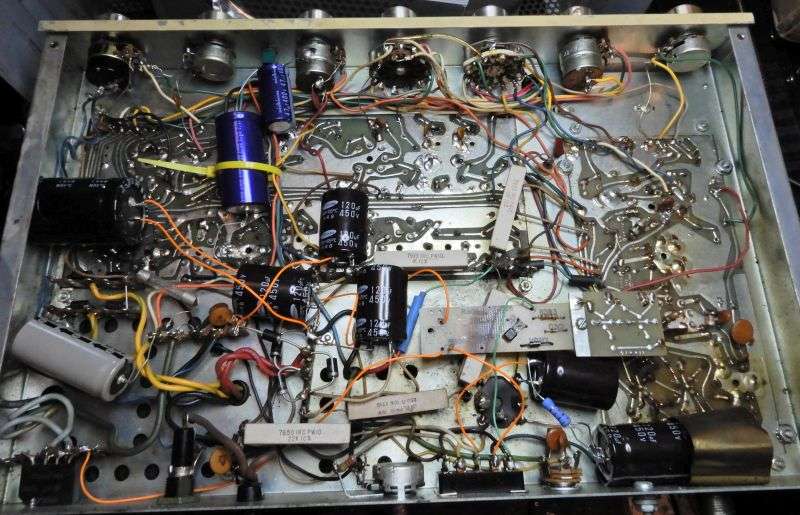
The underside of this Mark 4A receiver doesn't look all that bad. A bit fragile in places, but not terrible.
Topside is a different story.
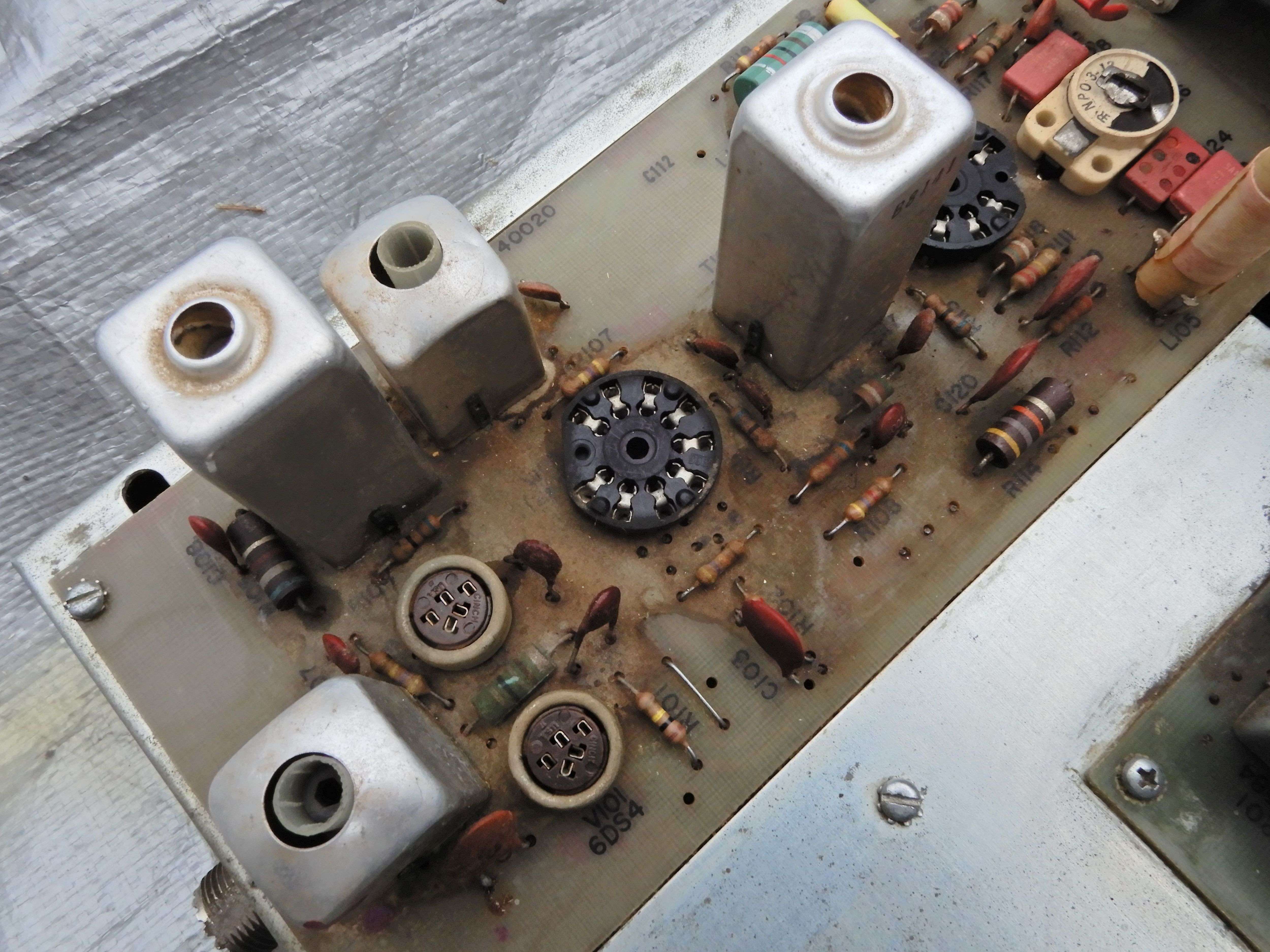
Downright crusty. Looks a little better after a flush with denatured, a toothbrush and some compressed air.
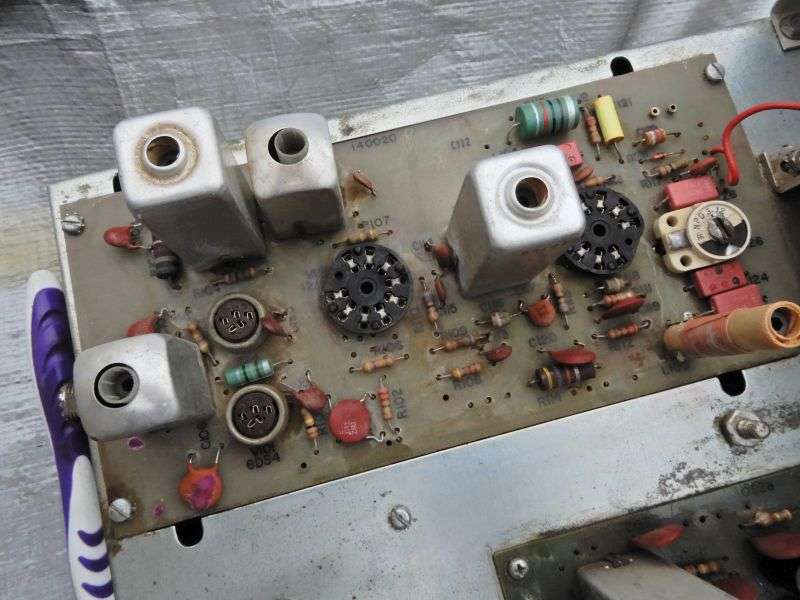
Just one problem. All the schmoo carried away by the solvent ends up on the solder side of the circuit boards if you don't also flush that side right away. The solvent evaporates and leaves the precipitated solids behind.
Oops. We're gonna skip that part of the cleanup. Takes a pile of cotton swabs by the time it's done.
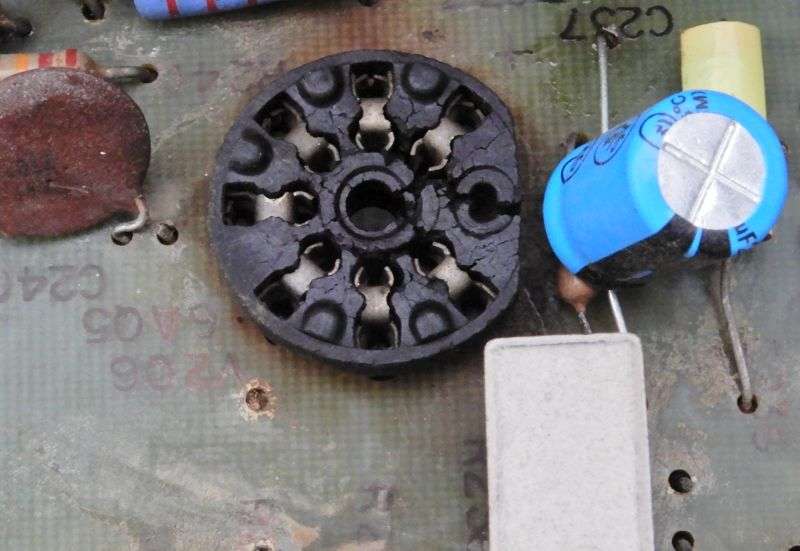
This radio lacks an odometer, but there is one indirect measure of mileage. The socket for the 6AQ5 speaker-amp tube will degrade from heat first of all the sockets in the radio. That tube runs at the highest temperature in the receiver, so that socket goes first.
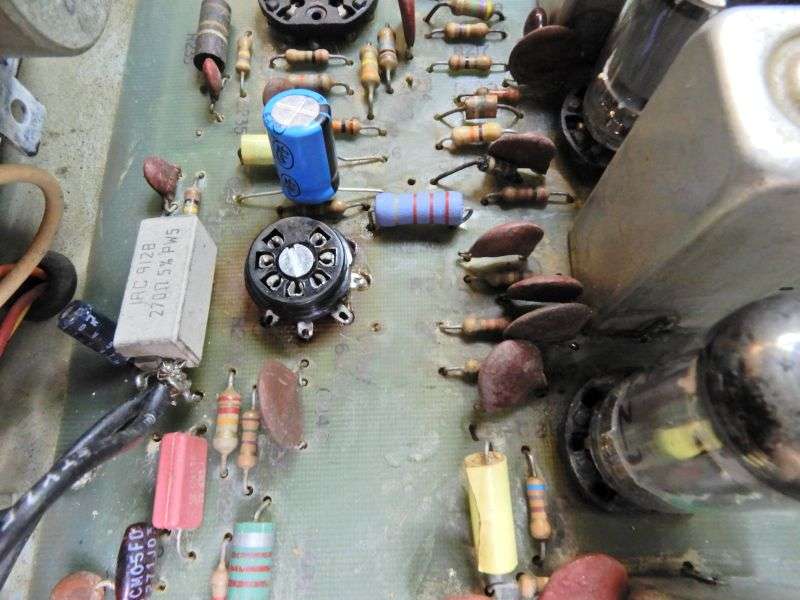
The new socket had a metal saddle on it, and the pins have to be bent under to line up with the circuit-board holes. But we countersink the center hole so a 4-40 flat-head screw lays flush and won't interfere with the tube. The bolt holds the socket to the circuit board so the tired old foil traces won't need to.
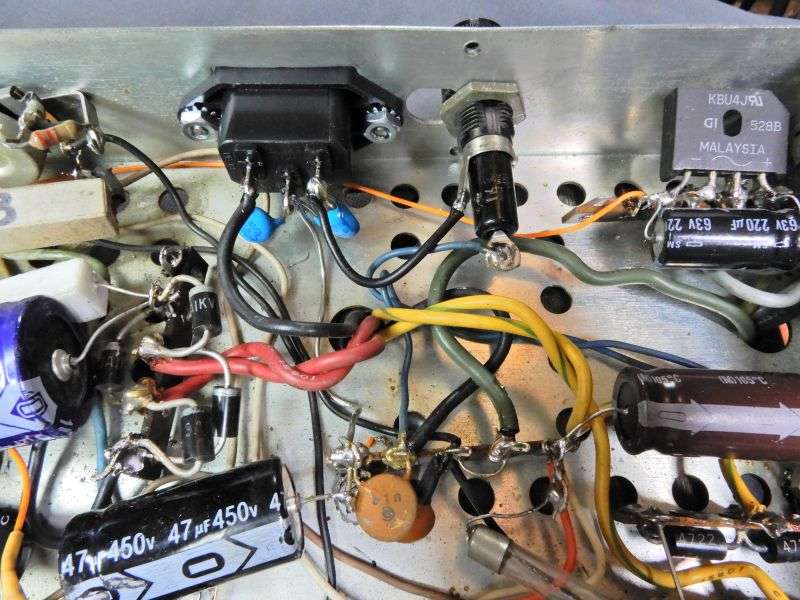
This radio had a bad AC cord on it. Normally we leave that alone, but this cord had to go. Time to put a 3-prong cord on it. This is my preferred method.
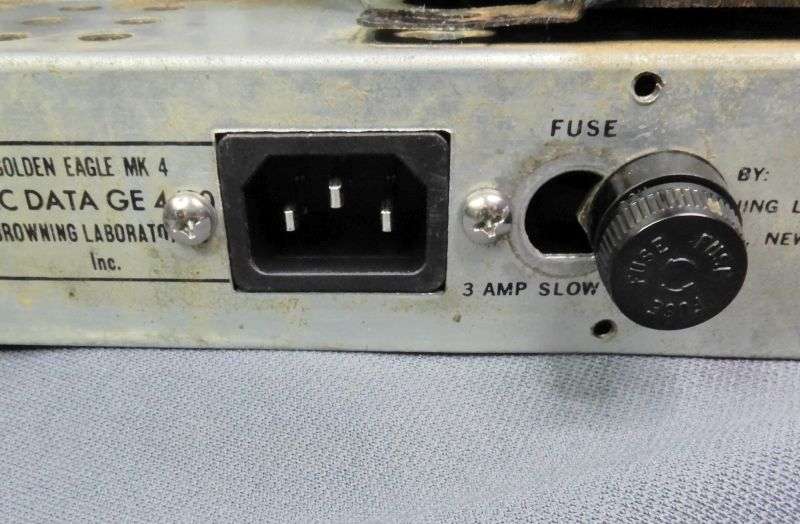
Found the fuse holder was too close after I had punched the rectangular hole. Had to move the fuseholder over. Doesn't look too swift, but at least it faces the rear. Gotta work out spacing better the next time we do this.
But hey, this was just the start. I always rework the receiver first, so it can "burn in" while the transmitter gets fixed.
The transmitter was a real hoot.
73
The underside of this Mark 4A receiver doesn't look all that bad. A bit fragile in places, but not terrible.
Topside is a different story.
Downright crusty. Looks a little better after a flush with denatured, a toothbrush and some compressed air.
Just one problem. All the schmoo carried away by the solvent ends up on the solder side of the circuit boards if you don't also flush that side right away. The solvent evaporates and leaves the precipitated solids behind.
Oops. We're gonna skip that part of the cleanup. Takes a pile of cotton swabs by the time it's done.
This radio lacks an odometer, but there is one indirect measure of mileage. The socket for the 6AQ5 speaker-amp tube will degrade from heat first of all the sockets in the radio. That tube runs at the highest temperature in the receiver, so that socket goes first.
The new socket had a metal saddle on it, and the pins have to be bent under to line up with the circuit-board holes. But we countersink the center hole so a 4-40 flat-head screw lays flush and won't interfere with the tube. The bolt holds the socket to the circuit board so the tired old foil traces won't need to.
This radio had a bad AC cord on it. Normally we leave that alone, but this cord had to go. Time to put a 3-prong cord on it. This is my preferred method.
Found the fuse holder was too close after I had punched the rectangular hole. Had to move the fuseholder over. Doesn't look too swift, but at least it faces the rear. Gotta work out spacing better the next time we do this.
But hey, this was just the start. I always rework the receiver first, so it can "burn in" while the transmitter gets fixed.
The transmitter was a real hoot.
73

