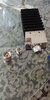
Tokin, if your analyzer in your 2nd image is attached directly to the DL, IMO you likely have a good DL
But, try this idea to see if the analyzer is stable over a range of frequencies. Scan across the entire CB bandwidth. Then go higher and then lower in frequency, than the CB band if you can. This will let you see how stable your DL is. If your results are close...then you know you have a reliable Dummy Load as a tool. Don't expect the results to be perfect as you move about in frequency, but the results should be close.
Then try this with several different jumper lengths and see how that goes.
You've heard talk about using a tuned jumper with your analyzer and getting mirror like image results. Then test the idea.
If you have a frequency resonant length coax jumper (tuned jumper) that you cut to a 1/2 wavelength, compare it to your analyzer connected directly to the DL results. If the jumper is tuned correctly and the values are equal or close to your DL results...then the jumper is good for the purpose intended at that frequency.
It is not necessary, but I made notes as I went along and recorded my results...so I didn't have to rely on my memory as I tested my ideas.
.


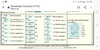 So, good news if this calculator is correct.