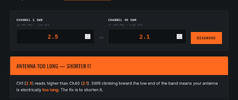
Got tired of seeing the same "my SWR is high, what's wrong" threads with 15 replies of guesswork, so I built something that actually gives a straight answer.
You plug in your Channel 1 and Channel 40 SWR readings, and it tells you exactly what's going on — antenna too long, too short, or a grounding fault — plus what to actually do about it. No account, no app, just numbers in, diagnosis out.
[SWR Doctor →] (https://cbradiohq.com/#swrlink)
Built it because I was tired of chasing that answer down manually every time, figured other people probably were too. Free, no catch. Let me know if it nails the diagnosis or if you run into an edge case it doesn't handle — still refining it.
You plug in your Channel 1 and Channel 40 SWR readings, and it tells you exactly what's going on — antenna too long, too short, or a grounding fault — plus what to actually do about it. No account, no app, just numbers in, diagnosis out.
[SWR Doctor →] (https://cbradiohq.com/#swrlink)
Built it because I was tired of chasing that answer down manually every time, figured other people probably were too. Free, no catch. Let me know if it nails the diagnosis or if you run into an edge case it doesn't handle — still refining it.