

You are using an out of date browser. It may not display this or other websites correctly.
You should upgrade or use an alternative browser.
You should upgrade or use an alternative browser.
-
You can now help support WorldwideDX when you shop on Amazon at no additional cost to you! Simply follow this Shop on Amazon link first and a portion of any purchase is sent to WorldwideDX to help with site costs.
-
The Winners of the three Retevis radios 16 Anniversary giveaway are announced!! Click Here to find out if you won!
Cobra 138
- Thread starter Catalyst 122
- Start date
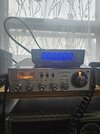
Correction it is a 138aAnyone know the variable to drop the dead key on this radio. 138 23 channel. Not "A" not "XLR" Old 138 23 channel.
Attachments
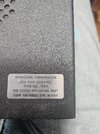

There isn't one. They used a fixed resistor (R148, 4.5 Ohm, 5 watts) to set the DC voltage that powers the driver and final in AM. There is a note in the Sam's (CB-57) that suggests a 6.2 Ohm resistor was sometimes used.
I guess you could try that old trick where they'd put diodes in line with the fixed resistor to drop the voltage, or try different resistor values.
I guess you could try that old trick where they'd put diodes in line with the fixed resistor to drop the voltage, or try different resistor values.

I would just add more diodes in series with D50.
make sure they are all pointed the same way as the stock diode.
each diode you add will lower the voltage to the driver and final by .6 volts.
you'll have to use trial and error to know how many diodes to add.
any 1N400x diode should work fine.
the good news about this mod is that it won't lower the modulation with the deadkey!
LC
make sure they are all pointed the same way as the stock diode.
each diode you add will lower the voltage to the driver and final by .6 volts.
you'll have to use trial and error to know how many diodes to add.
any 1N400x diode should work fine.
the good news about this mod is that it won't lower the modulation with the deadkey!
LC
Ive had great luck stacking diodes on some of the older General Electric radios with the power mic circuitry built in to lower the deadkey..I would just add more diodes in series with D50.
make sure they are all pointed the same way as the stock diode.
each diode you add will lower the voltage to the driver and final by .6 volts.
you'll have to use trial and error to know how many diodes to add.
any 1N400x diode should work fine.
the good news about this mod is that it won't lower the modulation with the deadkey!
LC

Our Peel'N Stick variable will work, but with one modification.
R148, the 4.5 ohm 5 Watt resistor gets removed. It's in parallel with an electrolytic cap C173. The "-" side of our module goes to the empty resistor hole connected to the capacitor's negtive side. The "+" side goes to the resistor's other empty hole.
The one thing different from a Cobra 29 installation is that the clockwise wire coming from the carrier control no longer connects to our PNS board, but gets connected instead to the other side of the modulation transformer secondary. The transformer lead that connects directly to the relay. Naturally the black ground wire still goes to ground on the circuit board.
I should point out an endearing habit of that radio. The relay is rated for 3 Amps. And if you set the sideband limiter (ALC) to 12 Watts, the radio's current draw stays below that red line. Pushing it harder overheats the relay contacts. The heat softens the plastic holding the contacts aligned. Get it hot enough, and both transmit and receive sides will now activate at the same time. Creates a dead short to the main power. The proper 3 Amp fuse is no joke on this radio. 50 years ago sideband operators would find out the hard way that cranking this radio for way more average wattage on sideband was a guaranteed breakdown. At least all you would need was a new relay and new fuse if it was the right size. And a "no-blow" fuse would raise foil traces from the board surface as they burned.
YMMV
73
R148, the 4.5 ohm 5 Watt resistor gets removed. It's in parallel with an electrolytic cap C173. The "-" side of our module goes to the empty resistor hole connected to the capacitor's negtive side. The "+" side goes to the resistor's other empty hole.
The one thing different from a Cobra 29 installation is that the clockwise wire coming from the carrier control no longer connects to our PNS board, but gets connected instead to the other side of the modulation transformer secondary. The transformer lead that connects directly to the relay. Naturally the black ground wire still goes to ground on the circuit board.
I should point out an endearing habit of that radio. The relay is rated for 3 Amps. And if you set the sideband limiter (ALC) to 12 Watts, the radio's current draw stays below that red line. Pushing it harder overheats the relay contacts. The heat softens the plastic holding the contacts aligned. Get it hot enough, and both transmit and receive sides will now activate at the same time. Creates a dead short to the main power. The proper 3 Amp fuse is no joke on this radio. 50 years ago sideband operators would find out the hard way that cranking this radio for way more average wattage on sideband was a guaranteed breakdown. At least all you would need was a new relay and new fuse if it was the right size. And a "no-blow" fuse would raise foil traces from the board surface as they burned.
YMMV
73
Do you have a link I can follow to check out this variable?Our Peel'N Stick variable will work, but with one modification.
R148, the 4.5 ohm 5 Watt resistor gets removed. It's in parallel with an electrolytic cap C173. The "-" side of our module goes to the empty resistor hole connected to the capacitor's negtive side. The "+" side goes to the resistor's other empty hole.
The one thing different from a Cobra 29 installation is that the clockwise wire coming from the carrier control no longer connects to our PNS board, but gets connected instead to the other side of the modulation transformer secondary. The transformer lead that connects directly to the relay. Naturally the black ground wire still goes to ground on the circuit board.
I should point out an endearing habit of that radio. The relay is rated for 3 Amps. And if you set the sideband limiter (ALC) to 12 Watts, the radio's current draw stays below that red line. Pushing it harder overheats the relay contacts. The heat softens the plastic holding the contacts aligned. Get it hot enough, and both transmit and receive sides will now activate at the same time. Creates a dead short to the main power. The proper 3 Amp fuse is no joke on this radio. 50 years ago sideband operators would find out the hard way that cranking this radio for way more average wattage on sideband was a guaranteed breakdown. At least all you would need was a new relay and new fuse if it was the right size. And a "no-blow" fuse would raise foil traces from the board surface as they burned.
YMMV
73
Sure enough,
Here's the fleabay listing:
https://www.ebay.com/itm/1164725379...pid=5336136228&customid=&toolid=10001&mkevt=1
73
Here's the fleabay listing:
https://www.ebay.com/itm/1164725379...pid=5336136228&customid=&toolid=10001&mkevt=1
73

That’s a snazzy little design Nomadradio. Thanks for the link. I do it without the nice little circuit board. Well done.
dxChat
- No one is chatting at the moment.