• You can now help support WorldwideDX when you shop on Amazon at no additional cost to you! Simply follow this Shop on Amazon link first and a portion of any purchase is sent to WorldwideDX to help with site costs.
  • A Winner has been selected for the 2025 Radioddity Cyber Monday giveaway! Click Here to see who won!

Cobra 2000 carrier control with the "rabbit turd" swing kit.

nomadradio

Analog Retentive
I Support WorldwideDX.com!
Apr 3, 2005
8,379
13,925
698
Louisville, KY
www.nomadradio.com
For years we would see tiny lumps of black potting resin with three wires protruding, installed mostly in radios built by RCI. These were "swing kits". You removed a resistor from the circuit board and inserted wires from the module into the holes where the resistor had been. Hammer the resin to see what's inside, and lo and behold. A resistor is inside. In fairness, not the same resistance value as the factory part you plucked out, but a part you could buy (back then) for a penny or two from Mouser in quantity. The resistor inside would have a higher resistance value than the factory part. The bonus was that a lot of radios would exhibit "squeal", or internal audio feedback if you turned the mike gain too high after the "kit" was installed.

We called them "rabbit turds". The shape, size and black resin reminded me of the waste that accumulates under a rabbit cage.

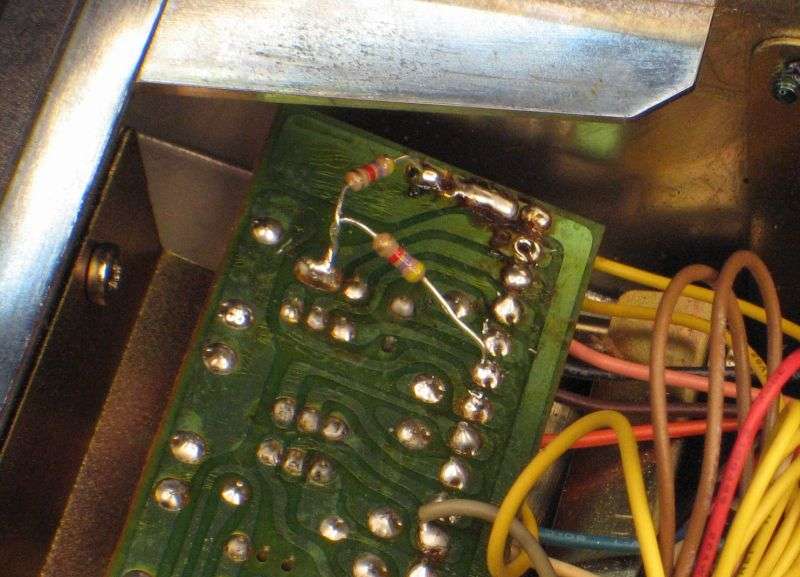
Fast forward to 2025 and we see a Cobra 2000 with a deluxe version of the rabbit turd, with ten wires coming out of it.

Anybody want to place bets on how many of those wires actually connect to anything inside the potting resin?
ROo1Ht.jpg


Three of them lead to the carrier-control pot mounted on the rear panel. Kinda clumsy, but we'll fix that soon enough.
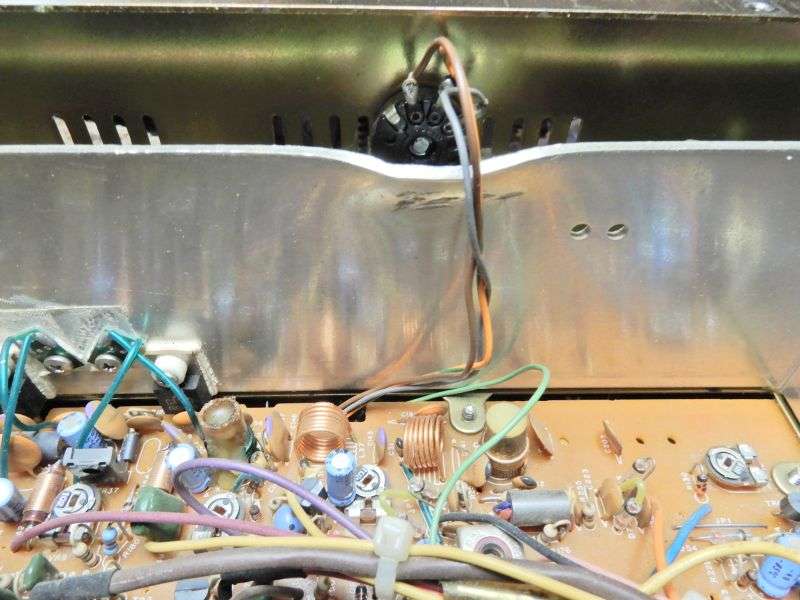
rIgKFm.jpg


That's three wires.

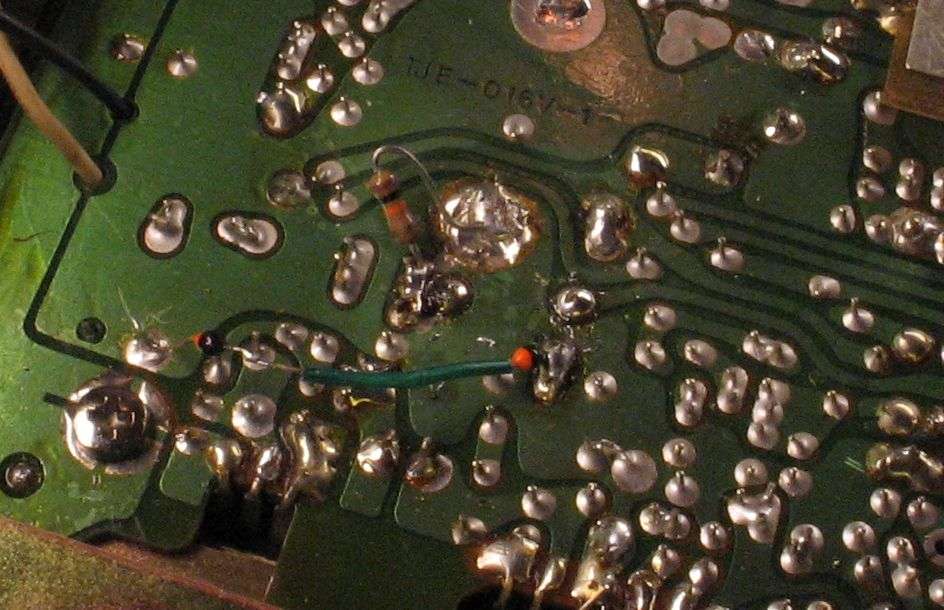
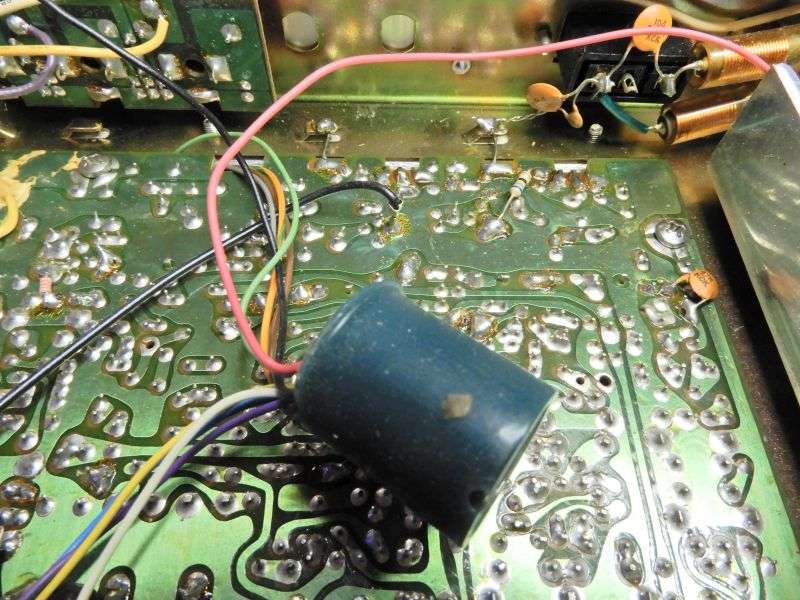
The factory carrier trimpot vr10 got removed, and three wires from the module take its place.
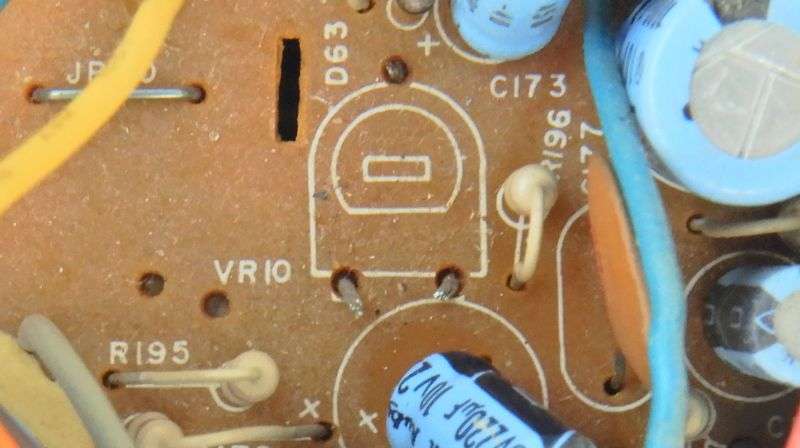
v7xcLJ.jpg


05dM5L.jpg


That's six wires.

In the first pic, a red wire going off the right is soldered to the AC/DC switch to obtain 13.8 VDC main power. The black wire goes to ground.

That's eight wires.

aUjFEU.jpg


The white wire goes to the clockwise lug of the mike gain control.

That's nine wires.

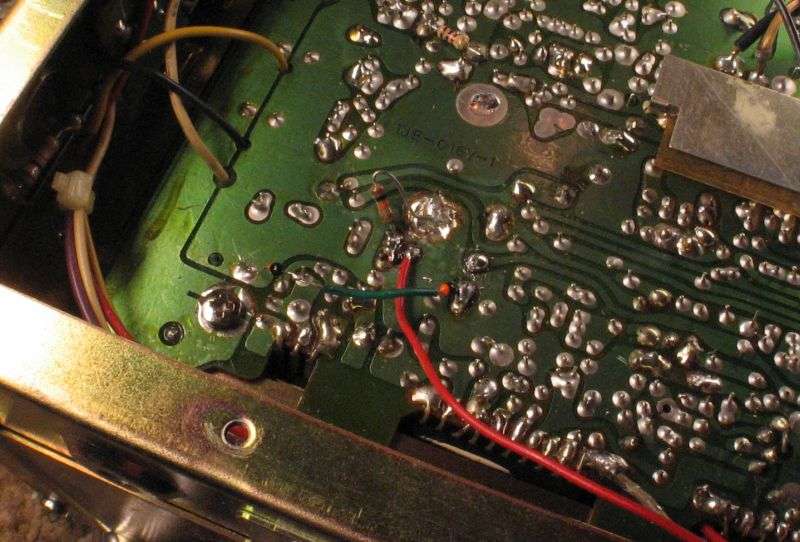
The last wire is green. It provides full 13.8 Volt DC to the yellow bias-test wire. This feeds full main power to the final transistor, the "power jump" that provides the same peak power on AM as sideband. Some folks like this some don't. But it doesn't seem to cause any loss of audio quality.

SnMxUK.jpg


That's ten wires total. Makes you think what's inside that lump of resin is pretty sophisticated, right?

The resin is just brittle enough to smash apart with a hammer.

B0OJst.jpg


The white wire escaped. Fell on the floor. Wasn't connected. The blue wire broke, only a tiny bit of it remains. The resistor broke in half, but at least there is one electronic component in there. The resistor served to lower the minimum carrier wattage by placing it in parallel with R196, the factory resistor that sets the minimum carrier that VR10 can set.

So yeah, there's a part in there. And technically all but the white wire are connected to someting. If you call connecting them to each other "something".

We set up the radio's SWR Cal knob to control the radio's carrier after the turdectomy was performed.

I did shoot pics of how we do that, but it's bedtime. Maybe I'll cover that later.

73
 

For years we would see tiny lumps of black potting resin with three wires protruding, installed mostly in radios built by RCI. These were "swing kits". You removed a resistor from the circuit board and inserted wires from the module into the holes where the resistor had been. Hammer the resin to see what's inside, and lo and behold. A resistor is inside. In fairness, not the same resistance value as the factory part you plucked out, but a part you could buy (back then) for a penny or two from Mouser in quantity. The resistor inside would have a higher resistance value than the factory part. The bonus was that a lot of radios would exhibit "squeal", or internal audio feedback if you turned the mike gain too high after the "kit" was installed.

We called them "rabbit turds". The shape, size and black resin reminded me of the waste that accumulates under a rabbit cage.

Fast forward to 2025 and we see a Cobra 2000 with a deluxe version of the rabbit turd, with ten wires coming out of it.

Anybody want to place bets on how many of those wires actually connect to anything inside the potting resin?

ROo1Ht.jpg


Three of them lead to the carrier-control pot mounted on the rear panel. Kinda clumsy, but we'll fix that soon enough.

rIgKFm.jpg


That's three wires.

The factory carrier trimpot vr10 got removed, and three wires from the module take its place.
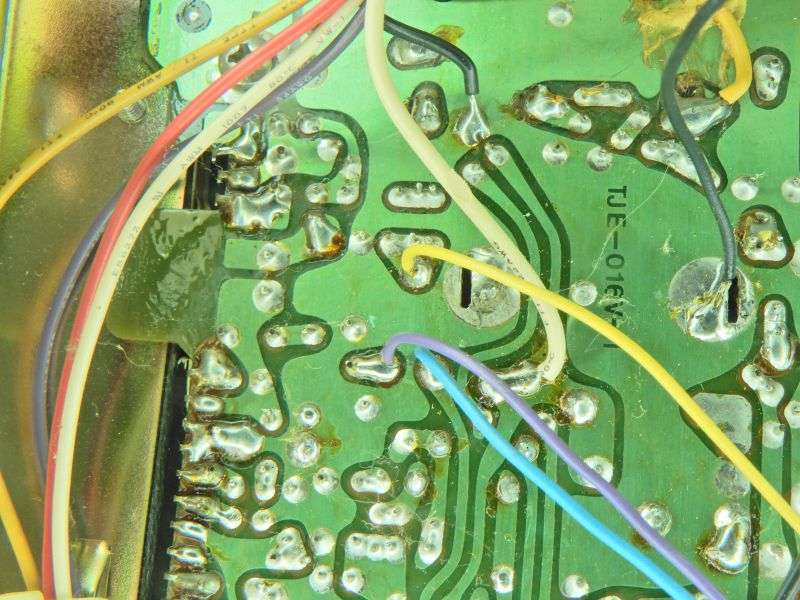
v7xcLJ.jpg


05dM5L.jpg


That's six wires.

In the first pic, a red wire going off the right is soldered to the AC/DC switch to obtain 13.8 VDC main power. The black wire goes to ground.

That's eight wires.
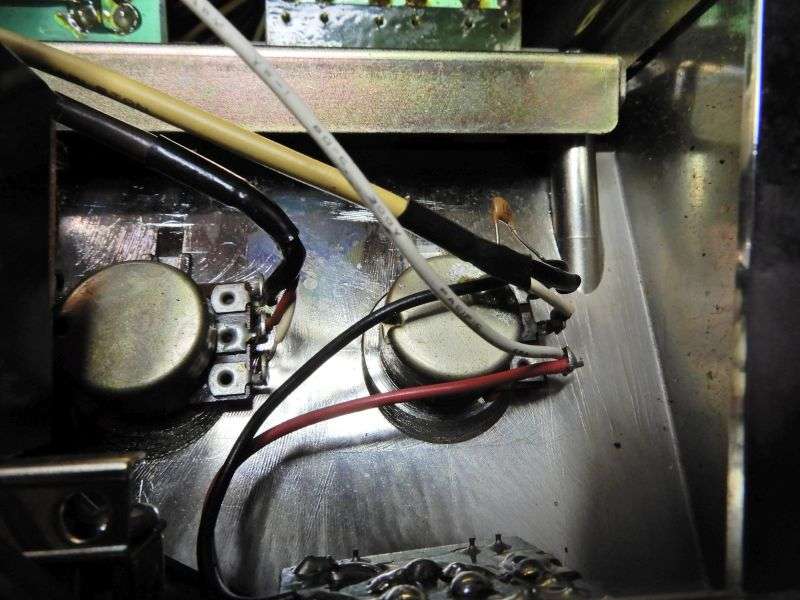
aUjFEU.jpg


The white wire goes to the clockwise lug of the mike gain control.

That's nine wires.

The last wire is green. It provides full 13.8 Volt DC to the yellow bias-test wire. This feeds full main power to the final transistor, the "power jump" that provides the same peak power on AM as sideband. Some folks like this some don't. But it doesn't seem to cause any loss of audio quality.
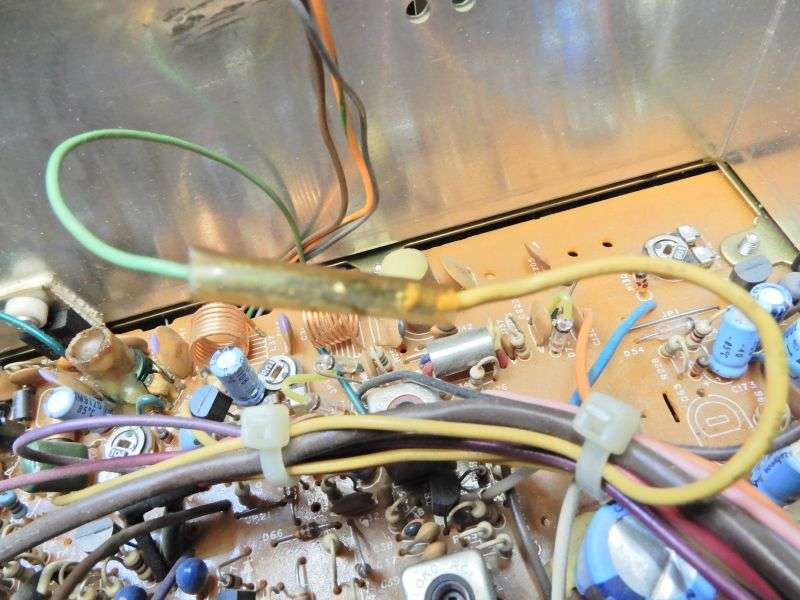
SnMxUK.jpg


That's ten wires total. Makes you think what's inside that lump of resin is pretty sophisticated, right?

The resin is just brittle enough to smash apart with a hammer.
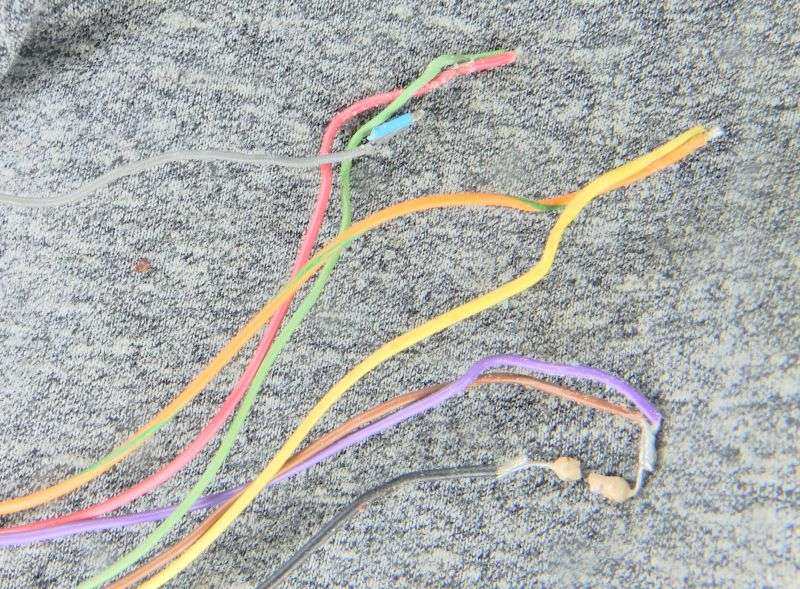
B0OJst.jpg


The white wire escaped. Fell on the floor. Wasn't connected. The blue wire broke, only a tiny bit of it remains. The resistor broke in half, but at least there is one electronic component in there. The resistor served to lower the minimum carrier wattage by placing it in parallel with R196, the factory resistor that sets the minimum carrier that VR10 can set.

So yeah, there's a part in there. And technically all but the white wire are connected to someting. If you call connecting them to each other "something".

We set up the radio's SWR Cal knob to control the radio's carrier after the turdectomy was performed.

I did shoot pics of how we do that, but it's bedtime. Maybe I'll cover that later.

73
I'd like to see the pics maybe its a better way then we do it.
 
I tried posting a link to a post I made a while ago. Some of the pics were missing. No idea why, and I can't edit a post that old to fix a hyperlink.

So here's another try:

Here is a procedure we have done so many times that a written description just never got made.

Kinda like folklore, just "handed down".

And scribbled in the margin of a Sams CB-251 schematic page.

A customer asked about this the other day, and I thought sure we had documented it some time in the last 20-plus years of digital photography around here. Turns out some pics got shot, and nothing was done with them. Until now. Just gotta send him a link to this post.

The Cobra 2000GTL is incredibly popular to modify. The second-most popular mod is to make the radio's SWR Cal control into the AM carrier power control. This setup will preserve the function of the radio's internal SWR meter. When the radio was stock, you keyed the mike and turned the Cal knob to hit a mark on the meter before flipping the switch the SWR to make a reading.

Now, when you set the switch to Cal and turn the Cal knob, the meter will follow the radio's carrier power. Typical carrier level to hit the Cal mark is about 3 Watts.

There is no separate trimpot to set the minimum carrier level. And it works best if the final transistor's "bias test" wire is connected to a continuous 14-Volt source. The proverbial "power jump" mode. Just be *VERY* sure you connect a milliammeter between the final's bias test wire and the post where it was connected. Key the mike with zero mike gain on either sideband. Set VR8 for 60 mA. Now you can clip the socket from the end of the wire, strip the end and solder it to the solder pad for the collector (center pin) of TR41. Sure, there are other spots to obtain full power-supply voltage, this is just the spot we use.

Wow, didn't need one picture for all that.

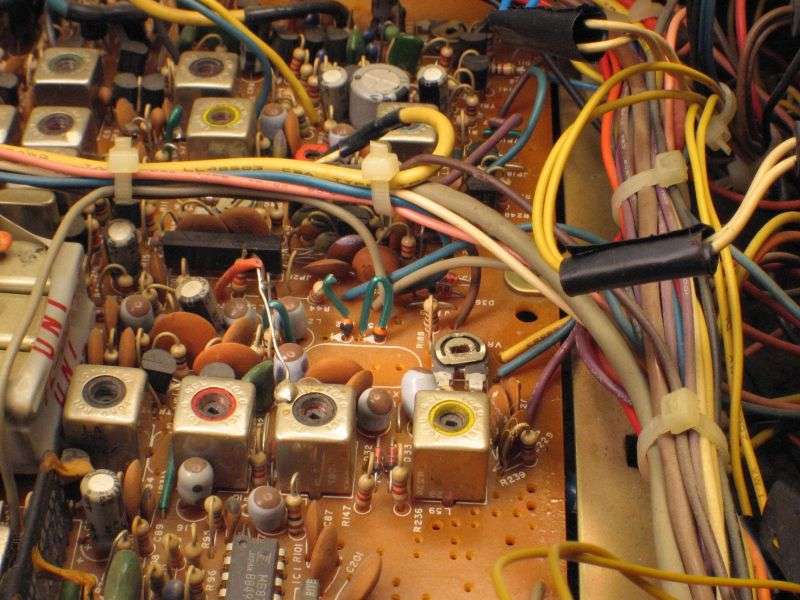
First step is to remove D52 and D75. These two diodes provide the transmit-only tuning voltage for the factory "fixed transmit" setup.

dNiROv.jpg


Okay, in real life you'll find them hiding behind the fat 11.325 crystal. This radio had an Expo 100 kit, so that crystal is not in its normal spot in this radio.


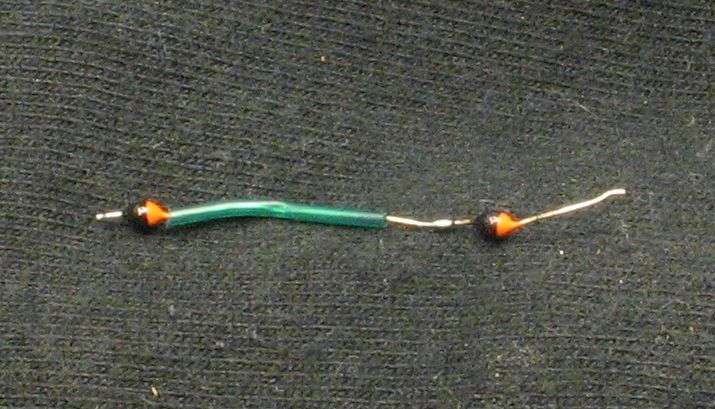
You already modded the clarifier so that the transmit frequency is "locked" to the receiver frequency, right? Well, only if you fancy using sideband at all. If these two diodes are missing, you can take four (yeah, 4) generic 1N4148 or equivalent diode and solder them in series string. It takes four normal single-junction diodes to replace the two tiny black diodes. Those actually contain two diodes in series inside each tiny black blob. Using D52 and D75 as a pair in series gives us the same voltage drop as four of the generic glass silican diodes.

YRRWtG.jpg


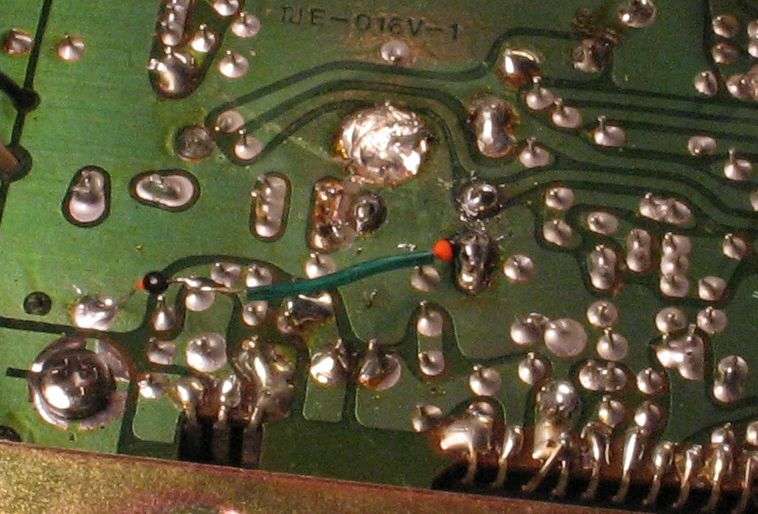
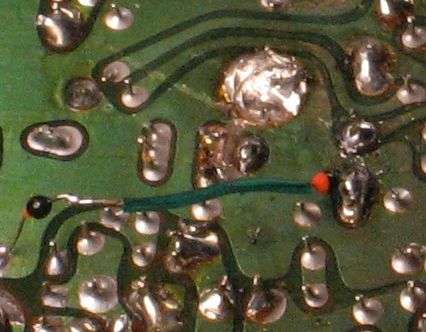
Where these go next is the outboard-facing lug of VR10, the carrier-control trimpot. If it's missing from your radio, either find a new 5k trimpot, or rob one from a derelict pc board. It's important, because it sets the max carrier with the SWR Cal knob full to the right. The unmarked end of our diode pair goes to that lug of VR10 nearest the outside of the radio. The end with the paint daub (or black band if you're using generic diodes} goes to a ground foil. There are plenty of them nearby to choose from. The one in the pic is just an example.

nW60C9.jpg


Next task is to find the center (wiper) lug of VR10 and cut the foil trace between the trimpot's lug and the circuits to the rear of the radio from there. We want to isolate VR10's center lug. I didn't get a terribly-clear pic of just this step, but you get the idea.

fmFEgJ.jpg


The three wires on the SWR Cal control are brown for CCW (left end) white for the wiper (center lug) and red for the clockwise lug. All 3 of these wires terminate at the outboard end of the flip-switch circuit board. Unsolder them from the board, and extend a piece of wire lap-soldered onto each one so they will reach VR10 comfortably. You don't need a pic for that, after all do you?

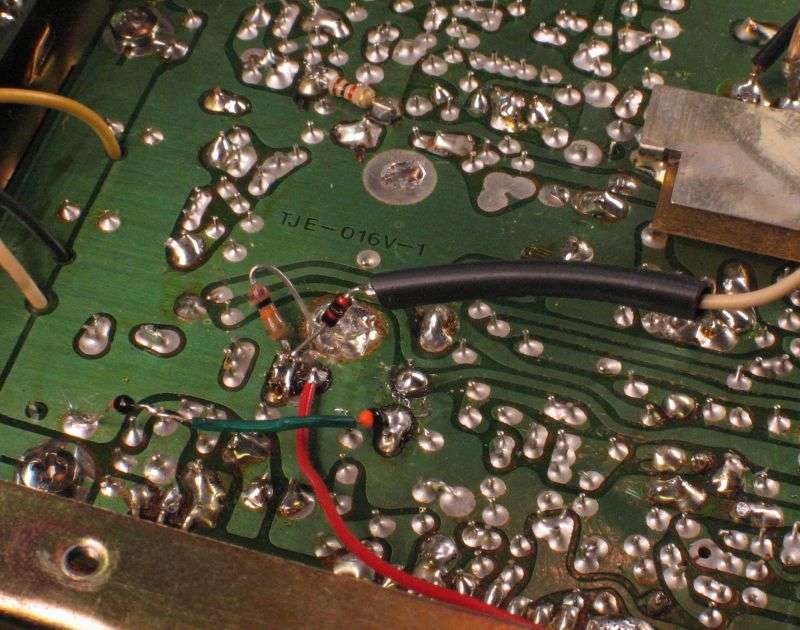
A 10k 1/4-Watt resistor gets one end soldered to the foil trace that we separated from the center pin of VR10. The other end goes to a convenient nearby ground foil of your choice.

tkFERB.jpg


The now-longer red wire from the SWR Cal's clockwise lug goes to the separated center pin of VR10.

dP1cnz.jpg


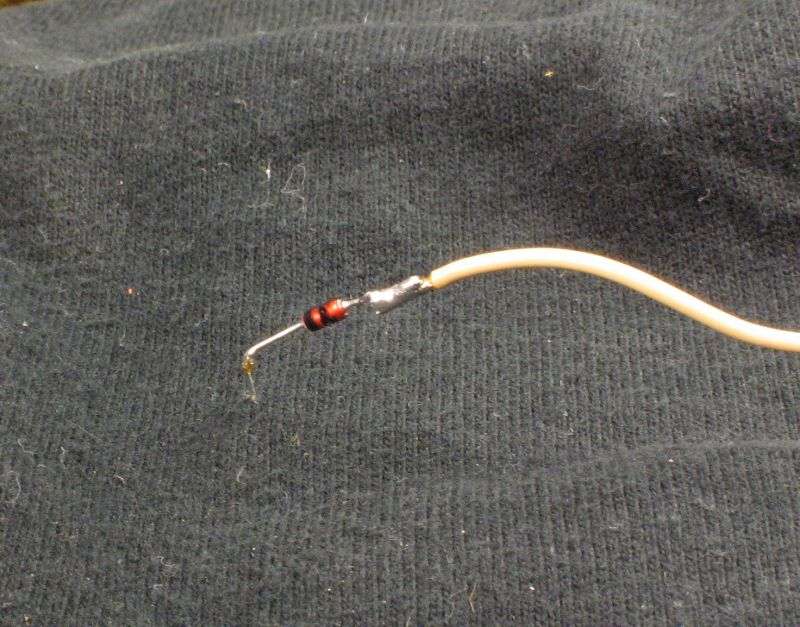
The now-longer white wire will get lap-soldered to the anode (not banded) end of a 1N4148 diode.

YN9Nxj.jpg


The cathode (banded end) of this diode gets soldered to the foil trace at the rear end of the cut, where the hot end of the 10k resistor is attached.

ohYSRn.jpg


Last step here is to slide the insulating sleeve over the white wire's diode and solder the now-longer brown wire to the outboard lug of VR10, where the anode end of the diode string is already soldered. You DID slide some insulation over the white wire before you soldered it, right?

Using the D52/D75 in series gets us around 2.4 Volts or so, regulated fairly well. Just so happens that when the carrier control is turned all the way down, it feeds into the added 1N4148 diode, so that about 1.8 Volts feeds into the AM modulator circuit, which feeds into the base of a 2SC945 transistor TR42, which now feeds about 1.2 Volts into the base of TR41, which gets us about 6/10 of a Volt coming out of the emitter of TR41, and just barely "ticks over" the driver transistor for a carrier power of around one or two tenths of a Watt minimum carrier with no need for another trimmer pot.

Final step is to take two 4.7k resistors and wire them in place of the front-panel control. This will fool the circuit into acting as if the original Cal knob were set to about 12 o'clock.

TrLBZx.jpg


Feel free to do any part of this setup differently, but literally hundreds of customers have decided they like this one over the decades. Your preference is for you to decide.

73
 
Last edited:

dxChat
Help Users
  • No one is chatting at the moment.