• You can now help support WorldwideDX when you shop on Amazon at no additional cost to you! Simply follow this Shop on Amazon link first and a portion of any purchase is sent to WorldwideDX to help with site costs.
  • A Winner has been selected for the 2025 Radioddity Cyber Monday giveaway! Click Here to see who won!

Cobra 2000 GTL frequency counter issue

Cable Guy

Growth must be chosen again and again.
I Support WorldwideDX.com!
Dec 29, 2010
1,094
1,169
173
413-West Tennessee
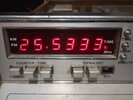
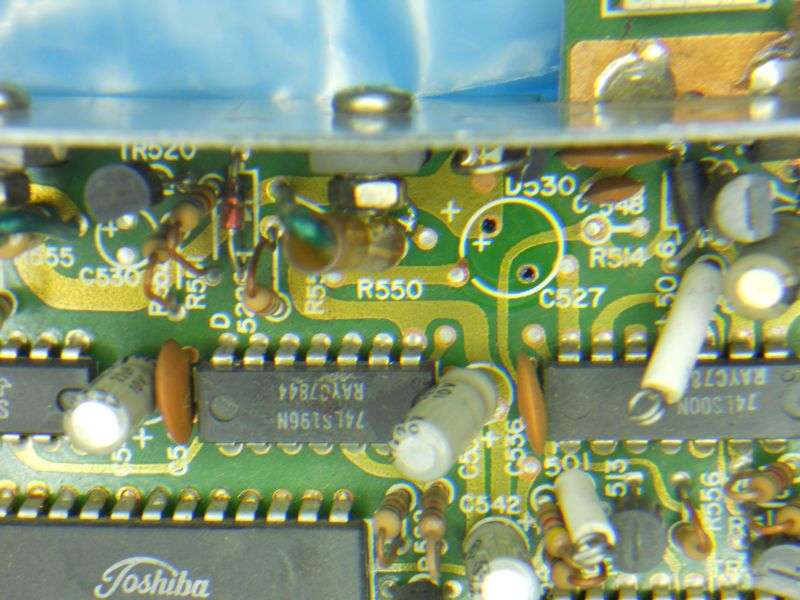
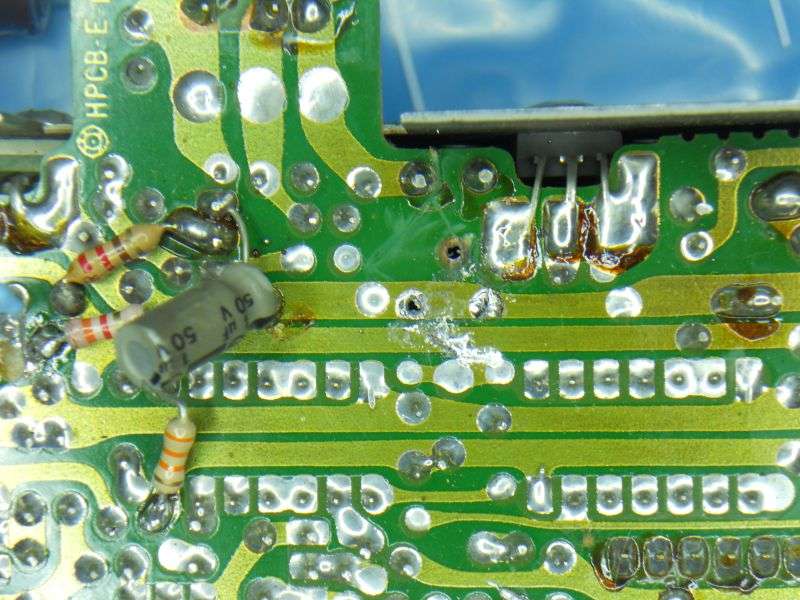
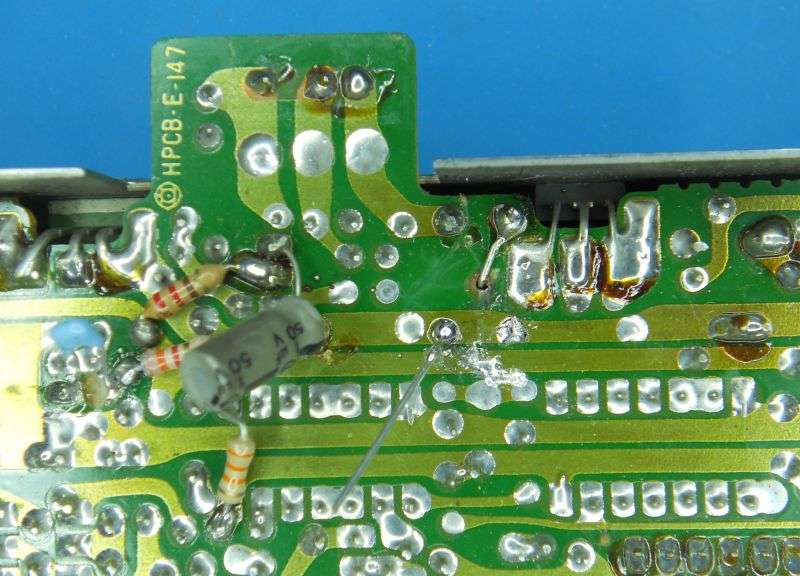
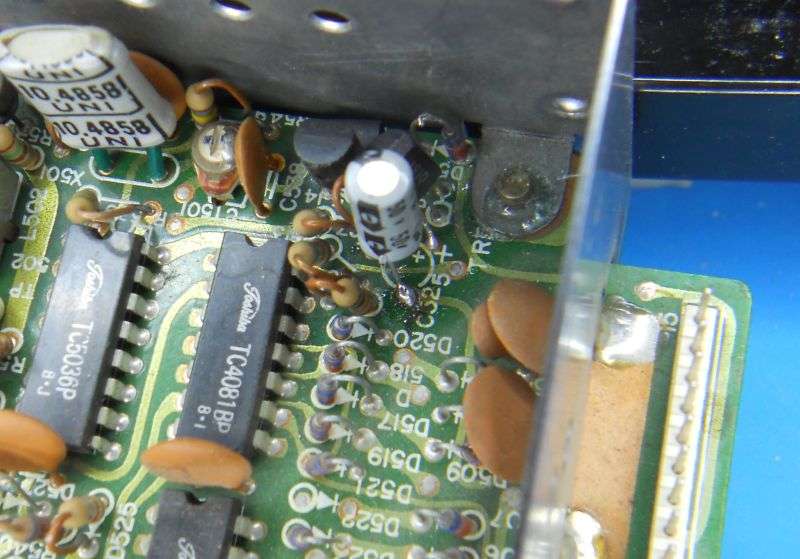
I was brought this radio to try to fix, dead as a door nail. Pin rot on the pll, fixed. Loop oscillator was shot, replaced. Meter driver transistor had pin rot, replaced. Faulty capacitor between audio chain stage, replaced. Came alive and worked. Ordered a cap kit and recapped entire rig, but the FC is giving issues. Sometimes it works, sometimes it does this regardless of channel...
IMG_20251028_111411019_HDR.jpg
It has been recapped, the TSB has not been done yet, will be if I can get it working, but no 92mhz displayed yet.
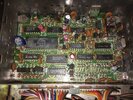
IMG_20251028_111423957.jpg
Manipulating the newly installed caps has no effect, so I don't think it's a loose connection and no vias were removed with the old caps, the recap went surprisingly well. The residue on the chips is from a cold spray to see if a thermal issue, no change.

Also, under am tx or ssb tx/rx, FC reads 33.3333. I'm concerned the 5032 could be faulty, I will probe it.
 
Last edited:

Try hot air. Cold causes contraction, and that might strengthen a bad connection. Heat causes expansion and might cause it to go open.

I wanted to dive into the FC schematic to make sense of it, but I got one step in and was in immediate disagreement with the service manual notes, so I am not sure what to do.

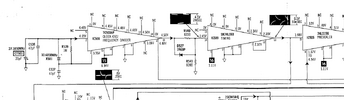
Cable Guy, maybe you can guide me to the truth here. Starting at the 10.4858MHz reference at the TC5036P (I assume its actually set to 10.48576MHz to get whole numbers from the divider), the datasheet says I should be dividing that by 2^17. That comes out to 80Hz. The next stage is a divide by 8, bringing it down to 10Hz. But if you look at the sams notes on the waveform, you see periods of 500Hz (2mS period) and 20Hz (50mS period) respectively. Edit: it was 5Hz, not 10Hz. It is dividing 40 by 8, not 80 by 8.

First, there is no way to get 500Hz out of a straight binary counter with 10.48xxMHz at the input. Second, a divide by 8 chip cannot take 500Hz down to 20Hz. That would be dividing by 25.
1761683698138.png
And who the heck would put 27MHz next to a 10MHz crystal lol (far left)?
 
Last edited:
  • Like
Reactions: Cable Guy
Wow, I didn't even see that 27.1850 mhz designator. Take a look at the cbtricks schematic and see if it makes sense. I have both, the cbtricks and Sam's, but I have shied away from in depth C2K FC issues because I just don't have the big picture on its operation, so I can't explain it. I'm hoping nomad comes by and drops a bone. I believe this FC supplies its own 7.8 mhz while in AM rx, but I don't know how. A circuit explanation would be very helpful.

I will try the hot air.
 
  • Like
Reactions: brandon7861
I haven't had a whole lot of time at work to look into how this thing works, but I think the NAND IC takes in the RF (7.8015MHz and 34.7665MHz on ch1) and alternately outputs 0.4s (2.5Hz) from each to the divider IC505. The delay between the 5Hz output from IC509 and the 2.5Hz output from IC510 allows the 0.2s (5Hz) gate time to get clean samples from each of the 0.4s windows of each signal at IC505 while simultaneously outputting the same/10 for the counter IC506. This divide by 10 at IC505 gets the signals under the 10MHz input limit of the counter.

From there, pure speculation.
I think the signal on Sin grabs the BCD outputs (which sequentially outputs each of the 6 decimal digits in BCD from each input signal) and the microcontroller IC502 takes those two 6-digit decimal values and subtracts them (0.69533-0.15603=0.5393MHzcounts/gate). Finally, the micro multiplies it by 50 to get 26.965MHz for outputting to the display digits.

Wish I had more time to stare at this. If I ever get my hands on a working one, I'll probe it and see what it really does.
 
Last edited:
  • Like
Reactions: Cable Guy
In sideband modes and AM transmit (only) the carrier input frequency is subracted from the VCO frequency. The TMS1000 mcu was found in Texas Instruments pocket calculators of the era. This one has a different program than the calculators, but it's mask programmed. The optical mask used to expose the silicon die contains the ones and zeros of the program code. Not "flash" erasable like a modern mcu. Always assumed that it subtracts the carrier frequency from the VCO frequency to display the difference. The "92.200" display in AM receive would reveal that it can't 'hear' the VCO input. Adding the 35 MHz VCO frequency to 92.2 is the same as subracting 7.8 MHz. With one difference. Adding them gives a result of 127 MHz not 27 MHz. No problem, since it only has enough digits to display 27.xxxx. Since there is no carrier input in AM receive, the program substitutes 92.200 to perform the arithmetic.

The early production of the counter connected the output of the VCO preamp chip directly to a logic gate input. There's a factory mod that inserts a disc cap between them. A pair of resistors set the gate input to about 3 Volts DC. A trace gets cut, the cap wired across it and the two resistors wired to the gate's input pin.

I'll see if I can find it at work. Don't have it here. Might be on the cbtricks.org site. I do remember that this mod cured some oddball behaviors. Just don't remember seeing the display stuck on that number.

73
 
  • Like
Reactions: Cable Guy
Hi,

I thought I had seen this somewhere.. so did a quick search.

--
Skyline
 
  • Like
Reactions: Cable Guy
Hi,

I thought I had seen this somewhere.. so did a quick search.

--
Skyline
I found that also, not sure what a kitchen tech is.

I haven't had a whole lot of time at work to look into how this thing works, but I think the NAND IC takes in the RF (7.8015MHz and 34.7665MHz on ch1) and alternately outputs 0.4s (2.5Hz) from each to the divider IC505. The delay between the 5Hz output from IC509 and the 2.5Hz output from IC510 allows the 0.2s (5Hz) gate time to get clean samples from each of the 0.4s windows of each signal at IC505 while simultaneously outputting the same/10 for the counter IC506. This divide by 10 at IC505 gets the signals under the 10MHz input limit of the counter.

From there, pure speculation.
I think the signal on Sin grabs the BCD outputs (which sequentially outputs each of the 6 decimal digits in BCD from each input signal) and the microcontroller IC502 takes those two 6-digit decimal values and subtracts them (0.69533-0.15603=0.5393MHzcounts/gate). Finally, the micro multiplies it by 50 to get 26.965MHz for outputting to the display digits.

Wish I had more time to stare at this. If I ever get my hands on a working one, I'll probe it and see what it really does.
Wow, I have verified signals into and around the various circuits and comparing frequency, amplitude and timing to another working counter and everything looks spec up to the 5032, then took a break.
In sideband modes and AM transmit (only) the carrier input frequency is subracted from the VCO frequency. The TMS1000 mcu was found in Texas Instruments pocket calculators of the era. This one has a different program than the calculators, but it's mask programmed. The optical mask used to expose the silicon die contains the ones and zeros of the program code. Not "flash" erasable like a modern mcu. Always assumed that it subtracts the carrier frequency from the VCO frequency to display the difference. The "92.200" display in AM receive would reveal that it can't 'hear' the VCO input. Adding the 35 MHz VCO frequency to 92.2 is the same as subracting 7.8 MHz. With one difference. Adding them gives a result of 127 MHz not 27 MHz. No problem, since it only has enough digits to display 27.xxxx. Since there is no carrier input in AM receive, the program substitutes 92.200 to perform the arithmetic.

The early production of the counter connected the output of the VCO preamp chip directly to a logic gate input. There's a factory mod that inserts a disc cap between them. A pair of resistors set the gate input to about 3 Volts DC. A trace gets cut, the cap wired across it and the two resistors wired to the gate's input pin.

I'll see if I can find it at work. Don't have it here. Might be on the cbtricks.org site. I do remember that this mod cured some oddball behaviors. Just don't remember seeing the display stuck on that number.

73
I can contend with the 92.200, but this 25/33.3333 mhz is weird. Apparently some of these boards have issues with solder adhesion to the foil and I want to look it over for that. Also I noticed when reflowing header pins that the joints keep bubbling up after removing the iron tip, often bursting right as it cools, creating ugly untrustworthy joints. I have had to clean the old solder off, flux and resolder. There is speculation about the foil composition, flux or solder used. I'm leaning toward the flux/solder causing oxidation on the foil from not wetting, the bubbling has me perplexed.
 
In sideband modes and AM transmit (only) the carrier input frequency is subracted from the VCO frequency. The TMS1000 mcu was found in Texas Instruments pocket calculators of the era. This one has a different program than the calculators, but it's mask programmed. The optical mask used to expose the silicon die contains the ones and zeros of the program code. Not "flash" erasable like a modern mcu. Always assumed that it subtracts the carrier frequency from the VCO frequency to display the difference. The "92.200" display in AM receive would reveal that it can't 'hear' the VCO input. Adding the 35 MHz VCO frequency to 92.2 is the same as subracting 7.8 MHz. With one difference. Adding them gives a result of 127 MHz not 27 MHz. No problem, since it only has enough digits to display 27.xxxx. Since there is no carrier input in AM receive, the program substitutes 92.200 to perform the arithmetic.

The early production of the counter connected the output of the VCO preamp chip directly to a logic gate input. There's a factory mod that inserts a disc cap between them. A pair of resistors set the gate input to about 3 Volts DC. A trace gets cut, the cap wired across it and the two resistors wired to the gate's input pin.

I'll see if I can find it at work. Don't have it here. Might be on the cbtricks.org site. I do remember that this mod cured some oddball behaviors. Just don't remember seeing the display stuck on that number.

73
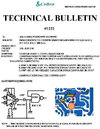
Is this the mod? It's the TSB I referenced..

3998-cobra-2000-counter-fix.jpg
 
I don't think the relevant part of that thread is that the guy's a kitchen tech (whatever that is), but the IC that he replaced to resolve his 25.5333 display issue. :LOL:
 
TSB 1232 says the factory included this resistor/cap mod from serial number 83012001 and up. Says to me they caught this design booboo before the end of 1978, if that's really what the radio serial number's first digit '8' is supposed to indicate.

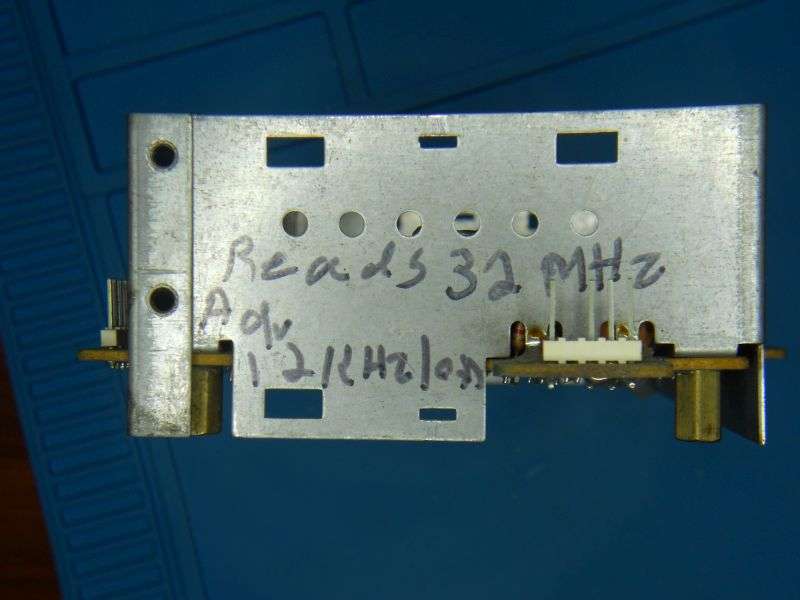
I misspoke when I said I had never seen this symptom. I pulled this derelict clock/counter module off the shelf to see if this mod was present. Not so as it turns out. Does say "Reads 32 MHz" on it. Not 33, but close. Might be the same fault causing it, maybe? Just forgot seeing it before this went onto the junk shelf.

33N1co.jpg


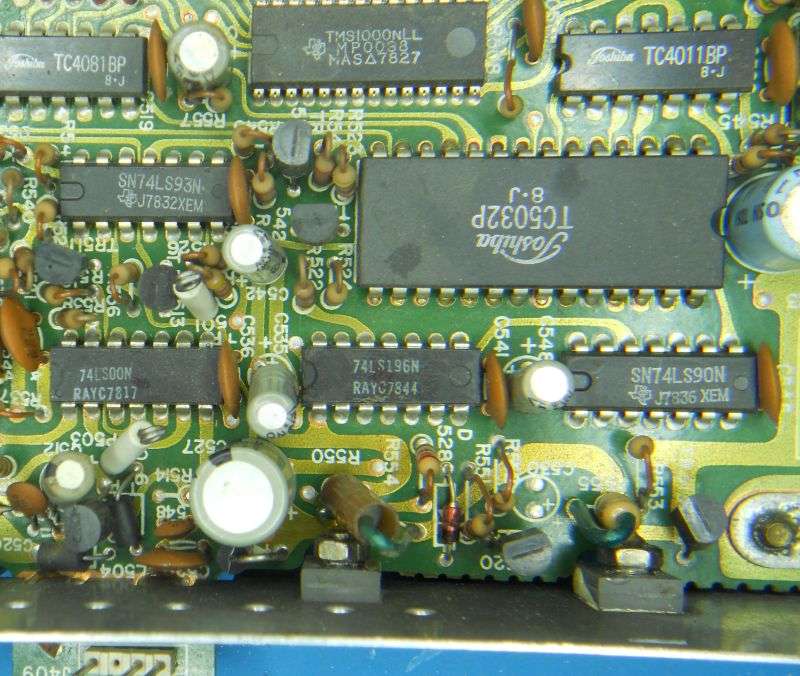
Date codes visible on several chips say 1978.

9QK8mN.jpg


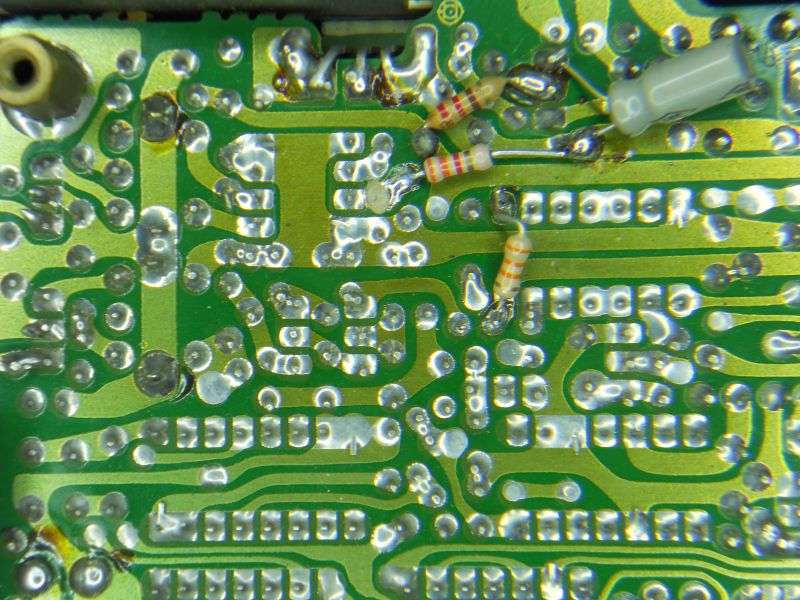
This unit is old enough it did not have the added disc cap and two resistors shown in the TSB.The foil trace with the gap cut into it leads to IC512 pin 3 on the left of the cut. The right-hand side of the cut leads to IC507 pin 1. The suggested physical placement of the two resistors looks a bit clumsy. Since they connect to IC507 pin 1, I arranged them as seen. Not so clumsy and crowded looking as the drawing in the TSB.

1UKukq.jpg


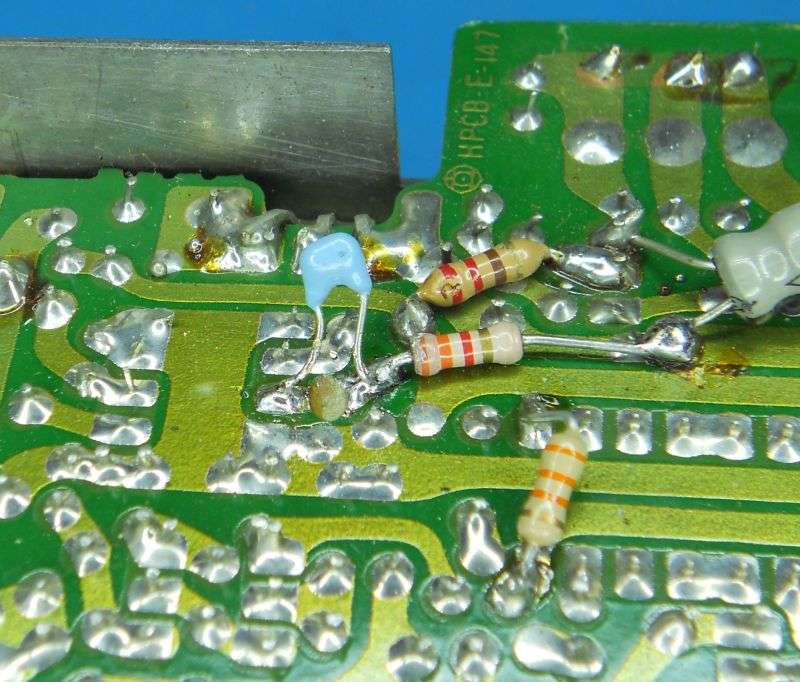
Clearly a small disc capacitor is best to fit in this tiny space. Bought a batch of this blue monolithic ceramic cap at the Dayton Hamvention flea market. Used them in all sorts of stuff.

He8TJf.jpg


Fits across the gap perfectly. Now to recap this module. Don't know if that will fix it, but the idea is to have a working clock/counter module on hand for the next repair customer who needs one. Or it will turn out to have more gremlins than just the TSB and electrolytic caps. Only one way to find out.

My favorite method for caps on a small double-sided board like this has been to "walk" a capacitor out, melting the solder on one lead, and leaning it over. Doesn't pull that lead out all the way, but repeating this for the other lead usually gets it out altogether. One more touch of the iron tip the the first one releases the cap altogether. Leaves only solder in the two holes. I have traditionally used our Hakko FR300 to suck the solder and leave two empty holes for the new cap. One drawback. Some caps have a foil trace on only the top side of the board. The "solder" side lead has only a copper doughnut on that lead. Doughnuts want to just slide off and be gone. Tonight my idiot light came on I touched the iron tip to the solder-only pad and just slapped the module against the silicone bench pad. Popped out the solder leaving a clean, empty hole. And NO damage to the doughnut pad. Shoulda thought of that decades ago.

One exception seems to be C527. It filters the unregulated input from the power supply.

xUBd7C.jpg


The brown circle is where the doughnut pad came away.

hyLOq9.jpg


But this pad has top-side foil connected to the cathode of the power-input diode D530. C527's positive lead gets bent over and around the cathode lead of D530. We call this patch the "combover".

BPgtlu.jpg


C525 is a 1uf cap at the front-right corner of the board. Has a doughnut pad under the negative lead. My preferred way to remedy this is to just stand it up enough to solder the top side foil directly.

9tSTQL.jpg


There are other caps on this pc board with a doughnut pad on one lead. The combover trick works for those. Now to replace the rest of them and find a 'test' radio to try it in.

Yeah, I know his counter was already re-capped. Just couldn't resist. Now we'll find out if this fixes the "32 MHz" fault scribbled in sharpie on the side of mine. If not, maybe I'll get that fixed on this one. If so, that fix might help with the counter reading "33". The TC5032 is spectacularly tricky to troubleshoot with a 'scope. Hope that's not the root of his problem.

Film at 11.

73

 
TSB 1232 says the factory included this resistor/cap mod from serial number 83012001 and up. Says to me they caught this design booboo before the end of 1978, if that's really what the radio serial number's first digit '8' is supposed to indicate.

I misspoke when I said I had never seen this symptom. I pulled this derelict clock/counter module off the shelf to see if this mod was present. Not so as it turns out. Does say "Reads 32 MHz" on it. Not 33, but close. Might be the same fault causing it, maybe? Just forgot seeing it before this went onto the junk shelf.

33N1co.jpg


Date codes visible on several chips say 1978.

9QK8mN.jpg


This unit is old enough it did not have the added disc cap and two resistors shown in the TSB.The foil trace with the gap cut into it leads to IC512 pin 3 on the left of the cut. The right-hand side of the cut leads to IC507 pin 1. The suggested physical placement of the two resistors looks a bit clumsy. Since they connect to IC507 pin 1, I arranged them as seen. Not so clumsy and crowded looking as the drawing in the TSB.

1UKukq.jpg


Clearly a small disc capacitor is best to fit in this tiny space. Bought a batch of this blue monolithic ceramic cap at the Dayton Hamvention flea market. Used them in all sorts of stuff.

He8TJf.jpg


Fits across the gap perfectly. Now to recap this module. Don't know if that will fix it, but the idea is to have a working clock/counter module on hand for the next repair customer who needs one. Or it will turn out to have more gremlins than just the TSB and electrolytic caps. Only one way to find out.

My favorite method for caps on a small double-sided board like this has been to "walk" a capacitor out, melting the solder on one lead, and leaning it over. Doesn't pull that lead out all the way, but repeating this for the other lead usually gets it out altogether. One more touch of the iron tip the the first one releases the cap altogether. Leaves only solder in the two holes. I have traditionally used our Hakko FR300 to suck the solder and leave two empty holes for the new cap. One drawback. Some caps have a foil trace on only the top side of the board. The "solder" side lead has only a copper doughnut on that lead. Doughnuts want to just slide off and be gone. Tonight my idiot light came on I touched the iron tip to the solder-only pad and just slapped the module against the silicone bench pad. Popped out the solder leaving a clean, empty hole. And NO damage to the doughnut pad. Shoulda thought of that decades ago.

One exception seems to be C527. It filters the unregulated input from the power supply.

xUBd7C.jpg


The brown circle is where the doughnut pad came away.

hyLOq9.jpg


But this pad has top-side foil connected to the cathode of the power-input diode D530. C527's positive lead gets bent over and around the cathode lead of D530. We call this patch the "combover".

BPgtlu.jpg


C525 is a 1uf cap at the front-right corner of the board. Has a doughnut pad under the negative lead. My preferred way to remedy this is to just stand it up enough to solder the top side foil directly.

9tSTQL.jpg


There are other caps on this pc board with a doughnut pad on one lead. The combover trick works for those. Now to replace the rest of them and find a 'test' radio to try it in.

Yeah, I know his counter was already re-capped. Just couldn't resist. Now we'll find out if this fixes the "32 MHz" fault scribbled in sharpie on the side of mine. If not, maybe I'll get that fixed on this one. If so, that fix might help with the counter reading "33". The TC5032 is spectacularly tricky to troubleshoot with a 'scope. Hope that's not the root of his problem.

Film at 11.

73
Thanks Nomad, lots of good stuff in there. "Combover" haha. I had 1 donut come away from the board, so I soldered from top side. I have a few nos 5032 chips if needed, but don't want to swap until I'm absolutely sure that chip is bad. To replace it, I would probably use a Dremel and cut the pins, destroying it, but it would make pulling it easier from the double sided board. The serial number is just below the TSB production change number so the mod should be applied regardless. I will dive back into it shortly.
 

dxChat
Help Users
  • No one is chatting at the moment.