I got this radio from a friend that has now passed on i have hooked the radio up and tested it and don't hear anything out of the speaker i am gonna replace the speaker and retest i am fixing to also download the schematic from cbtricks if possible is there anyone that could guide me in the right direction on fixing this radio.

You are using an out of date browser. It may not display this or other websites correctly.
You should upgrade or use an alternative browser.
You should upgrade or use an alternative browser.
-
You can now help support WorldwideDX when you shop on Amazon at no additional cost to you! Simply follow this Shop on Amazon link first and a portion of any purchase is sent to WorldwideDX to help with site costs.
-
The Winners of the three Retevis radios 16 Anniversary giveaway are announced!! Click Here to find out if you won!
E. F. Johnson Messenger 123SJ
- Thread starter TennAaron
- Start date

Here is the schematic for the messenger 123SJ... DanI got this radio from a friend that has now passed on i have hooked the radio up and tested it and don't hear anything out of the speaker i am gonna replace the speaker and retest i am fixing to also download the schematic from cbtricks if possible is there anyone that could guide me in the right direction on fixing thiHere
Attachments
I would check the tubes first to make sure they are good. I would also recommend considering a recap..Here is the schematic for the messenger 123SJ... Dan
i dont see any tubes inside its transistors i think i will post picture for yaI would check the tubes first to make sure they are good. I would also recommend considering a recap..
Must be newer than the one I was thinking of...i dont see any tubes inside its transistors i think i will post picture for ya
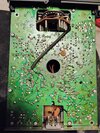
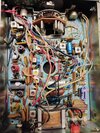
If that radio is over 40 years old I would consider a recap... I recommend Klondike Mike's for a recap kit...here is the pictures of it

I have one of those (and a 123A) in the parts bin. Standing by if you need parts.
Welcome to the forum!
Welcome to the forum!
Start with checking all the electrolytic caps with an ESR meter. Make sure you either mark them or take good pictures so nothing gets put in backwards.

Electrolytic capacitors are the suspects in this murder mystery. They will be marked for polarity. Some will have a "+" at one end, usually the end with rubber around the lead wire. Other caps will be marked "-". Naturally the plus side is the other end. Make a careful note which way the part you remove is marked, so the new cap agrees with the old cap's polarity. Most of the electrolytic caps in that radio are the axial style, with a lead wire coming out each end.
Newer capacitors may have both lead wires coming out the same end, called a radial package. Those nearly always mark only the negative side. So long as the wires will reach the holes in the circuit board, this part will sub for the axial part. May look clumsy, but if it reaches, it will work.
Changing them one at a time is a must. Too easy to lose track if more than one of them is removed at a time. Once you're done, have a close look with a bright light and a magnifier to make sure you have not "bridged" any adjacent foil traces with a drip of solder. Better to find one of those before you apply power and see magic smoke escape.
The mike is hard wired to that radio, no connector to unplug. The switch inside the mike serves to activate the speaker until you press the push-to-talk button. This mutes the speaker while transmitting. If the switch in the mike has dirty contacts, or if the cord has a bad wire in it, this can shut off the receiver audio, too. The bar-graph S-meter is a clue. If it bobs around on channel noise when an antenna is connected, that means the receiver should be feeding audio to the speaker. And if none of the bars light up on channel noise, that's not a good sign.
73
Newer capacitors may have both lead wires coming out the same end, called a radial package. Those nearly always mark only the negative side. So long as the wires will reach the holes in the circuit board, this part will sub for the axial part. May look clumsy, but if it reaches, it will work.
Changing them one at a time is a must. Too easy to lose track if more than one of them is removed at a time. Once you're done, have a close look with a bright light and a magnifier to make sure you have not "bridged" any adjacent foil traces with a drip of solder. Better to find one of those before you apply power and see magic smoke escape.
The mike is hard wired to that radio, no connector to unplug. The switch inside the mike serves to activate the speaker until you press the push-to-talk button. This mutes the speaker while transmitting. If the switch in the mike has dirty contacts, or if the cord has a bad wire in it, this can shut off the receiver audio, too. The bar-graph S-meter is a clue. If it bobs around on channel noise when an antenna is connected, that means the receiver should be feeding audio to the speaker. And if none of the bars light up on channel noise, that's not a good sign.
73

dxChat