• You can now help support WorldwideDX when you shop on Amazon at no additional cost to you! Simply follow this Shop on Amazon link first and a portion of any purchase is sent to WorldwideDX to help with site costs.
  • A Winner has been selected for the 2025 Radioddity Cyber Monday giveaway! Click Here to see who won!

Galaxy DX66V2 schematics

Scott Gardner

New Member
Mar 19, 2021
5
2
3
Utah
I have a dx66v2 that keeps popping the fuse when you key up the mic. I’m not that tech savvy but have already replaced the polarity diode that is generally the culprit. I’m looking for the schematics for this radio so I can maybe start to learn how to do the troubleshooting. Also any help would be appreciated.

update: when there is nothing hooked up to the coax connector (I know you shouldn’t do this, I thought my dummy load was hooked up but realized after the fact it wasn’t) the fuse will not blow when you key the mic but as soon as you hook up either the antenna or a dummy load and key up, the fuse blows.
 
Last edited:

Welcome to the forum! You'll find that posting a question about equipment failure will prompt a list of questions about what works and what doesn't. As a rule, you zero in on what's broke by first identifying the parts that are NOT broke, one by one.

polarity diode that is generally the culprit

If you have to key the mike to see this fault, you can take that diode right off the list. Only trouble it can cause will be the same with the radio's power either switched on or off.

If you have to turn on the power to trip a fuse that diode ain't it.

The new radios have a tendency to pop the transmitter's final-stage MOSFET transistor and also damage the modulator transistor at the same time.

Mostly it's caused by setting a tiny 'bias' trimmer pot for max power. Needs to be set for safe operating temperature. The 'max wattage' setting is also the max heat setting, and fastest-poof setting.

Do you have any way to unhook and test the final transistor?

A tripped fuse suggests one of two things. Either that trimpot is causing excessive current drain and the final hasn't popped yet.

OR

The final transistor has already failed. Maybe also damaging the modulator transistor.

OR, maybe you used the wrong size fuse? Didn't ask what size it wat that got tripped.

999 times out of 1000, the wrong size fuse found in a radio will be one that's rated for too much current.

But that one time out of a thousand, we find someone using a fuse that's just too small.

Just a thought.

73
 
  • Like
Reactions: NZ8N
So the fuse I used was a 5a fuse. I have a component tester I could use to test the finals (dual final radio) and I will get right in that. I don’t suppose you’d know what pot to adjust lol that’s been a big problem for me too… finding schematics. Anyway I will get on the finals right away
 
I don’t know which pot to adjust lol but it does sound like that is a viable option… update: I had a 3a slow popping fuse I used and it works just fine now so maybe it needs that? Anyway now I need to figure out the “blue light when it transmits” question he had. I have to get him to explain it better first though. Anyway, I did check the finals and driver and they all tested good so I soldered the back on and replaced the 5a fuse with the slow popping one and it all seems to be working now.
 

Attachments

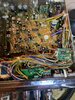
  • image.jpg
    image.jpg
    2.4 MB · Views: 14
Nvm still blowing fuses
I really need the schematics if anyone knows where to get them that would be well appreciated. I’m playing email/phone tag with galaxy radios about them now but if I can find them outside of this resource it may speed things up quite a bit
 
Nvm still blowing fuses
I really need the schematics if anyone knows where to get them that would be well appreciated. I’m playing email/phone tag with galaxy radios about them now but if I can find them outside of this resource it may speed things up quite a bit
Just to make the mention, but why not just send it to them for warranty repair. Last I knew they had a year warranty.

Could save you time and headache
 
why not just send it to them for warranty repair.

2 main reasons 1) no more warranty 2) I like to learn and learn by doing. I got the radio from a friend who said he had someone look at it but never could figure it out. I’m trying my hand at it with whatever help I can get. One way or another I would like to get a hold of the schematics though if for no other reason than to have in case something else goes wrong.
 
Somewhere on the main circuit board there should be a type number. Usually begins with the letters "EPT" followed by a string of digits, and a suffix letter at the end.

If the circuit board is documented elsewhere for some other brand and/or model, it could be a short cut around Galaxy's reluctance to share.

73
 
  • Like
Reactions: tecnicoloco

dxChat
Help Users
  • No one is chatting at the moment.