• You can now help support WorldwideDX when you shop on Amazon at no additional cost to you! Simply follow this Shop on Amazon link first and a portion of any purchase is sent to WorldwideDX to help with site costs.

Lightning L6 matching

I inherited this antenna setup from my uncle. Made a lot of contacts UK, Australia just a few. But this antenna setup has been a rabbit hole ever sense I got it. I had several lengths of coax. Depending on how I hook up the jumpers between radio,amp,meter and my multi point antenna connection my meter would change from 1.5 to a 2.75or some other random reading. So I seen where people would use 1/4 wave jumpers so I bought some rg400 and made several of 1/4 wave jumpers. Now my meter shows a flat 1-1 SWR across all the CB frequencies. So how can you trust any reading on a shack meter? Everything I have read and studied says when that happens it’s always an antenna mismatch. This leaves me with the only way to make sure it’s all right is to use an analyzer at the feed points. This got me over thinking the whole system. Just like what yall mentioned in previous post. I know this forum has a lot of experience operators and technicians. If I connect my analyzer at the switch in the shack it shows 35 ohm. I know that is a system reading and not antenna alone. Over all it seems to work ok but those SWR readings are always eating at me.
 
The SWR meter in the shack is probably telling the truth. Having an impedance match and having the system balanced are two different things.

When you change coax length and the SWR changes, it suggests the antenna is unbalanced and the outer shield of the coax is acting as part of the antenna. Changing the coax length changes the impedance looking down the outer shield, just like changing the length of a whip antenna changes its feed point impedance. Think of it like two antennas connected in parallel, the beam being one, and the outer surface of the coax leading back to the shack the other. If the beam's feed point impedance and this common-mode impedance looking down the shield combines to give 50ohm, you have a perfect SWR.

To prevent the coax length from affecting SWR, you would need some type of balun at the feed points. That applies to the analyzer as well. Since the system has proven itself to be unbalanced, you can expect the coax running down to your analyzer to also act like an antenna and lead to improper readings.
 
  • Like
Reactions: NZ8N
I've been wondering that too. I looked at the assembly instructions, and it looks like what would be a full wave loop driven at the corners is not. The wire eyelets go on the same post (corners connected, not a split feed point) with that corner driven against ground.

So then what kind of driven is it if not a full wave loop? An end-fed half-wave (wire frame) like having a single fat dipole? And would the termination on the unused coax affect it much?

Interesting for sure.
In a voltage fed loop. The high voltage point(the point of Max radiation) is at the same point as the feed point to the loop. Conversely 90 degrees from the feed point is voltage null (zero radiation) This is where the other feed line is terminated. So, when you voltage feed a loop at the 6:00 or 12:00 o'clock position(vertical polarization). The 3 and 9 o'clock position are at voltage null. So now you can place another feed line at the 3 and 9 position and it should not affect the vertical point (6 and 12 o'clock position) if the loop is resonant at the xmit frequency and the termination points are exactly 90 degrees from each other. This theory is somewhat the same principal as a circular beam.
It is still I good deal to use a switch box that grounds the unused coax when in operation. All Lightning quads used a voltage fed drive element. The tradition quad is a current fed loop (single polarity). The drive loop in this type of antenna has to be exact. If the drive element gets stretched in any type of way you will see some weird SWR readings because of the points listed above.
 
Last edited:
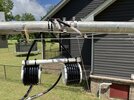
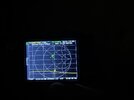
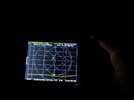
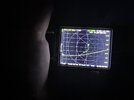
Should I unhook my feed lines from the antenna to test with an analyzer? I have a quarter wave @27.205 length of coax connected to the analyzer with clips for connecting to the boom and tuning stubs.View attachment 76402View attachment 76403
If you have the Rig-expert 55. It has the ability to be calibrated in such a manner so you can take the affect of the feed coax out of the equation.
 

dxChat
Help Users
  • No one is chatting at the moment.