

My Review of the Retevis MB4 CB Radio
I’ve been around enough CB radios to know when something breaks the usual pattern, and the Retevis MB4 definitely does. The moment I pulled it out of the box, it was obvious this wasn’t just another compact black box. Even though it has all the same features found in most modern CB's, what's different is that it’s a true single‑DIN CB radio, the kind you can slide right into a dashboard slot like a car stereo. That alone makes it stand out, and it gives RVers, truckers, and big pickup truck drivers a new option for a CB. Once I started using it, the MB4 turned out to be a surprisingly capable little unit with a mix of modern features and practical design choices that actually make sense in real‑world use.
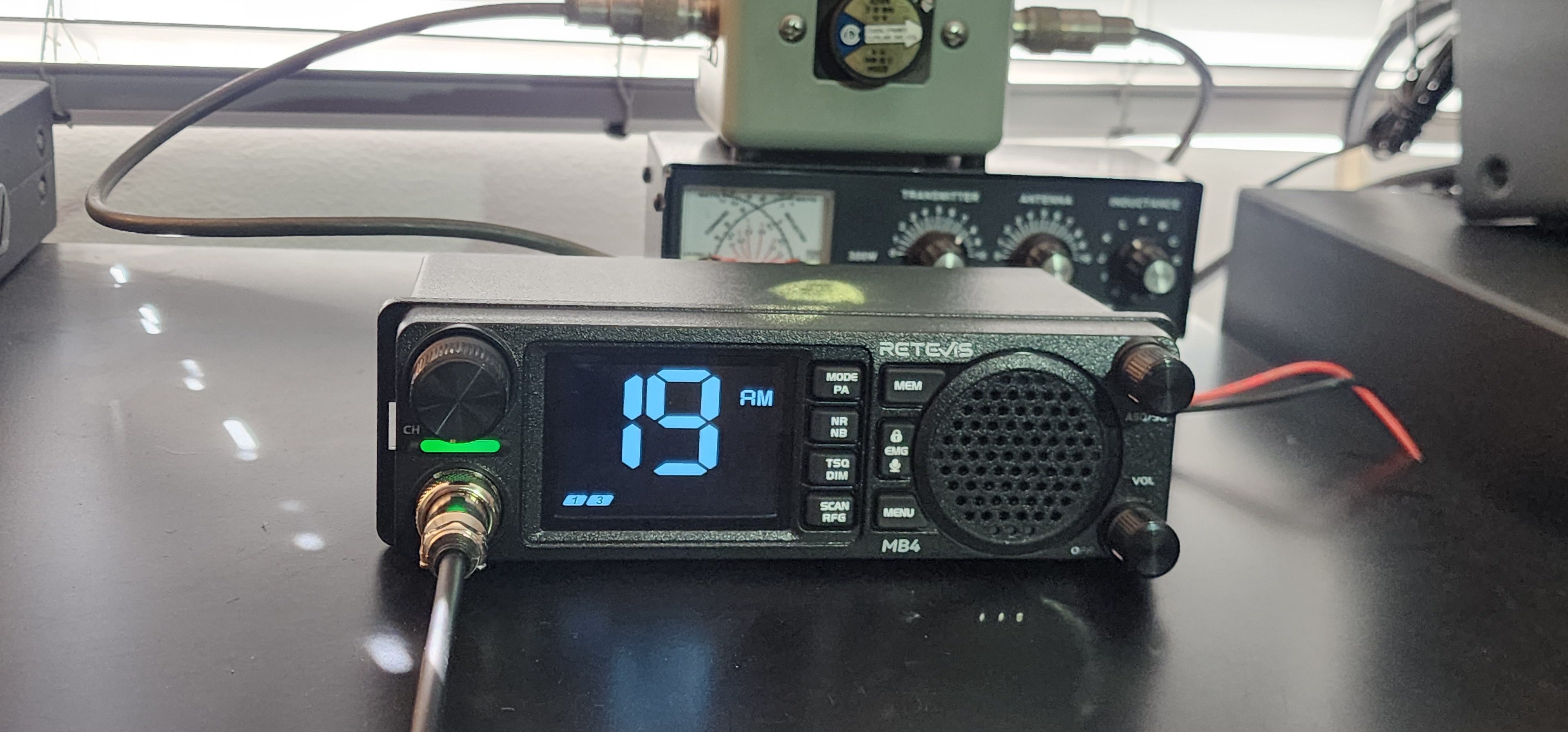
A Big, Clean Display and Straightforward Controls
The first thing that hits you when you power it on is the display. It’s huge, bright, and easy to read from anywhere in the cab. All of the main controls are simple and intuitive — channel knob, volume, squelch, scan, dimmer, RF gain, NR, etc. Nothing buried, nothing confusing. The dimmer only has three levels, but they’re enough to keep the screen from lighting up the whole vehicle at night.
The Forward‑Facing Speaker Is a Legitimate Advantage
One of the smartest design choices on this radio is the front‑facing speaker, which is not only a nice touch for DIN mounting, but also if you just want to include the regular, included mounting brackets. You almost never see that on CBs or even ham mobiles, and it makes a huge difference. The audio comes straight at you instead of firing downward or sideways. It’s loud, clear, and in most vehicles you won’t need an external speaker at all. For anyone who drives a noisy truck, Jeep, RV, or anything with a less‑than‑quiet cabin, this is a real quality‑of‑life upgrade.
Both DIN and Bracket Mounting Options Included
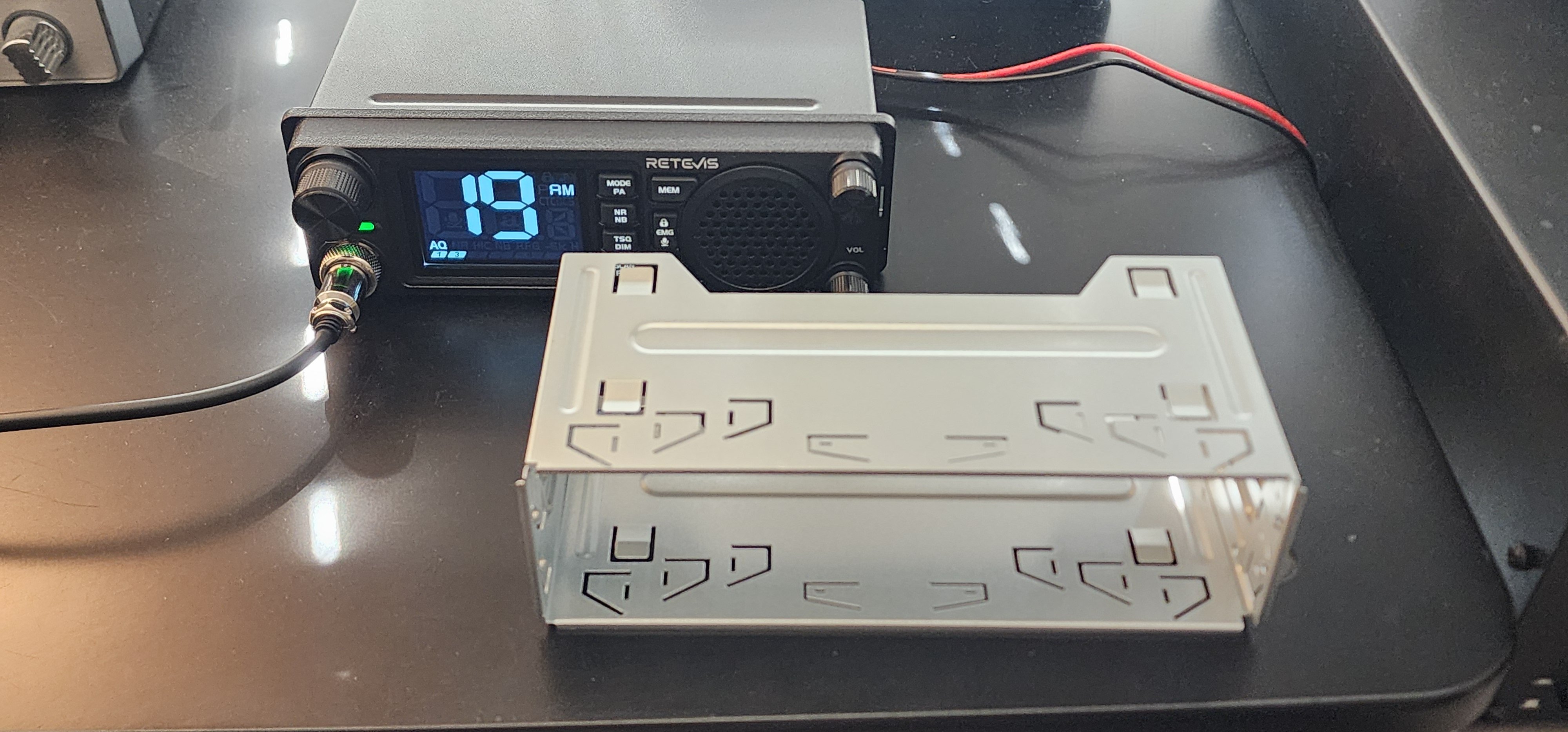
The MB4's uniqueness is the optional DIN mounting but it also includes all the standard brackets. The DIN bracket includes the keys for radio removal. Here's a pic of what the DIN bracket looks like:
AM and FM Sound Good
The MB4 supports both AM and FM, and FM is becoming more relevant now that it’s legal in many countries, including the U.S. The radio handles both modes cleanly. FM audio in particular is crisp and easy to listen to. AM transmitted audio is good and clear, but it doesn't have that "big boy" audio that many operators like with the stock mic. The good news is that the radio supports both an electret mic (included), or a dynamic mic by switching a setting in the menu.
Tone & code squelch (CTCSS/DCS) is available in FM mode, and the radio stores tone settings per memory channel. The only oddity is that the tones and codes are numbered instead of labeled, so you’ll need the manual’s chart to know which tone or code corresponds to the menu number. This implementation is the result of type type of screen used. If you're trying to change the tone/code squelch on the fly while talking to another operator using a different manufacture's radio, this will be an issue, but if you using these as preset, saved memories for use with a common traveling group (like your camping buddies), it won't matter much.
Memory Channels, VOX, and Other Useful Features
The MB4 gives you five memory channels, and each one remembers the channel, mode, and tone settings. It’s simple to program and just as simple to recall. VOX is another feature you don’t usually see on CB radios. It works well, and you can adjust both sensitivity and delay depending on how noisy your environment is. It’s handy if you want to hang the mic using a keeper and use it hands‑free. You could also wire up a headset easy enough. One note about the VOX feature: Retevis' website shows the VOX in use without the mic plugged in - that's not the way it works. You definitely need a mic.
TX and RX Noise Reduction
The radio includes both receive and transmit noise reduction, plus a traditional noise blanker. The receive noise reduction does a good job cutting down white noise and background hiss. It makes long listening sessions less fatiguing, especially in a mobile environment. The TX noise reduction cuts down on vehicle and road noise that might be picked up by the mic. One note: When you turn on NR, you're turning on both TX and RX noise reduction, even though the settings for each have their own menu settings. Like any DSP, it’s best used in moderation — crank it too high and you’ll start to lose some natural audio texture.
Power Output: Exactly What It Should Be
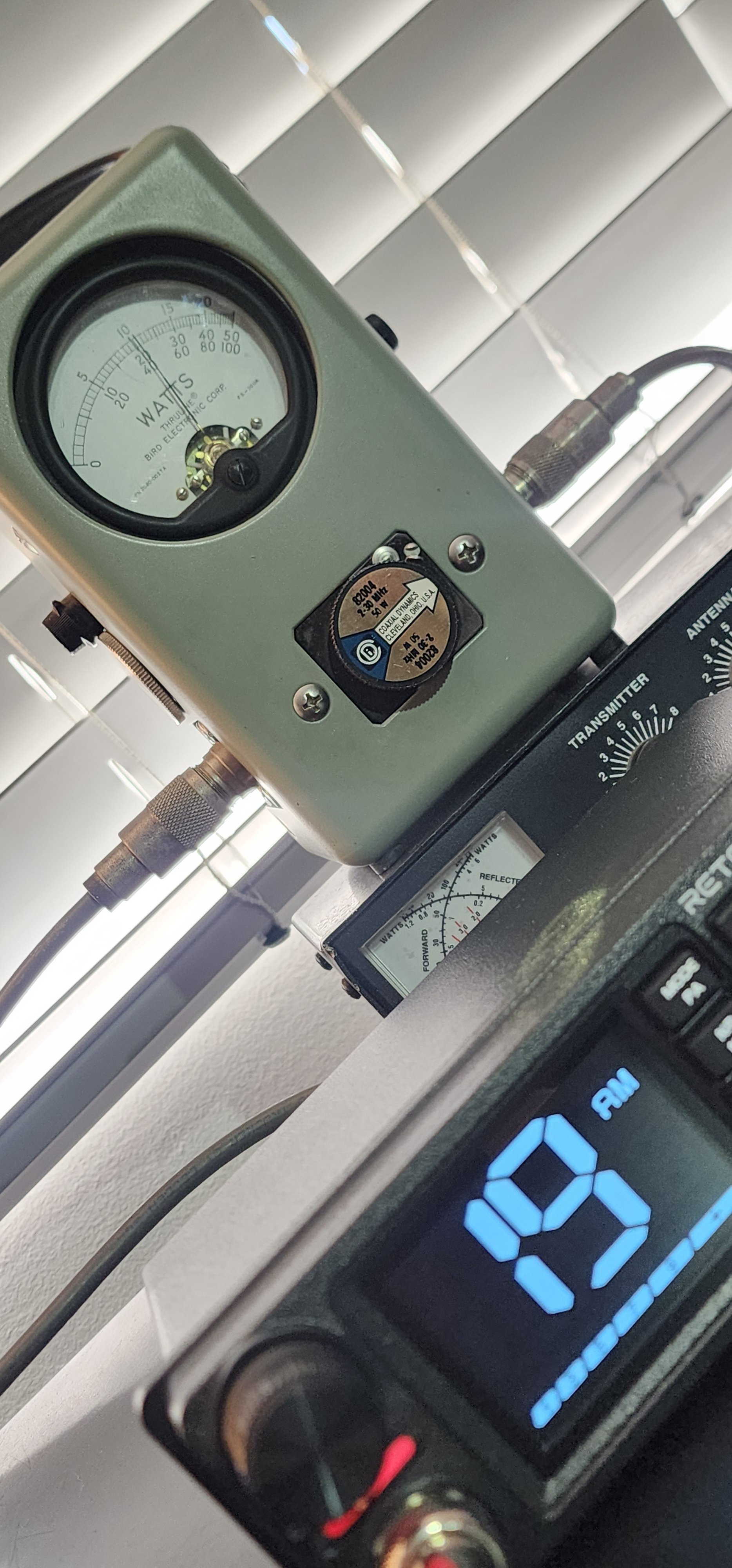
With a 12 volt supply on the meter, the MB4 does exactly what a legal CB should do. It puts out a solid 4‑watt carrier and hits 16 watts PEP on voice peaks. That’s textbook 4:1 modulation. when I used a supply voltage closer to a typical vehicle (14 volts), I saw 5 watts peaking at 20. All measurements were made using a Bird 43P meter with a 50 watt element.
Installation Notes (and One Thing I’d Change)
Since this is a DIN‑mountable radio, I checked the fit in my RV. in the dashboard slot, and it fit fine. While I didn't leave the CB installed, I actually pulled out the AM/FM radio to check the CB radio fit. There is one design flaw worth mentioning: the inline fuse is placed way too close to the radio. If it ever blows, you’d have to pull the whole unit out to replace it. The fix is simple, just cut the fuse holder off and relocate it to the battery side of the wiring. Once that’s done, the installation becomes much more serviceable.
If you're interested in this radio, Retevis is offering WorldwideDX.com members a $15 discount using code MB4CUT15 along with This Link on Amazon.
I’ve been around enough CB radios to know when something breaks the usual pattern, and the Retevis MB4 definitely does. The moment I pulled it out of the box, it was obvious this wasn’t just another compact black box. Even though it has all the same features found in most modern CB's, what's different is that it’s a true single‑DIN CB radio, the kind you can slide right into a dashboard slot like a car stereo. That alone makes it stand out, and it gives RVers, truckers, and big pickup truck drivers a new option for a CB. Once I started using it, the MB4 turned out to be a surprisingly capable little unit with a mix of modern features and practical design choices that actually make sense in real‑world use.
A Big, Clean Display and Straightforward Controls
The first thing that hits you when you power it on is the display. It’s huge, bright, and easy to read from anywhere in the cab. All of the main controls are simple and intuitive — channel knob, volume, squelch, scan, dimmer, RF gain, NR, etc. Nothing buried, nothing confusing. The dimmer only has three levels, but they’re enough to keep the screen from lighting up the whole vehicle at night.
The Forward‑Facing Speaker Is a Legitimate Advantage
One of the smartest design choices on this radio is the front‑facing speaker, which is not only a nice touch for DIN mounting, but also if you just want to include the regular, included mounting brackets. You almost never see that on CBs or even ham mobiles, and it makes a huge difference. The audio comes straight at you instead of firing downward or sideways. It’s loud, clear, and in most vehicles you won’t need an external speaker at all. For anyone who drives a noisy truck, Jeep, RV, or anything with a less‑than‑quiet cabin, this is a real quality‑of‑life upgrade.
Both DIN and Bracket Mounting Options Included
The MB4's uniqueness is the optional DIN mounting but it also includes all the standard brackets. The DIN bracket includes the keys for radio removal. Here's a pic of what the DIN bracket looks like:
AM and FM Sound Good
The MB4 supports both AM and FM, and FM is becoming more relevant now that it’s legal in many countries, including the U.S. The radio handles both modes cleanly. FM audio in particular is crisp and easy to listen to. AM transmitted audio is good and clear, but it doesn't have that "big boy" audio that many operators like with the stock mic. The good news is that the radio supports both an electret mic (included), or a dynamic mic by switching a setting in the menu.
Tone & code squelch (CTCSS/DCS) is available in FM mode, and the radio stores tone settings per memory channel. The only oddity is that the tones and codes are numbered instead of labeled, so you’ll need the manual’s chart to know which tone or code corresponds to the menu number. This implementation is the result of type type of screen used. If you're trying to change the tone/code squelch on the fly while talking to another operator using a different manufacture's radio, this will be an issue, but if you using these as preset, saved memories for use with a common traveling group (like your camping buddies), it won't matter much.
Memory Channels, VOX, and Other Useful Features
The MB4 gives you five memory channels, and each one remembers the channel, mode, and tone settings. It’s simple to program and just as simple to recall. VOX is another feature you don’t usually see on CB radios. It works well, and you can adjust both sensitivity and delay depending on how noisy your environment is. It’s handy if you want to hang the mic using a keeper and use it hands‑free. You could also wire up a headset easy enough. One note about the VOX feature: Retevis' website shows the VOX in use without the mic plugged in - that's not the way it works. You definitely need a mic.
TX and RX Noise Reduction
The radio includes both receive and transmit noise reduction, plus a traditional noise blanker. The receive noise reduction does a good job cutting down white noise and background hiss. It makes long listening sessions less fatiguing, especially in a mobile environment. The TX noise reduction cuts down on vehicle and road noise that might be picked up by the mic. One note: When you turn on NR, you're turning on both TX and RX noise reduction, even though the settings for each have their own menu settings. Like any DSP, it’s best used in moderation — crank it too high and you’ll start to lose some natural audio texture.
Power Output: Exactly What It Should Be
With a 12 volt supply on the meter, the MB4 does exactly what a legal CB should do. It puts out a solid 4‑watt carrier and hits 16 watts PEP on voice peaks. That’s textbook 4:1 modulation. when I used a supply voltage closer to a typical vehicle (14 volts), I saw 5 watts peaking at 20. All measurements were made using a Bird 43P meter with a 50 watt element.
Installation Notes (and One Thing I’d Change)
Since this is a DIN‑mountable radio, I checked the fit in my RV. in the dashboard slot, and it fit fine. While I didn't leave the CB installed, I actually pulled out the AM/FM radio to check the CB radio fit. There is one design flaw worth mentioning: the inline fuse is placed way too close to the radio. If it ever blows, you’d have to pull the whole unit out to replace it. The fix is simple, just cut the fuse holder off and relocate it to the battery side of the wiring. Once that’s done, the installation becomes much more serviceable.
Optional Mag‑Mount Antenna
Retevis also offers a simple mag‑mount antenna tuned for 27 MHz. It’s nothing fancy and is basically a clone of the old Radio Shack mag mount, but it works. I assembled it, stuck it on a vehicle, and it tuned up immediately without any adjustment. For casual users, it’s basically plug‑and‑play.Final Thoughts
After spending time with the Retevis MB4, I came away liking this little radio, if for no other reasons than the big display and the forward facing, loud speaker. It has all of the features that any modern AM/FM CBA has, but it's not trying to be a flashy, feature‑bloated radio. Retevis chose to make some practical design choices with this radio and they work.If you're interested in this radio, Retevis is offering WorldwideDX.com members a $15 discount using code MB4CUT15 along with This Link on Amazon.
