
You are using an out of date browser. It may not display this or other websites correctly.
You should upgrade or use an alternative browser.
You should upgrade or use an alternative browser.
-
You can now help support WorldwideDX when you shop on Amazon at no additional cost to you! Simply follow this Shop on Amazon link first and a portion of any purchase is sent to WorldwideDX to help with site costs.
-
The Winners of the three Retevis radios 16 Anniversary giveaway are announced!! Click Here to find out if you won!
Siltronix VFO 90-6 Info Needed
- Thread starter SuperLid
- Start date


I believe it is called a Seiler oscillator. Wikipedia has a brief example that mentions how the frequency is determined.
If you know the inductor value, the cap value should be fairly simple to approximate. Whatever the inductor's reactance is at your desired frequency, calculate the pF needed to equal the same reactance and then subtract the pF from the cap the tank connects to (27pF). Should get you close enough to tweak values the rest of the way.
edit: and I never understood why they drew the schematic upside down. This is a little easier to look at.
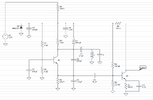
If you know the inductor value, the cap value should be fairly simple to approximate. Whatever the inductor's reactance is at your desired frequency, calculate the pF needed to equal the same reactance and then subtract the pF from the cap the tank connects to (27pF). Should get you close enough to tweak values the rest of the way.
edit: and I never understood why they drew the schematic upside down. This is a little easier to look at.
Last edited:
Nope....L value is unknown.I believe it is called a Seiler oscillator. Wikipedia has a brief example that mentions how the frequency is determined.
If you know the inductor value, the cap value should be fairly simple to approximate. Whatever the inductor's reactance is at your desired frequency, calculate the pF needed to equal the same reactance and then subtract the pF from the cap the tank connects to (27pF). Should get you close enough to tweak values the rest of the way.
edit: and I never understood why they drew the schematic upside down. This is a little easier to look at.
View attachment 75313
SL
I assume you are trying to convert a 5 to a 6 based on the other thread. Can't you just add a cap in the C15 spot and increase it until the frequency drops to what you want (7.8MHz)? If I try to calculate what inductor might be there based on the cap values shown for the 5, I would guess about 100pF or so is a good place to start. I think you mentioned 127pF in that thread.

Version six is sort of an orphan. They were dreaming to try and make it stable at 23 MHz. All the other models run at lower frequencies and drift less. The schematic for the 6 is different, so the widely-published schemo show capacitor values for the various versions, but skips from version 5 to version 7.
Oops.
The main tuning cap is too big to cover only the range of frequencies on the dial at 23 MHz, so a disc cap is placed in series with it to reduce the max capacitance. Pretty sure there's at least one other difference. Only thing we do with that model is convert it to a "3" for Browning Mark 3 use. The "6" just isn't stable enough, even after the usual measures are taken.
I'll have a look and see if we have any deeper detail at work next time I'm there.
73
Oops.
The main tuning cap is too big to cover only the range of frequencies on the dial at 23 MHz, so a disc cap is placed in series with it to reduce the max capacitance. Pretty sure there's at least one other difference. Only thing we do with that model is convert it to a "3" for Browning Mark 3 use. The "6" just isn't stable enough, even after the usual measures are taken.
I'll have a look and see if we have any deeper detail at work next time I'm there.
73

Based on SL's other thread, I believe it only has to be stable at 7.8MHz due to the tripler inside the radio. If it does have to be running at 23MHz, it might be possible to add a tripler and still use 7.8MHz. Just not sure how this would scale on the dial.Version six is sort of an orphan. They were dreaming to try and make it stable at 23 MHz. All the other models run at lower frequencies and drift less. The schematic for the 6 is different, so the widely-published schemo show capacitor values for the various versions, but skips from version 5 to version 7.
Oops.
The main tuning cap is too big to cover only the range of frequencies on the dial at 23 MHz, so a disc cap is placed in series with it to reduce the max capacitance. Pretty sure there's at least one other difference. Only thing we do with that model is convert it to a "3" for Browning Mark 3 use. The "6" just isn't stable enough, even after the usual measures are taken.
I'll have a look and see if we have any deeper detail at work next time I'm there.
73
The 6 does not operate at 23 MHz, it is 7.8 Mhz. The 6 was added later, as the early owners manuals state that the radios that use the 23 MHz crystals, will not work with the VFO. Later versions of the manual, that show the model 6, show the operating freq as 7.8 x 3 to get to 23 MHz. The radio sees the 3rd overtone. I have one operating that I modified from a 90-5, but the LC circuit values are different, as I only changed the C value, which is probably affecting the Q. The oscillator works, but the dial is not calibrated (after calibration). I could spend half my life, trying different values, but I would rather not. I am hoping someone out there has a 90-6, that can tell me the turns for L2 and the cap value.Version six is sort of an orphan. They were dreaming to try and make it stable at 23 MHz. All the other models run at lower frequencies and drift less. The schematic for the 6 is different, so the widely-published schemo show capacitor values for the various versions, but skips from version 5 to version 7.
Oops.
The main tuning cap is too big to cover only the range of frequencies on the dial at 23 MHz, so a disc cap is placed in series with it to reduce the max capacitance. Pretty sure there's at least one other difference. Only thing we do with that model is convert it to a "3" for Browning Mark 3 use. The "6" just isn't stable enough, even after the usual measures are taken.
I'll have a look and see if we have any deeper detail at work next time I'm there.
73
Thanks,
SL
Last edited:
I know you want a direct answer, so I'm only adding this in case you have to eventually brute-force it. Hopefully Nomad has the pics.
I would start with 4uH and about 110pF total (including trimmer) capacitance. This total capacitance can be increased to decrease the center frequency or vice versa. If the air variable produces too much frequency range, the inductance is decreased and the total capacitance is increased to compensate for the frequency change (or vice versa if the variable doesn't produce enough swing).
This may not line up perfectly with your circuit, but I figure there is useful information in the effects different combinations have.
For example, if I model (in simsmith) a parallel tank (with a Q of 250 as wikipedia recommends) and the 27pF tank isolation cap (from the schematic) in the signal path between a 1kohm source and load (to view the parallel resonance as a dip), a 2uH inductor in parallel with 208pF is 7.8MHz and 218pF is 7.6MHz, a swing of about .2MHz with 10pF change. If I change L to a 4uH inductor, 104pF is 7.8MHz and 114pF is 7.45MHz. If you want 1MHz of swing from a 10pF trimmer (tripler, so .333MHz of swing here), I figure 4uH would be pretty close. From the bad view I got of the inductor in mikesradiorepair's video, I don't think that inductor value is too far off. Hope you get it working!
edit: basically, the iterative process looks like this. Set the the VFO dial to a channel, preferably close to one end of the dial, adjust capacitance so frequency matches dial. Note that mikes video specifically states the cover must be on for this due to parasitics. If the other end of the dial doesn't match, either add or subtract tuning range by adjusting the inductor and repeat.
I would start with 4uH and about 110pF total (including trimmer) capacitance. This total capacitance can be increased to decrease the center frequency or vice versa. If the air variable produces too much frequency range, the inductance is decreased and the total capacitance is increased to compensate for the frequency change (or vice versa if the variable doesn't produce enough swing).
This may not line up perfectly with your circuit, but I figure there is useful information in the effects different combinations have.
For example, if I model (in simsmith) a parallel tank (with a Q of 250 as wikipedia recommends) and the 27pF tank isolation cap (from the schematic) in the signal path between a 1kohm source and load (to view the parallel resonance as a dip), a 2uH inductor in parallel with 208pF is 7.8MHz and 218pF is 7.6MHz, a swing of about .2MHz with 10pF change. If I change L to a 4uH inductor, 104pF is 7.8MHz and 114pF is 7.45MHz. If you want 1MHz of swing from a 10pF trimmer (tripler, so .333MHz of swing here), I figure 4uH would be pretty close. From the bad view I got of the inductor in mikesradiorepair's video, I don't think that inductor value is too far off. Hope you get it working!
edit: basically, the iterative process looks like this. Set the the VFO dial to a channel, preferably close to one end of the dial, adjust capacitance so frequency matches dial. Note that mikes video specifically states the cover must be on for this due to parasitics. If the other end of the dial doesn't match, either add or subtract tuning range by adjusting the inductor and repeat.
Last edited:
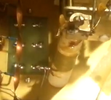
Interesting reply. I also have screengrabs from Mike's video, of the coil and caps. I can count what I *believe* is 13 turns and 10 pF in series and one in parallel.I know you want a direct answer, so I'm only adding this in case you have to eventually brute-force it. Hopefully Nomad has the pics.
I would start with 4uH and about 110pF total (including trimmer) capacitance. This total capacitance can be increased to decrease the center frequency or vice versa. If the air variable produces too much frequency range, the inductance is decreased and the total capacitance is increased to compensate for the frequency change (or vice versa if the variable doesn't produce enough swing).
This may not line up perfectly with your circuit, but I figure there is useful information in the effects different combinations have.
For example, if I model (in simsmith) a parallel tank (with a Q of 250 as wikipedia recommends) and the 27pF tank isolation cap (from the schematic) in the signal path between a 1kohm source and load (to view the parallel resonance as a dip), a 2uH inductor in parallel with 208pF is 7.8MHz and 218pF is 7.6MHz, a swing of about .2MHz with 10pF change. If I change L to a 4uH inductor, 104pF is 7.8MHz and 114pF is 7.45MHz. If you want 1MHz of swing from a 10pF trimmer (tripler, so .333MHz of swing here), I figure 4uH would be pretty close. From the bad view I got of the inductor in mikesradiorepair's video, I don't think that inductor value is too far off. Hope you get it working!
View attachment 75331
edit: basically, the iterative process looks like this. Set the the VFO dial to a channel, preferably close to one end of the dial, adjust capacitance so frequency matches dial. Note that mikes video specifically states the cover must be on for this due to parasitics. If the other end of the dial doesn't match, either add or subtract tuning range by adjusting the inductor and repeat.
I really don't want to spend a lot of time figuring this out. The DDS VFO's out there now, are very appealing and I have one to be delivered today, to play around with. I also plan to build one. Which is why I was hoping, someone has a 6, that can look under the covers for me. I do have it working, but the oscillator bandwidth is off. The dial will not calibrate 50 KHz out.
Also, I reached out, to the self proclaimed Siltronix VFO guru, who would not tell me the values, but he would sell me his book that contains the info, that allegedly took 1000 hours of his time to compile (on a 2 transistor oscillator mind you). I told him where he could stick his book.
BTW, the schematic for the model 6 does not exist in the public domain. As Nomad said, there is a series cap between L2 and the main tuning cap, which in Mike's video, shows 10 pF. The cap on L2, *might* be 10 pF as well.
One more thing of note. My first SSB radio, that I had to save and sell to buy used, in 1975, was a Unimetrics Stingray 1 (Lafayette Telsat SSB-50A with sky blue covers). It may have been the only one ever made, as I have never even seen a reference for it anywhere). I procured a 90-6 VFO for it and used a Turner Plus 3. I sold it all in the early 80's and miss that stuff. I am trying to relive my past and have a Hy-Gain 674B running the 90-5, that I modified. I would really like it to correctly work as a model 6. Eventually, I will get an SSB-50A, when I find *the one*.
Thanks,
SL
Attachments


Last edited:
The DDS VFO I ordered from Scamazon, was defective. Zero output. This has turned out to be a major PITA. Someone has to have one of the model 6 things hanging around.Interesting reply. I also have screengrabs from Mike's video, of the coil and caps. I can count what I *believe* is 13 turns and 10 pF in series and one in parallel.
I really don't want to spend a lot of time figuring this out. The DDS VFO's out there now, are very appealing and I have one to be delivered today, to play around with. I also plan to build one. Which is why I was hoping, someone has a 6, that can look under the covers for me. I do have it working, but the oscillator bandwidth is off. The dial will not calibrate 50 KHz out.
Also, I reached out, to the self proclaimed Siltronix VFO guru, who would not tell me the values, but he would sell me his book that contains the info, that allegedly took 1000 hours of his time to compile (on a 2 transistor oscillator mind you). I told him where he could stick his book.
BTW, the schematic for the model 6 does not exist in the public domain. As Nomad said, there is a series cap between L2 and the main tuning cap, which in Mike's video, shows 10 pF. The cap on L2, *might* be 10 pF as well.
One more thing of note. My first SSB radio, that I had to save and sell to buy used, in 1975, was a Unimetrics Stingray 1 (Lafayette Telsat SSB-50A with sky blue covers). It may have been the only one ever made, as I have never even seen a reference for it anywhere). I procured a 90-6 VFO for it and used a Turner Plus 3. I sold it all in the early 80's and miss that stuff. I am trying to relive my past and have a Hy-Gain 674B running the 90-5, that I modified. I would really like it to correctly work as a model 6. Eventually, I will get an SSB-50A, when I find *the one*.
Thanks,
SL
dxChat