
• You can now help support WorldwideDX when you shop on Amazon at no additional cost to you! Simply follow this Shop on Amazon link first and a portion of any purchase is sent to WorldwideDX to help with site costs.

SDR antenna transceiver switcher

Jolly Green

9CA203
I Support WorldwideDX.com!
Feb 24, 2025
30
106
43
FN35
Hello WDXers,

I'm running a SDR setup on RX and using a cheap PTT relay switcher box to TX with an IC-7300. It's so cheap, it's craptacular. TX bleeds through the SDR and it's fixing to eventually fry its input stage. And it starts to go bananas after a while and I have to "reset" it by unplugging it. Anybody got suggestions on something that has proper shielding and doesn't cost 500 bucks? Preamp would be nice but not necessary.
Obviously it has to work in the HF range, 100 Watts minimum.


The junk I got:
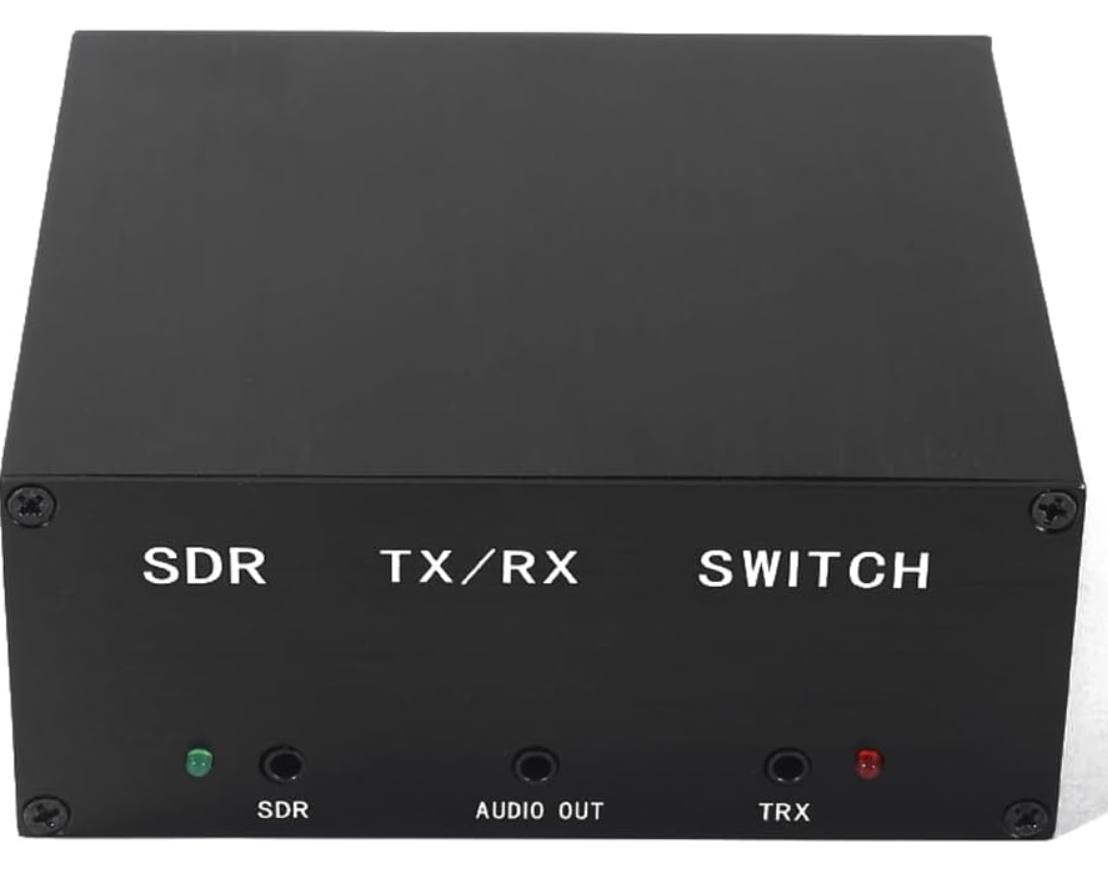
1776732648118.png


What I would REALLY like (local to me, like a twenty-minute drive, but the guy doesn't make them anymore)
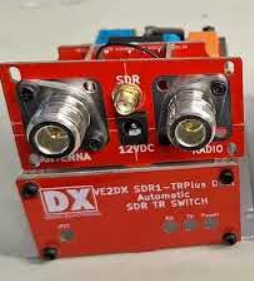
1776732853942.pnghttps://www.youtube.com/watch?v=GZqQC2HlnAo


Might consider these, but no idea on its innards. Anybody try these?
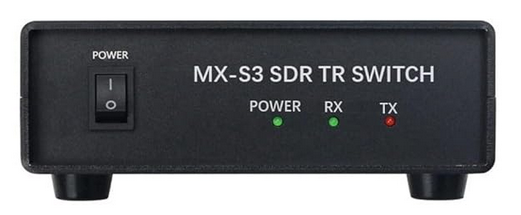
1776732772334.png


Interesting but expensive. There's also a no-preamp version. Still no idea on quality but some say it has as much as 100 dB isolation.
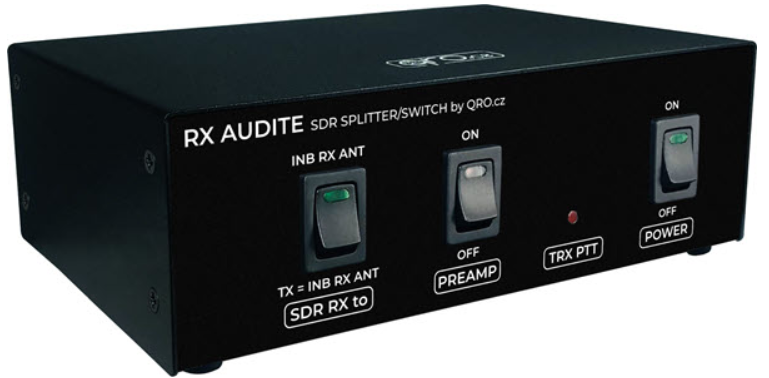
1776732969046.pnghttps://www.dxengineering.com/parts/qro-rx-auditepre


I'm open to info and suggestions here.


Cheers, mates.
 

Maybe I'm missing something, but WHY would you use an SDR for a receiver when you're using an IC-7300?? Surely the 7300 is a superior receiver in every way to the SDR? Just curious..........
Here are the main reasons.

Better spectrum visualisation on a 4k screen with 10Mhz span.
Simultaneous RX with virtual VFO.
Superior noise filtering and equaliser handled by software.

So, yeah, I still have a problem to solve. :D
 
Last edited:
I haven't tried this myself, but the following is very cheap to make and looks quite promising.


edit: Forgot to say, but I would add that to your existing sdr switch - receiver chain, not just replace it with this.

I examined this and it looks sound. At first I was afraid it might induce attenuation, but it looks manageable especially at HF frequencies or by choosing lower capacitance diodes.

At any rate, I wish to fix the root problem and replace the switcher and then see if this is still necessary.
 
I run both the MX-S3 and the earlier version (MX-S1) in my shack. The IC-7200/R-75 pair sitting next to me has an S1 attached.

Key differences:

S1 allowed for switching the transceiver audio (when off or in TX) on the SDR audio (when on, in RX). S3 has several PTT line connections - two of which go to ground on transmit, one more is selectable (N/O or N/C) on TX.

I use an S1 with my Ten Tec transceiver/receiver combos. An Omni V/VI or Paragon II is run in conjunction with an RX-320D and the receiver's audio output is run to the S1's RX Audio connection. The S1 audio output - along with that of the transceiver - goes to an audio control console; its main function here is simply to mute the audio when the transceiver is transmitting.

S3 is used with IC-718/R-75 combos. I run two receivers with one transceiver and employ a power divider to share the RX Ant output from the S3. Remember the multiple PTT connections? These are used to mute the R-75s when the 718 goes into transmit.

In both cases I attach a Receiver Protector to the RX Ant output of the switch - even though that connector is effectively relay-shorted to ground on TX.

Both have worked well for me. I'll be happy to answer any questions about them.
 
I run both the MX-S3 and the earlier version (MX-S1) in my shack. The IC-7200/R-75 pair sitting next to me has an S1 attached.

Key differences:

S1 allowed for switching the transceiver audio (when off or in TX) on the SDR audio (when on, in RX). S3 has several PTT line connections - two of which go to ground on transmit, one more is selectable (N/O or N/C) on TX.

I use an S1 with my Ten Tec transceiver/receiver combos. An Omni V/VI or Paragon II is run in conjunction with an RX-320D and the receiver's audio output is run to the S1's RX Audio connection. The S1 audio output - along with that of the transceiver - goes to an audio control console; its main function here is simply to mute the audio when the transceiver is transmitting.

S3 is used with IC-718/R-75 combos. I run two receivers with one transceiver and employ a power divider to share the RX Ant output from the S3. Remember the multiple PTT connections? These are used to mute the R-75s when the 718 goes into transmit.

In both cases I attach a Receiver Protector to the RX Ant output of the switch - even though that connector is effectively relay-shorted to ground on TX.

Both have worked well for me. I'll be happy to answer any questions about them.
Thanks for the info! I've had my eye on the MX-S3 but I've never seen any pics of its innards. I'd expect at least some minimal distanciation and or shielding between antenna traces and ports, like in VE2DX's unit:

2026-04-30_14-57.png
 
Not sure I would, to be honest.

That sequential triggering on the guardian whereas the bypass occurs a split second before the TX path is open sounds awesome. And when you let go the key, TX is cut before the bypass is disabled. It seems to me that it should protect the SDR for real. Also I noticed that the relay and RF bits are physically isolated in their own shielded compartments. There also seems to be an LNA in there, presumably for some extra gain for simultaneous receive on the SDR and transceiver. Might even act as an extra layer of protection. Looks superior to everything I've found so far on the net.

I went ahead and ordered it. Will report back once I've tested it.

In the youtube vid he demos his prototype at the 7 minute mark.


s-l16003.jpg
 
I'm not sure what benefits you'd gain from this particular design, unless your transceiver incorporates TX En/TX Out control lines (like certain Ten Tecs did). The key line of a QSK amp (e.g., 420 Hercules) was connected in series with the TX Out port and another line ran back from the amp to the TX En port on the transceiver. This gave the amp adequate time to sequence before the transmitter was commanded hot.

If all you're using is a standard mic with your rig and there isn't a way to insert the SDR switch into the transmitter key line, you lose this utility. The time delay actually becomes counterproductive, as you want the receiver antenna connection to immediately drop when the key line goes active.

Speaking of: The correct way to do this is a solid (always-on; hard wired) connection from transmitter to antenna, with the SDR's antenna connection facilitated via relay. It's disconnected when the device is off, connected only when the switch is powered and in RX mode and disconnected (preferably shunted to ground) when the TX goes active.

Be highly suspect of any such device which puts a relay of any sort in the TX path itself. Things do fail open or burn out.

I'm not sure what the CW In/Out function is going to buy one when utilizing full break-in, either, if there's an appreciable differential between the rig's T/R timing and that of the SDR switch. I can see a delay being introduced for the secondary receiver coming back to full sensitivity. Not an issue if you're using the transceiver's RX and filter sections to copy transmissions. It WILL be a problem when using the SDR for same, particularly during QRQ operation.
 

dxChat
Help Users
  • No one is chatting at the moment.