• You can now help support WorldwideDX when you shop on Amazon at no additional cost to you! Simply follow this Shop on Amazon link first and a portion of any purchase is sent to WorldwideDX to help with site costs.

Browning Mark: 4 old dog ponders new trick.

nomadradio

Analog Retentive
I Support WorldwideDX.com!
Apr 3, 2005
8,623
14,379
698
Louisville, KY
www.nomadradio.com
The Browning Mark 4A receiver has one crystal for each band it covers. The factory installed one at 22.82 MHz for channels 1-27 and 23.14 for channels 28-59. There was a crystal available to cover 32 channels below channel 1, 22.5 MHz.

They were available for years from Barkett Electronics, but I'm gonna try out a more high-tech alternative.

Stumbled across QRP Labs. https://qrp-labs.com/

In particular they sell a pc board with a SI5351 frequency synthesizer chip, the same "DDS" frequency source used in the Troy Radio gadgets. This one has no controls, other than three binary input pins. It's shrunk down to fit inside a HC6/U crystal can. My plan is to use three wires from the radio's front-panel band switch as inputs to this board.

They call it the ProgRock. https://qrp-labs.com/progrock2.html
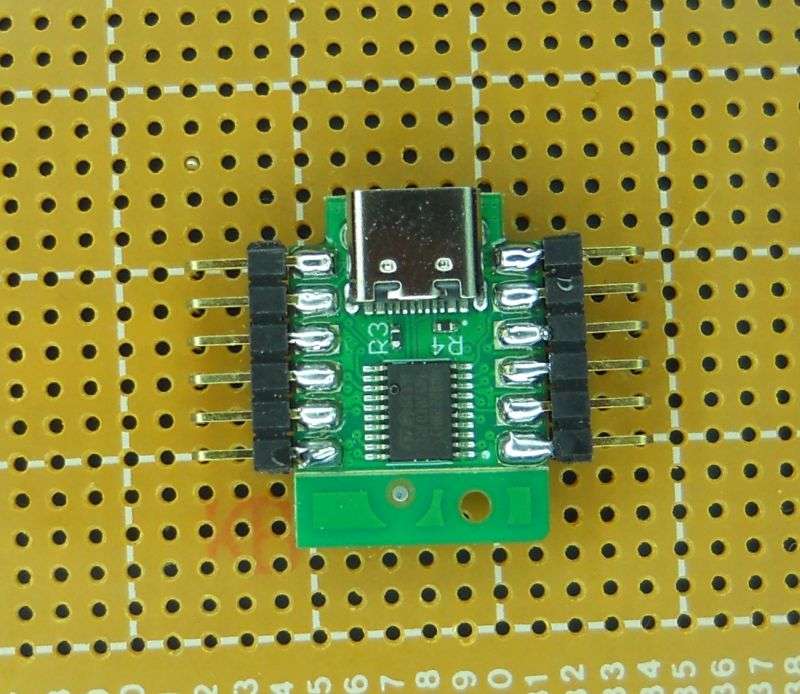
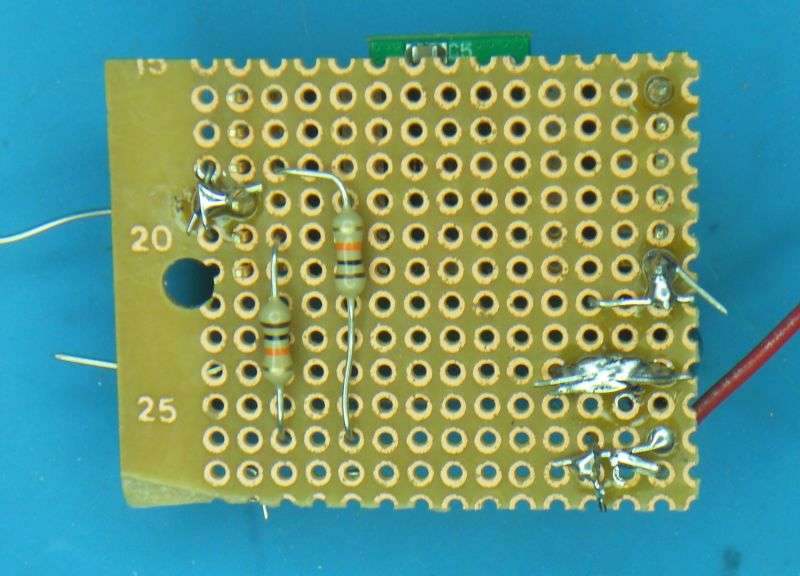
Pke2m4.jpg


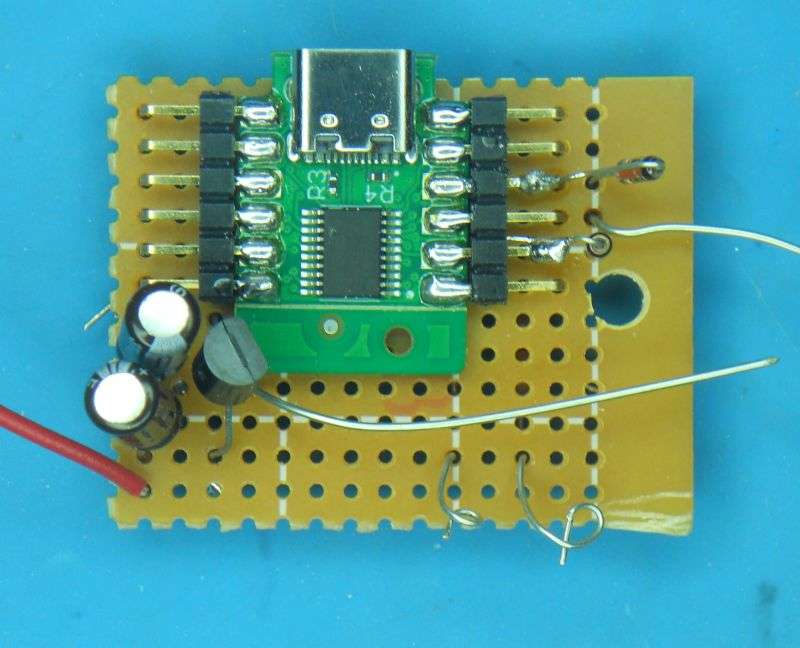
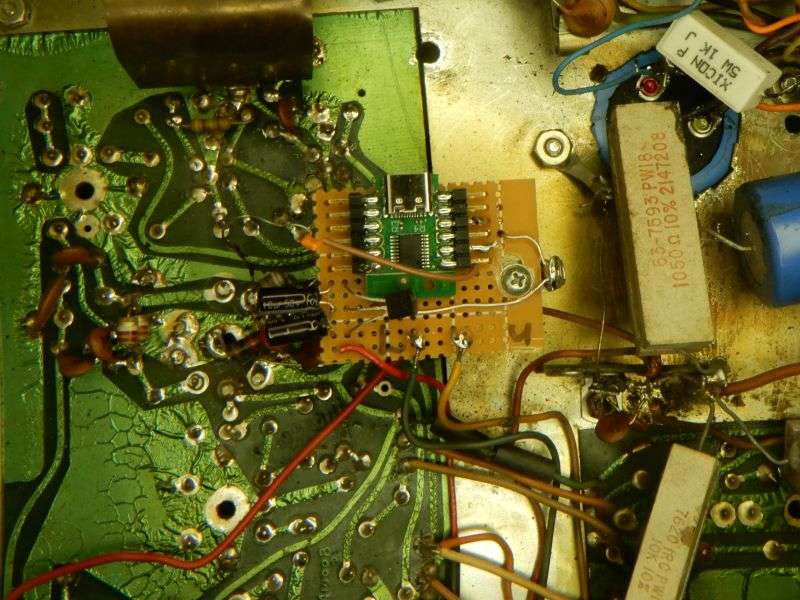
I added the right-angle pins to make prototyping easier.

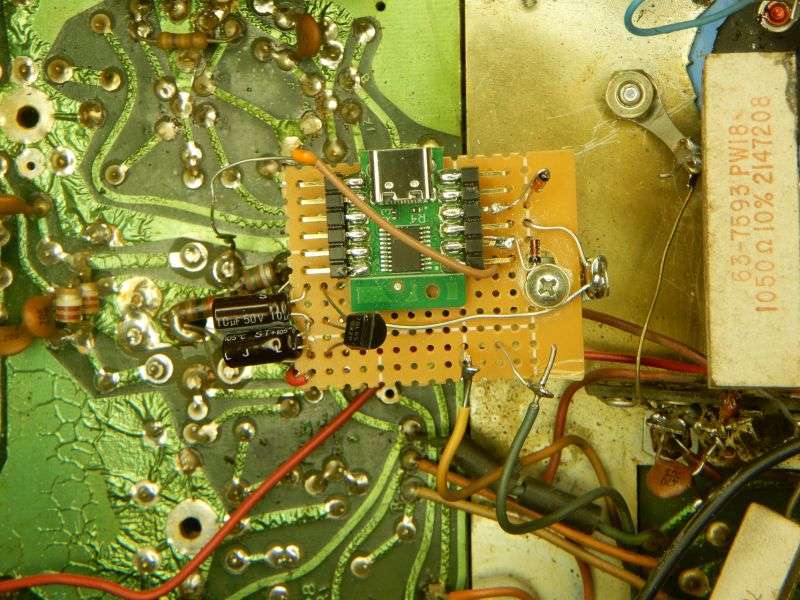
The mock-up here hasn't even been soldered together. The idea is to just replace the factory board and its crystals.
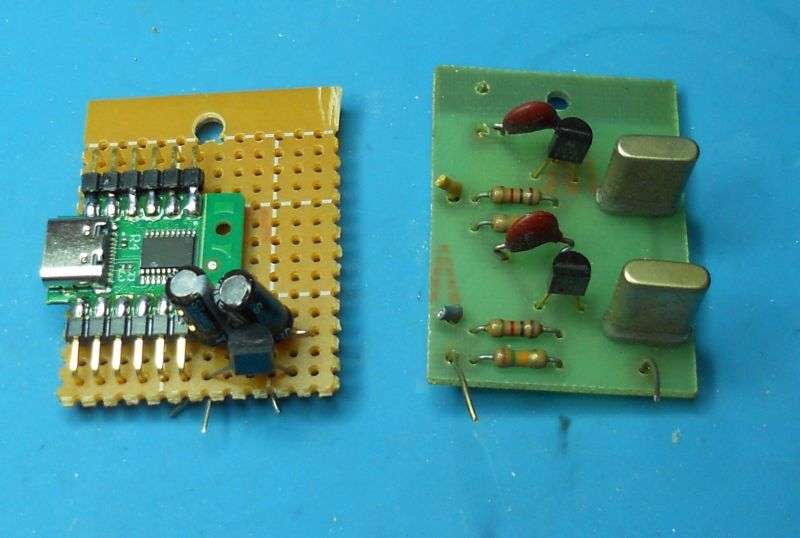
7hjX6G.jpg


The ProgRock is eighteen bucks plus shipping. About what you'd pay for just one crystal.

Maybe.

My ultimate ambition is to make a pc board to use in either this receiver or the Mark 3. That will require a rectifier and filter to use the 6.3 Volt AC heater power to run it. The Mark 4A has a source of 11 Volts DC. A simpler place to start from.

Film at 11.

73
 

The Browning Mark 4A receiver has one crystal for each band it covers. The factory installed one at 22.82 MHz for channels 1-27 and 23.14 for channels 28-59. There was a crystal available to cover 32 channels below channel 1, 22.5 MHz.

They were available for years from Barkett Electronics, but I'm gonna try out a more high-tech alternative.

Stumbled across QRP Labs. https://qrp-labs.com/

In particular they sell a pc board with a SI5351 frequency synthesizer chip, the same "DDS" frequency source used in the Troy Radio gadgets. This one has no controls, other than three binary input pins. It's shrunk down to fit inside a HC6/U crystal can. My plan is to use three wires from the radio's front-panel band switch as inputs to this board.

They call it the ProgRock. https://qrp-labs.com/progrock2.html

Pke2m4.jpg


I added the right-angle pins to make prototyping easier.

The mock-up here hasn't even been soldered together. The idea is to just replace the factory board and its crystals.

7hjX6G.jpg


The ProgRock is eighteen bucks plus shipping. About what you'd pay for just one crystal.

Maybe.

My ultimate ambition is to make a pc board to use in either this receiver or the Mark 3. That will require a rectifier and filter to use the 6.3 Volt AC heater power to run it. The Mark 4A has a source of 11 Volts DC. A simpler place to start from.

Film at 11.

73
I will be following this, I have a few friends who run old radios on the weekly Old Tube Radio Network that try to keep them alive, this may keep a few more on the air.
Thank you Chris.

73
Jeff
 
This project hasn't quite made it to the breadboard and jumper-wire stage. Seems like starting with a schematic would be wise. I hear echoes of my dad who wouldn't let me touch his pile of wood "scraps" before showing him a drawing of what I was making. And how much of his wood supply I would ruin.

gKCXYG.jpg


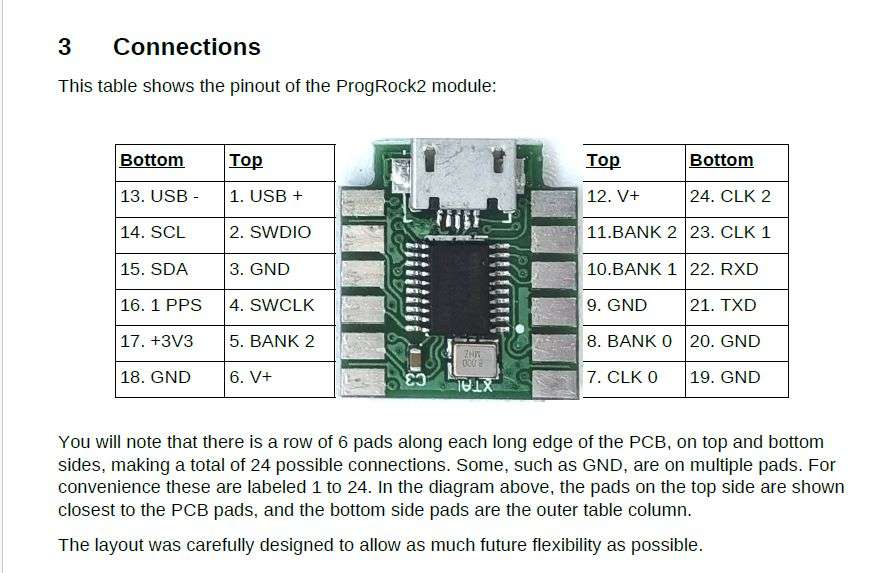
Here's the pinout of the Prog Rock synthesizer module. It has twelve foil pads on the top side of the pcb. And another twelve on the bottom side. For simplicity I'm using only the top-side pads Makes it more convenient connecting to the right-angle "spider leg" pins alone. The bottom side pads will be clumsy to reach and connect to this way. The input voltage on our two band-select inputs should not exceed 3.3 Volts DC. I puzzled over the board's 3.3 Volt regulator output appearing on the lower side only. I considered some clumsy ways to borrow power from that pad, and use it to feed a 3-Volt logic high signal through the band selector switch. Seemed the logical way.

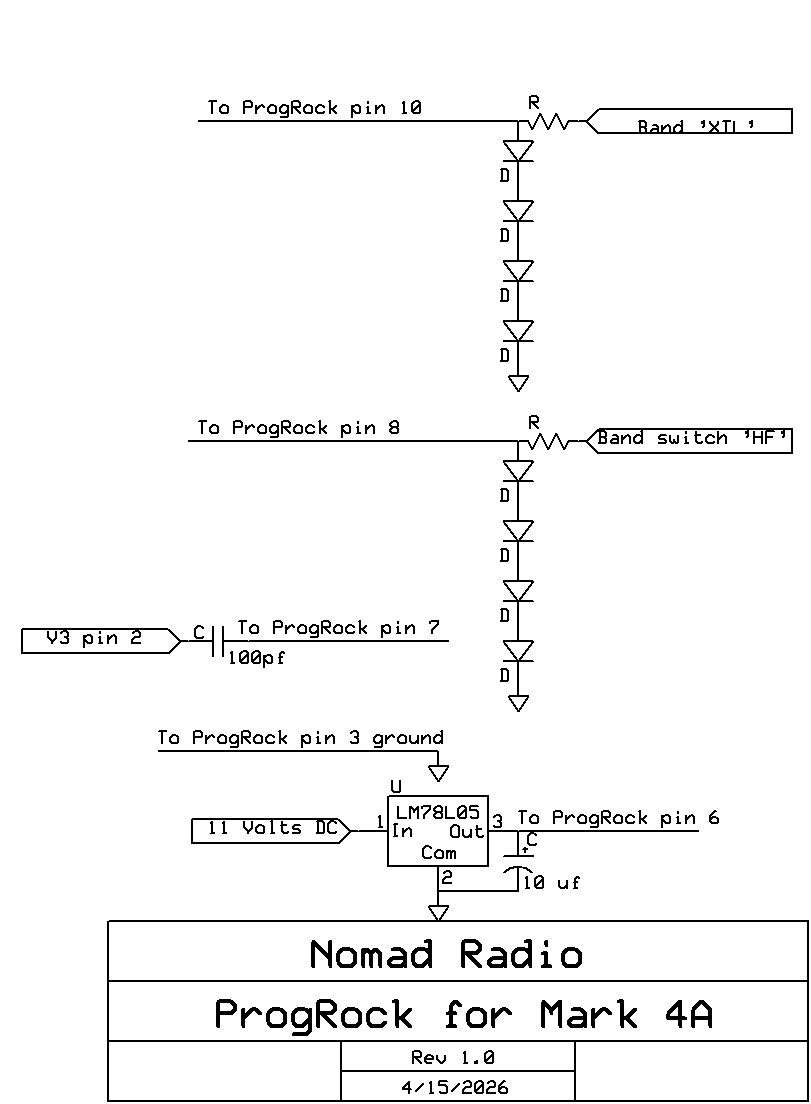
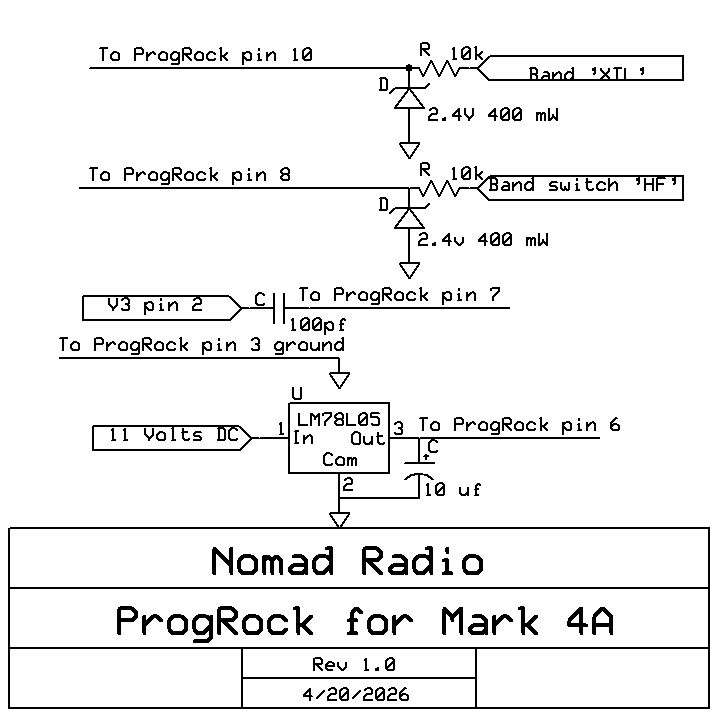
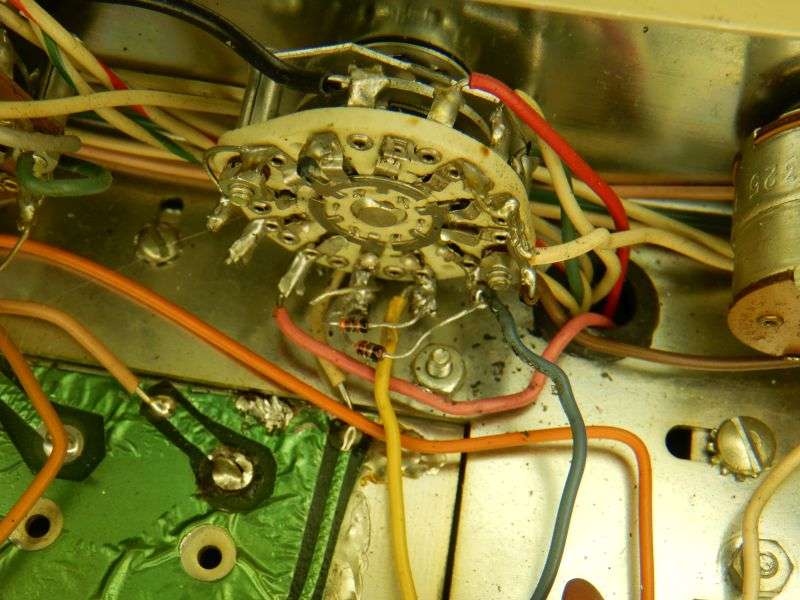
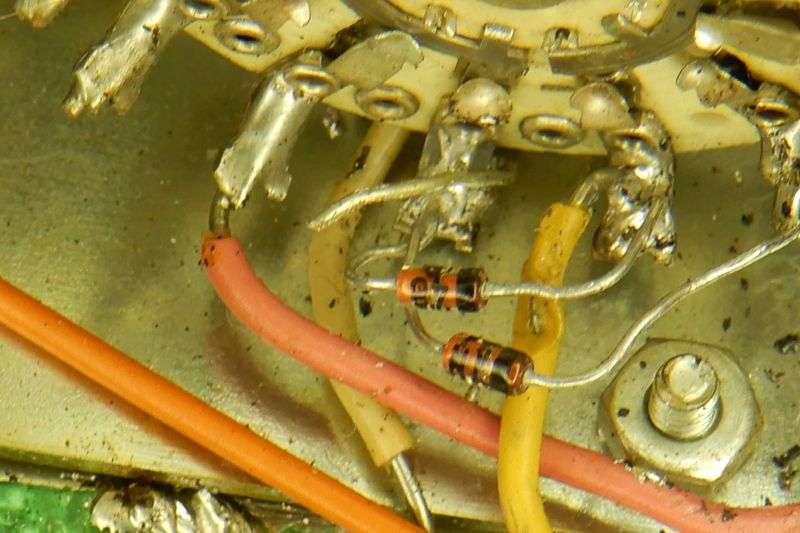
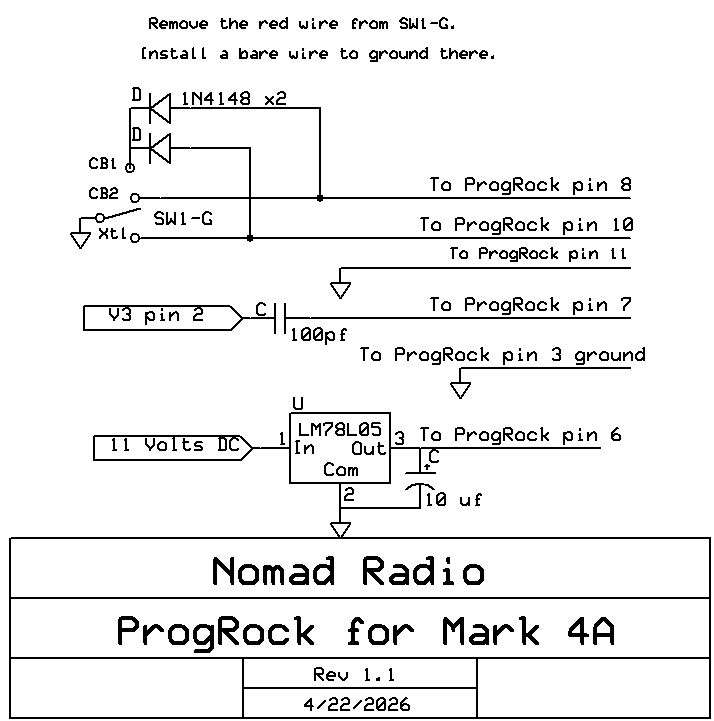
And then my idiot light came on. The band selector feeds 11 Volts down one at a time of two wires already. I'll use a series string of four 1N4148 diodes in series as a clamp across each of the controller's two input pins. The 10k Resistor on each input limits the diode current. The controller's input pins will see just under 3 Volts. Should conrol it as a proper logic high input.

I only need two wires to select three bands because the controller's input to select eight frequencies is a 3-bit binary number. The three binary input bits are labeled "Bank 0, Bank 1 and Bank 2". With no input voltage to all three pins, this is frequency zero. When the "bank zero" pin goes high, frequency number 1 comes out. And frequency number two is selected when "bank 1" --only-- goes high. And Bank zero goes back low. The radio already provides two wires to select bands, and that's all we need to select one band out of three. Too easy.

Yeah, the ProgRock stores five more frequencies but we only need three. Besides, the Browning receiver design is being stretched to cover three bands. The radio's design is just too narrow-banded to stretch its coverage any wider. Feel free to try it with four bands. You'll find it's a bit weak on one of those four bands. Which one it will be is determined by how the radio is aligned.


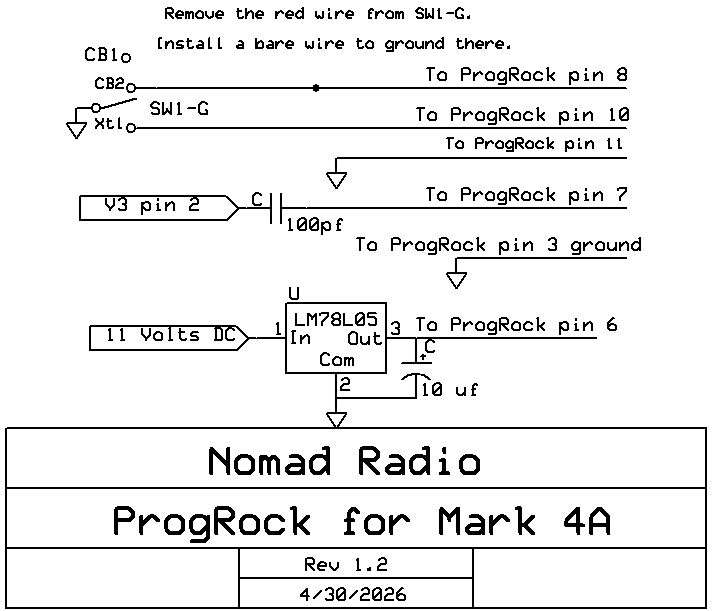
In the interest of open source, here's the schemo.

kC2qoJ.jpg


With any luck I'll get some slack time this weekend to pick up where I left off and actually try this trick in a radio.

Maybe.

73
 

dxChat
Help Users
  • No one is chatting at the moment.
  • @ Spanish:
    Where do i upload schematics
  • @ BJ radionut: