• You can now help support WorldwideDX when you shop on Amazon at no additional cost to you! Simply follow this Shop on Amazon link first and a portion of any purchase is sent to WorldwideDX to help with site costs.

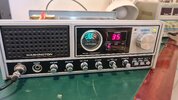
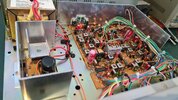
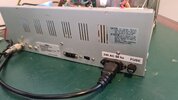
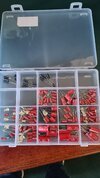
CB Re-caping

MKwrench,

those are all good changes, but there is a better mod for the audio.

try changing the value of R228 to 1.2K and then adding a 1uf non polarized cap from pin 9 of the audio chip to the junction of R194/R228/D36.

Leave the limiter intact and on the versions that have a fixed value instead of an AMC pot you'll have to change that 10K resistor to a variable pot.

now adjust the AMC using the scope to get the negative peaks just under 100%.

note, this mod only really does anything if you are lowering the deadkey of the radio and want to maintain max swing without clipping the negative peaks.

all credit for this mod goes to Exit13.
LC
I did this to one of my old Grants. It works great! I had to adjust the 1uf up a bit and added a pot and diode where R131 would be, I just followed the silk screen and ended up with a great working limiter.
I noticed .that more uf = more sensitivity for swing.
 
I meant replace R130 with the Diode/Pot combo on the silkscreen, in my above post. We leave R131 alone for a good working limiter.
 
Never forget the rule of the Shadetree Mechanic: If it ain't broke, keep fixing it until it is.

A radio with zero miles probably functions just fine. I'd wait to worry about caps until it exhibits a fault. My experience has been that once the first one or two caps goes bad, the falling dominoes follow soon.

But a radio with zero hours may very well have no bad caps.

Yet.

73
 
Never forget the rule of the Shadetree Mechanic: If it ain't broke, keep fixing it until it is.

A radio with zero miles probably functions just fine. I'd wait to worry about caps until it exhibits a fault. My experience has been that once the first one or two caps goes bad, the falling dominoes follow soon.

But a radio with zero hours may very well have no bad caps.

Yet.

73
Nomad, this is such a strange subject to research ... as opinions vary WILDLY!!!!!!

I have seen sources say that "it is simply age" and that electrolytic caps will dry and fail.... just sitting on a shelf.

What are your thoughts on that? (Thanks!)
 
Age and mileage both matter. Not all capacitors are created equal. Wish I had a database of which brands survive longest on the shelf. I have unloaded my share of decades-old electrolytics on fleabay, either because they were types we'll never use, or because they were just too old to risk seeing a failure in a repair job. There are no guarantees, only odds. Mileage reduces the odds of a part being reliable. Heat exposure is the most clear-cut risk. Either caused by internal heating from ripple-current stress, or from being adjacent to hot resistors or tubes. All electrolytics contain critical liquid chemistry, soaked into a layer of brown paper. A rubber plug is what keeps the chemistry inside where it belongs. Rubber lasts longer in the proverbial cool, dark place. Once it shrinks and hardens from heat exposure, the seal is broken and the critical chemistry evaporates. Just saw a Panasonic mobile radio from 45-plus years ago that showed no signs of trouble, but it looked like it spent its life in a carton in a climate-controlled closet. Oddly enough it was full of Panasonic electrolytic caps. They have a good quality record, so that probably improves the odds. Time spent in an attic, basement or garage will age things more rapidly than a dry closet with a constant temperature.

High-quality parts age better than low-budget knockoffs.

A part that checks like new after decades on a shelf probably won't deliver the same service life it would have if it had been put to use 40 years ago. An old part that checks okay today probably won't last another decade or more. But will it be a week, a month or a year? Never have learned how to predict that.

73
 

dxChat
Help Users
  • No one is chatting at the moment.