

Radioddity recently contacted me, asking if I'd like to take a look at the new version of their portable HF antenna package, the HF-010. I'm a sucker for portable antennas because my favorite way to operate is in the great outdoors, even if it means just going to a local park or down to the dock on the ocean. I had looked at previous versions of this antenna but never pulled the trigger on buying it because I have a full arsenal of Buddipole and Chameleon stuff that covers every band HF band (I even put those two products together to achieve a 160 meter portable antenna). When I heard that this new Radioddity HF-010 covered 6-80 meters and also had new mounting options, I wanted to try it.
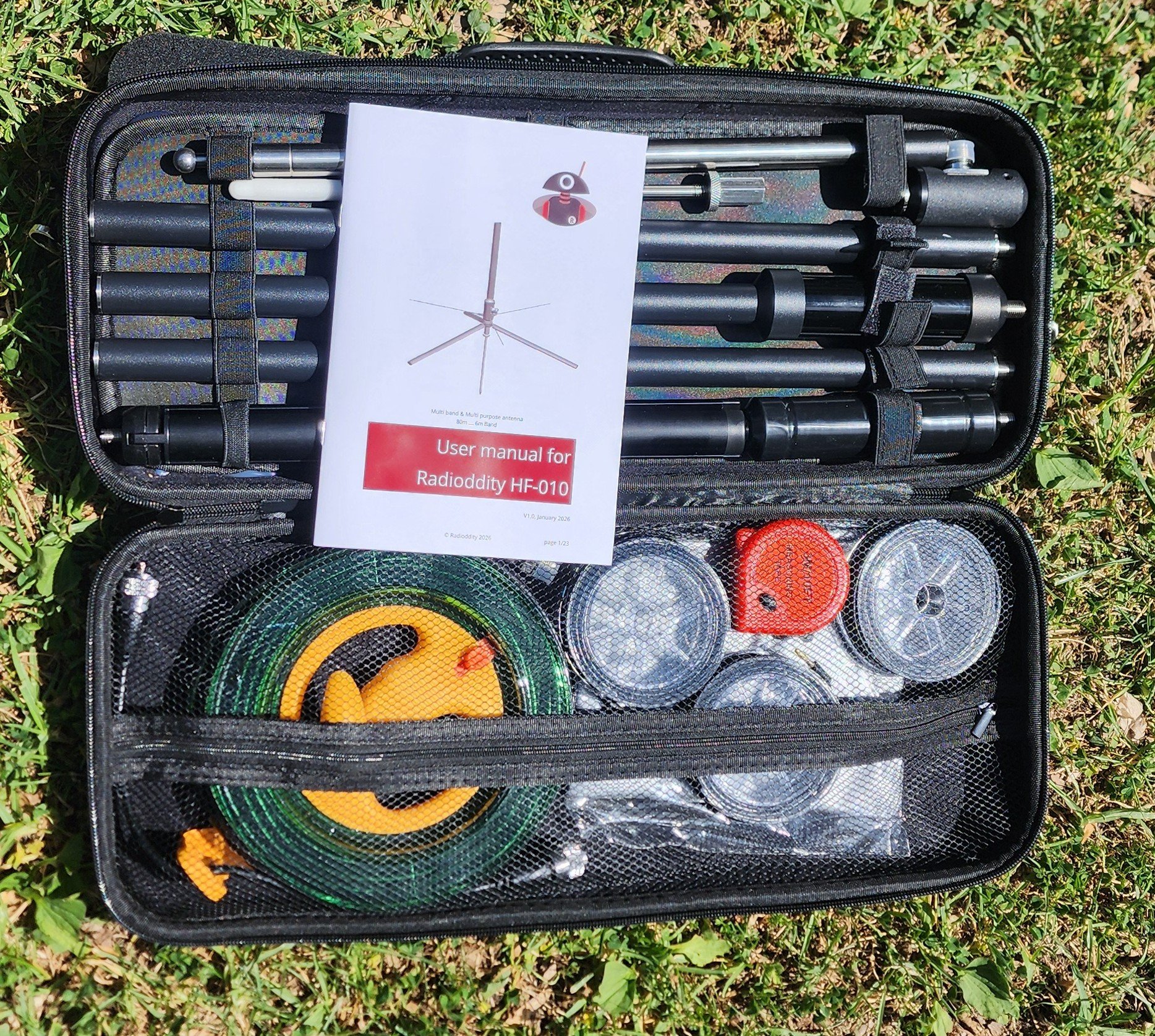
The antenna comes in a nice carry case with everything organized very well. The radials and coax come with winding reels for quick deployment and takedown (more on those later). They even put in a BNC/SO239 and 3/24 coupler to give you more flexibility. The manual gives you nearly exact tuning lengths for the coil and elements.
This new version of the antenna comes with both a ground spike for soil mounting, as well as a low tripod. You can use the spike with the tripod to add a bit of stability, which is what I decided to try:
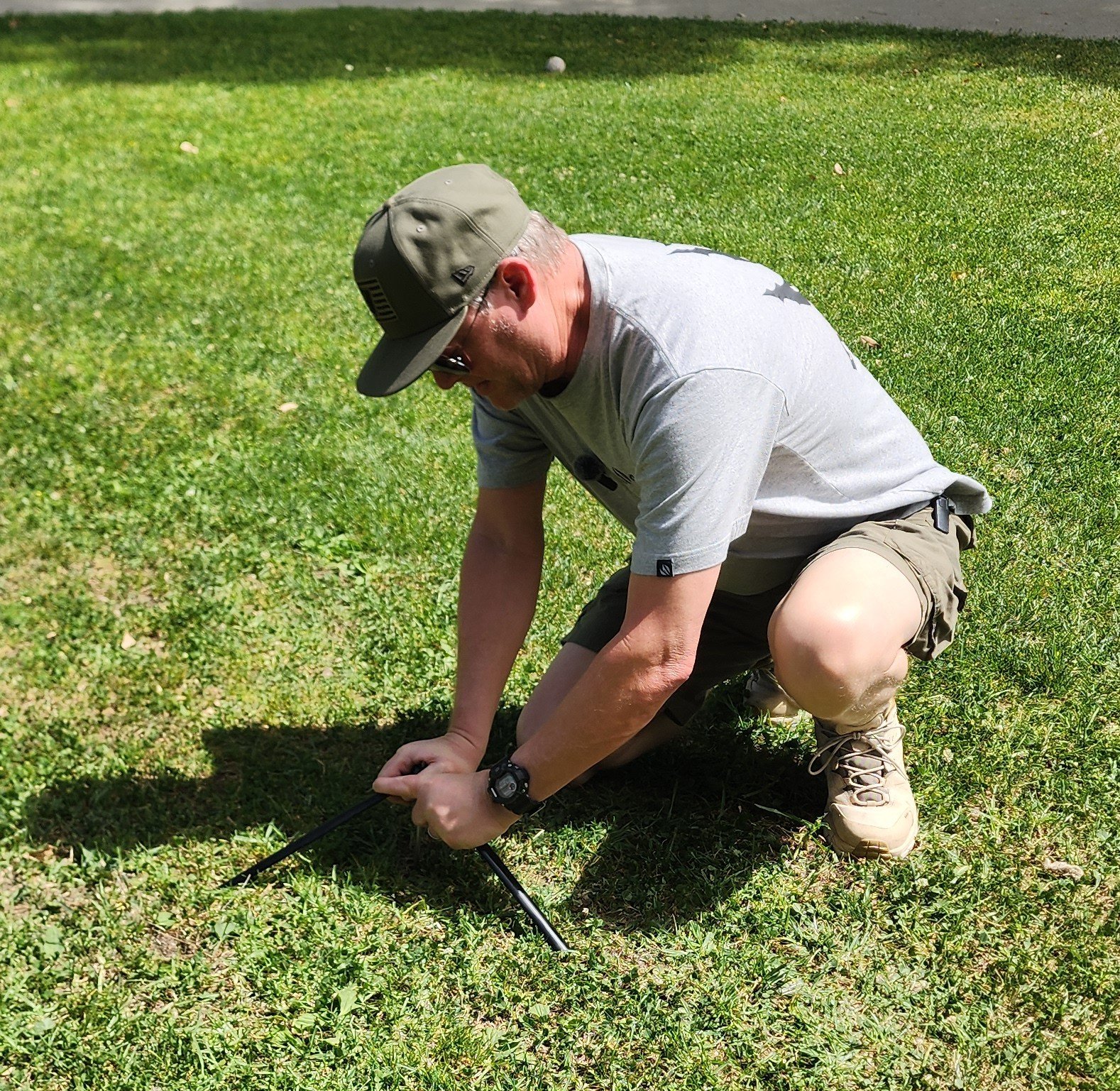
Here's where there is an oddity about the antenna design: All of the parts above the coax connector use the 3/8-24 thread standard, commonly found in U.S. mobile and portable antennas. But the base of the coax connector and the spike are metric. Be aware of this design choice if you think you want to try the antenna base with other products.
Here's a better pic of the tripod, coax & radial base, and tuning coil shaft laid out on the grass. The threaded pieces are all stainless steel; these parts will hold up to abuse. The short sealed coil with the Radioddity label is the 80 meter load coil.
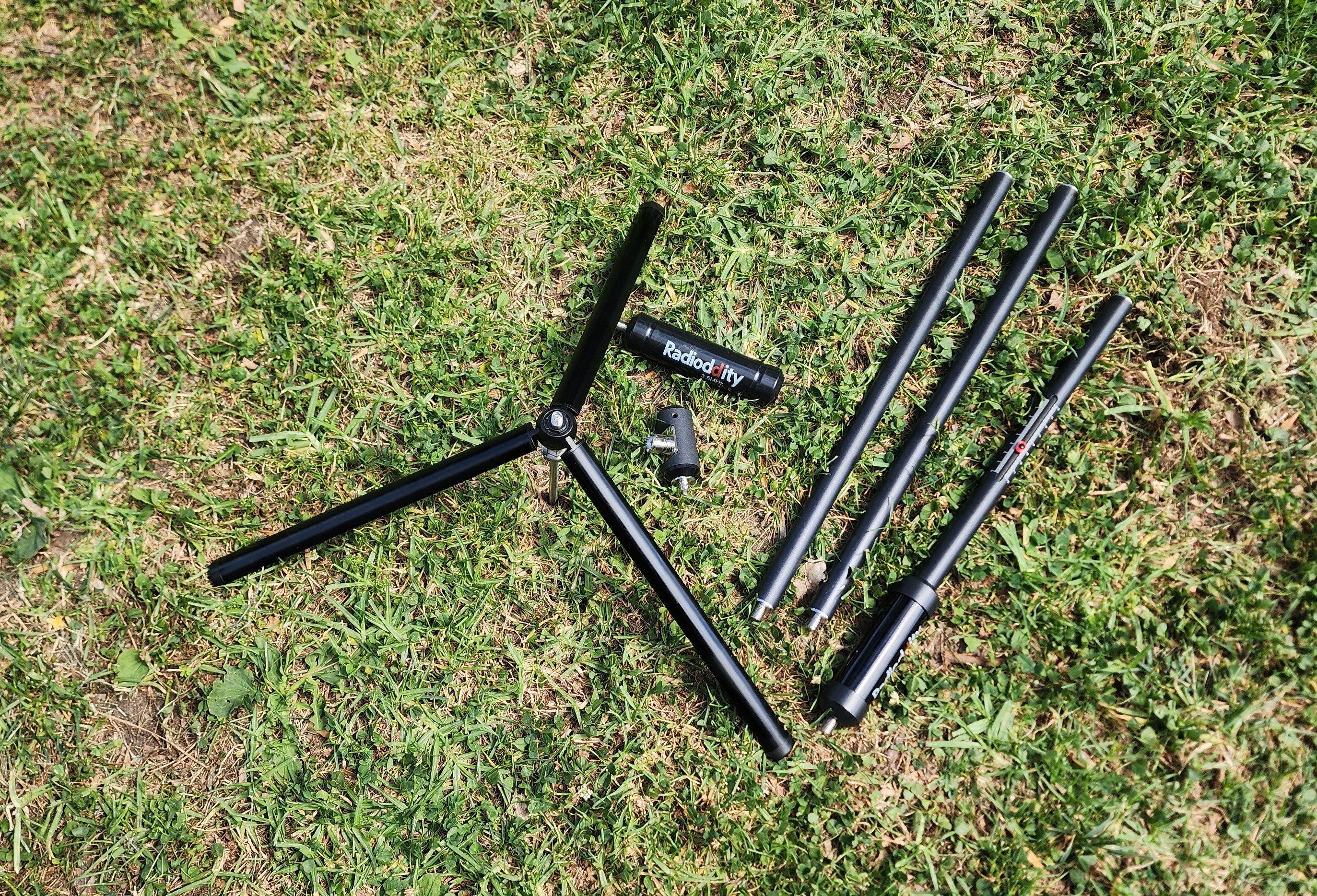
I would have liked to see the 80 meter load coil designed a little fatter to gain some efficiency, but then you're also trading off portability. In fact, portability is the exact reason why I don't take the Buddipole 80 meter load coils with me very often. So now I have options.
The main antenna goes together in minutes. You assemble the two lower shafts first
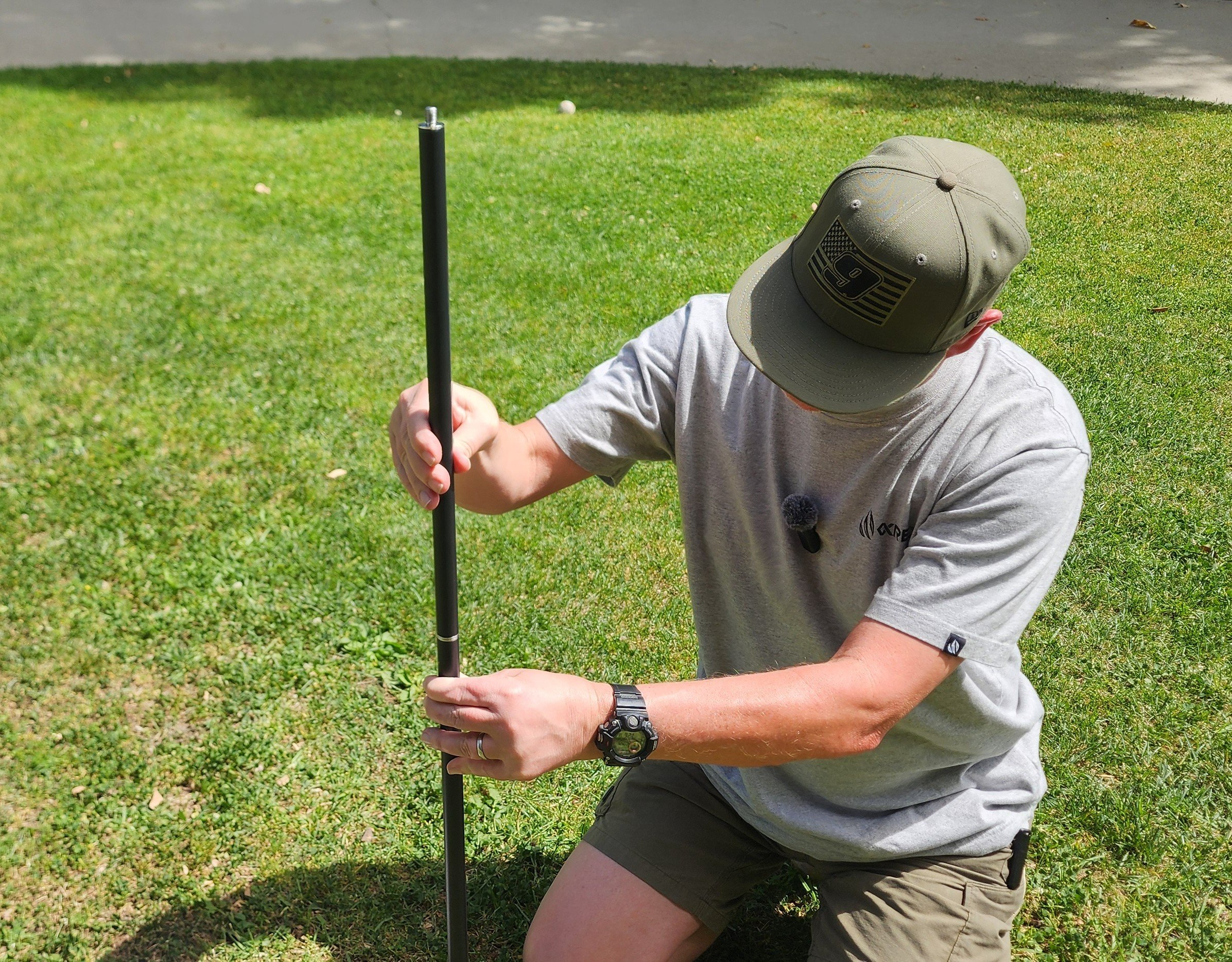
followed by the element with the adjustable load coil if you need it. On the higher bands, you'll skip this and just adjust the whip and the radials. On 17m-60m, you'll need the adjustable coil and on 80, you use that coil instead. Today I decided to play on 20 meters, so it got put to use.
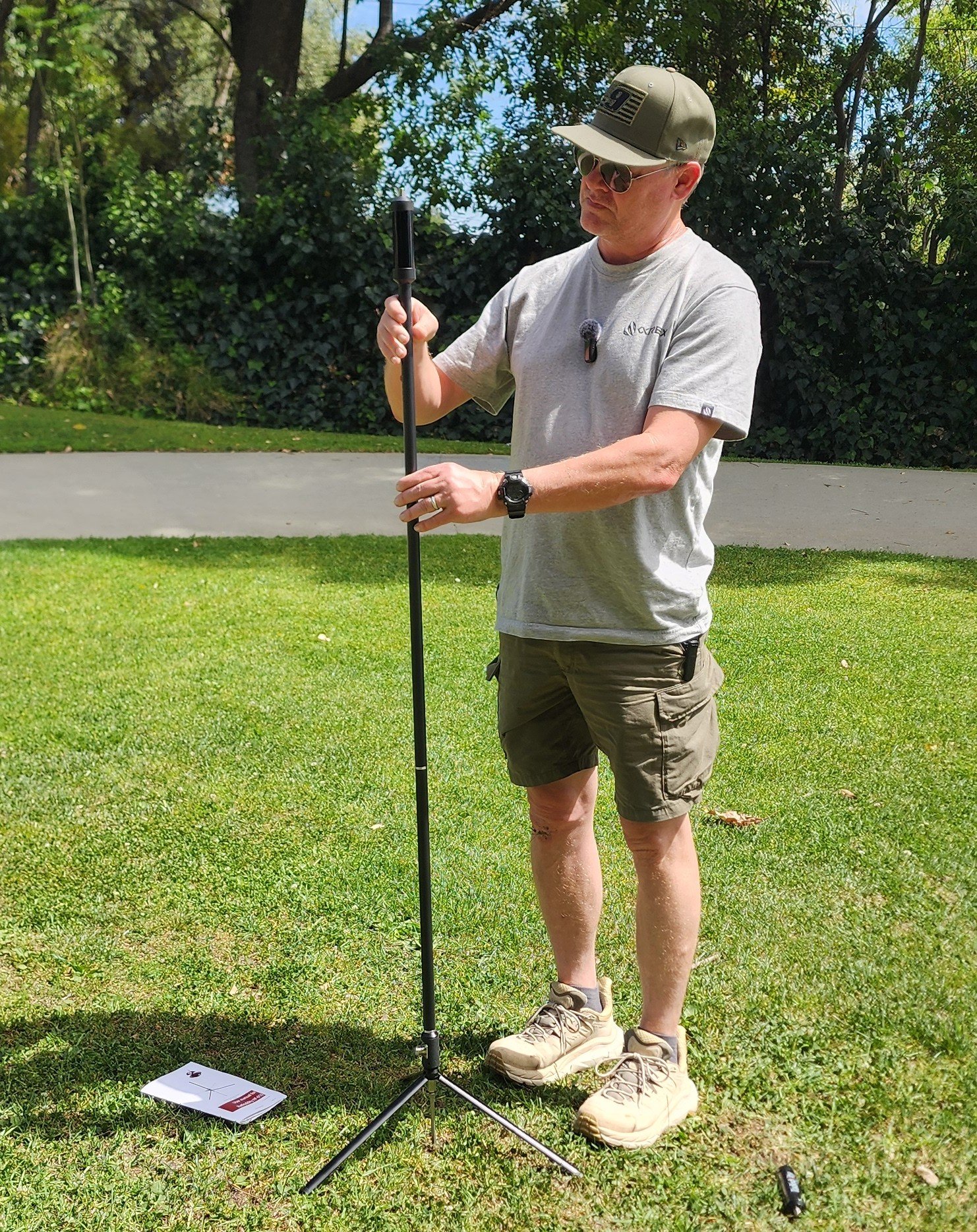
If you want to use the antenna on a hard surface where the spike is not practical, you'll need to figure out a way to secure the antenna. The HF-010 comes with a donut that is intended to be placed over the tripod and over the coax connector that can be filled with water or sand. Obviously, you'll need to plan ahead if you intend to use the donut because you'll need to find a water source and pre-filling it will change the portability options. It's an interesting idea, but if your goal is ultra portability, it's not all that practical.
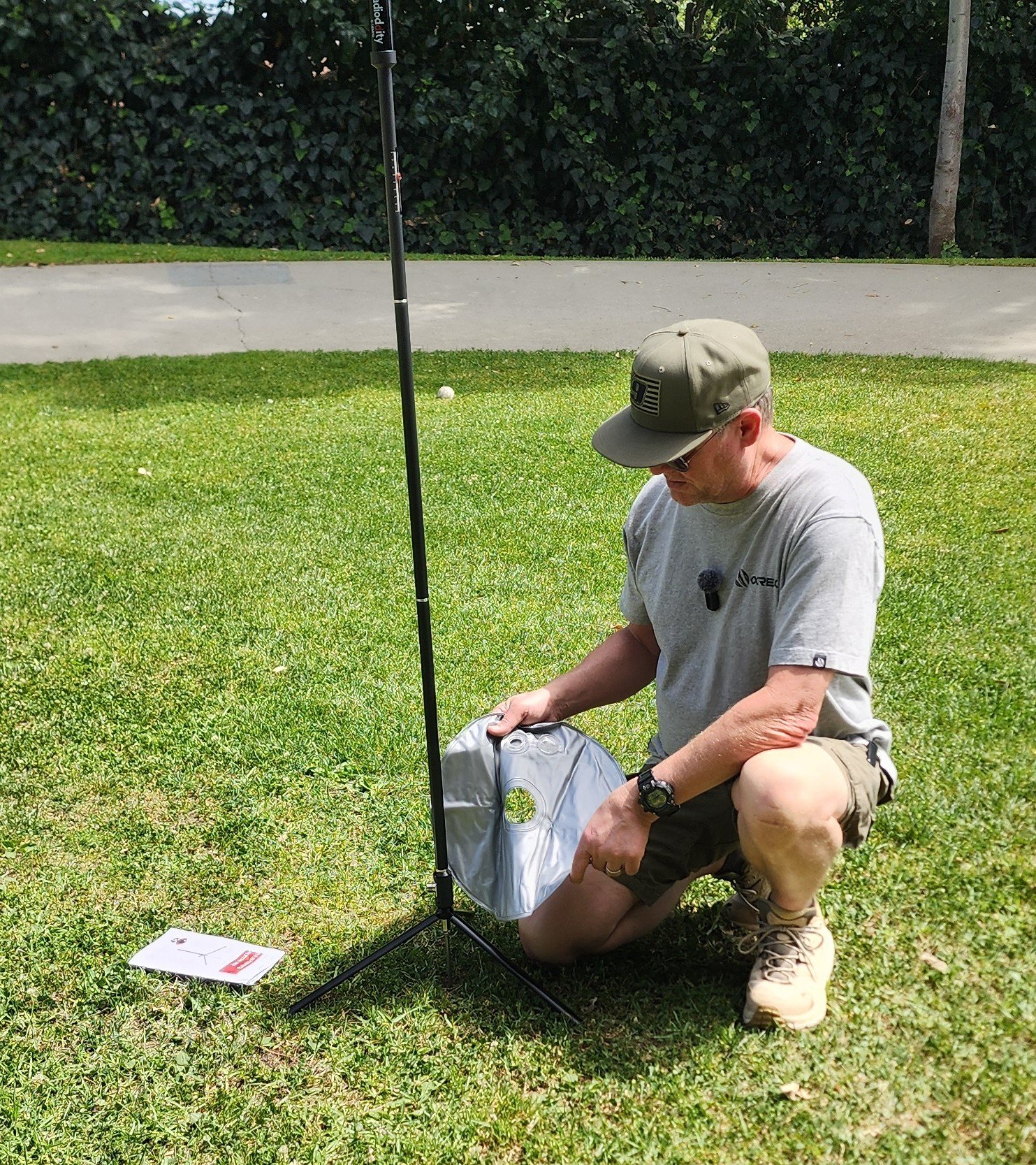
One of the very nice touches of the HF-010 is the banana plugs on the ground radials, making the deployment quick and easy. I really liked this!
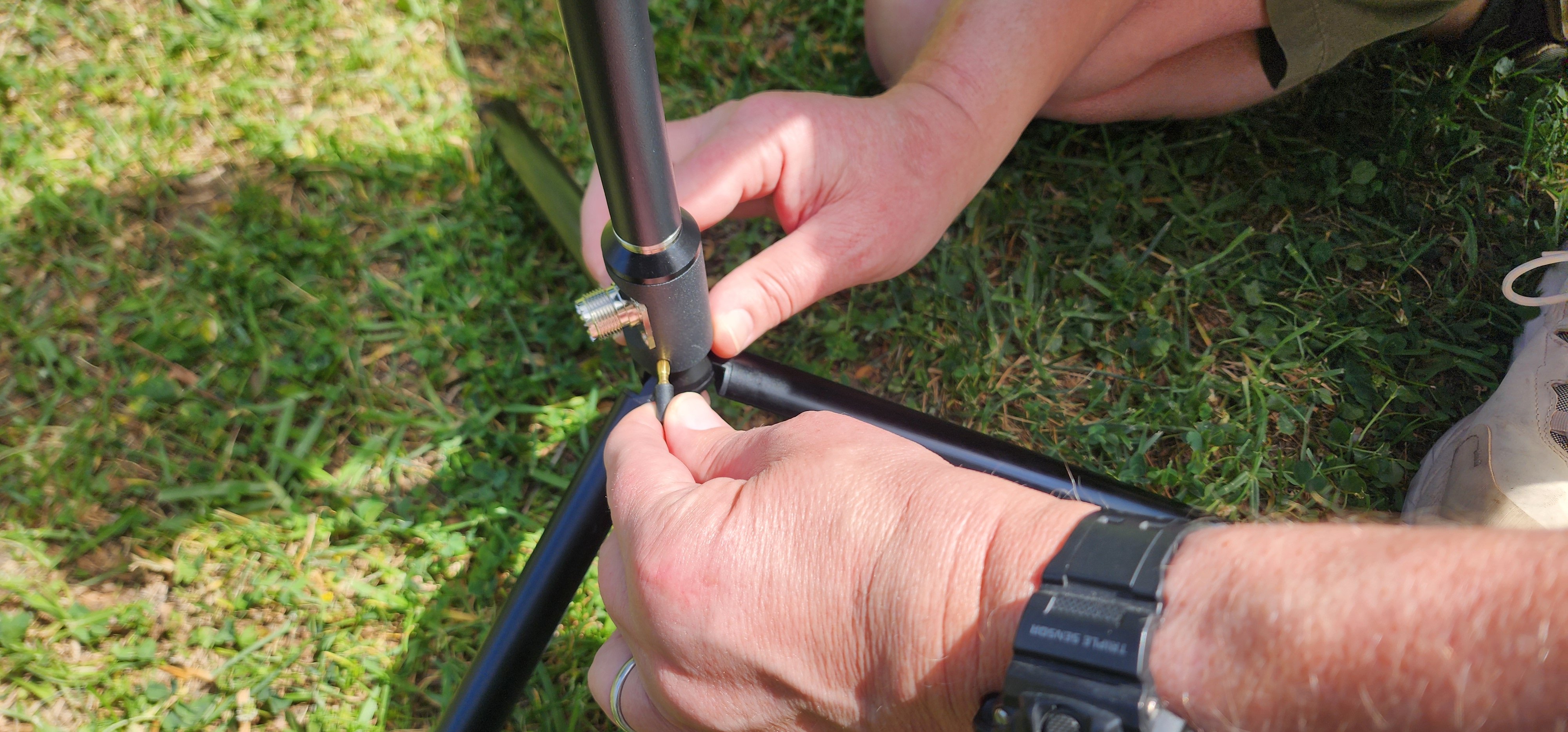
The antenna uses 3 radials (if you want to use all of them). If you can't remember the 1/4 wavelengths for each band, the manual gives you the measurements to use with the included tape measure. The lengths are also pre-marked with a little piece of tape, which I didn't notice until i rolled the first one out. I will probably color code these with a sharpie for future reference.
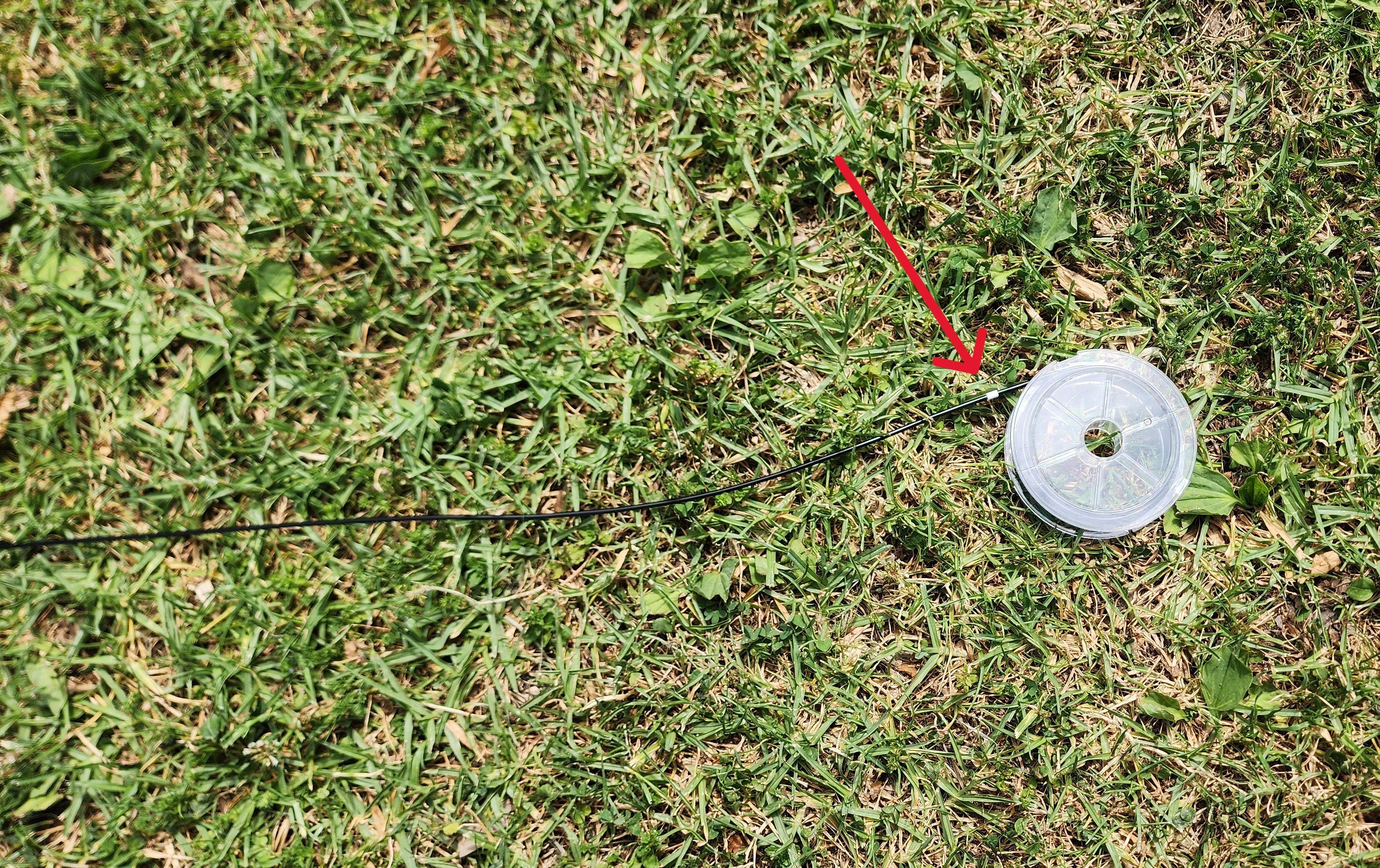
The manual also gives the length to use for the whip on the various bands, so you'll need to use the tape measure to lay this out before attaching it.
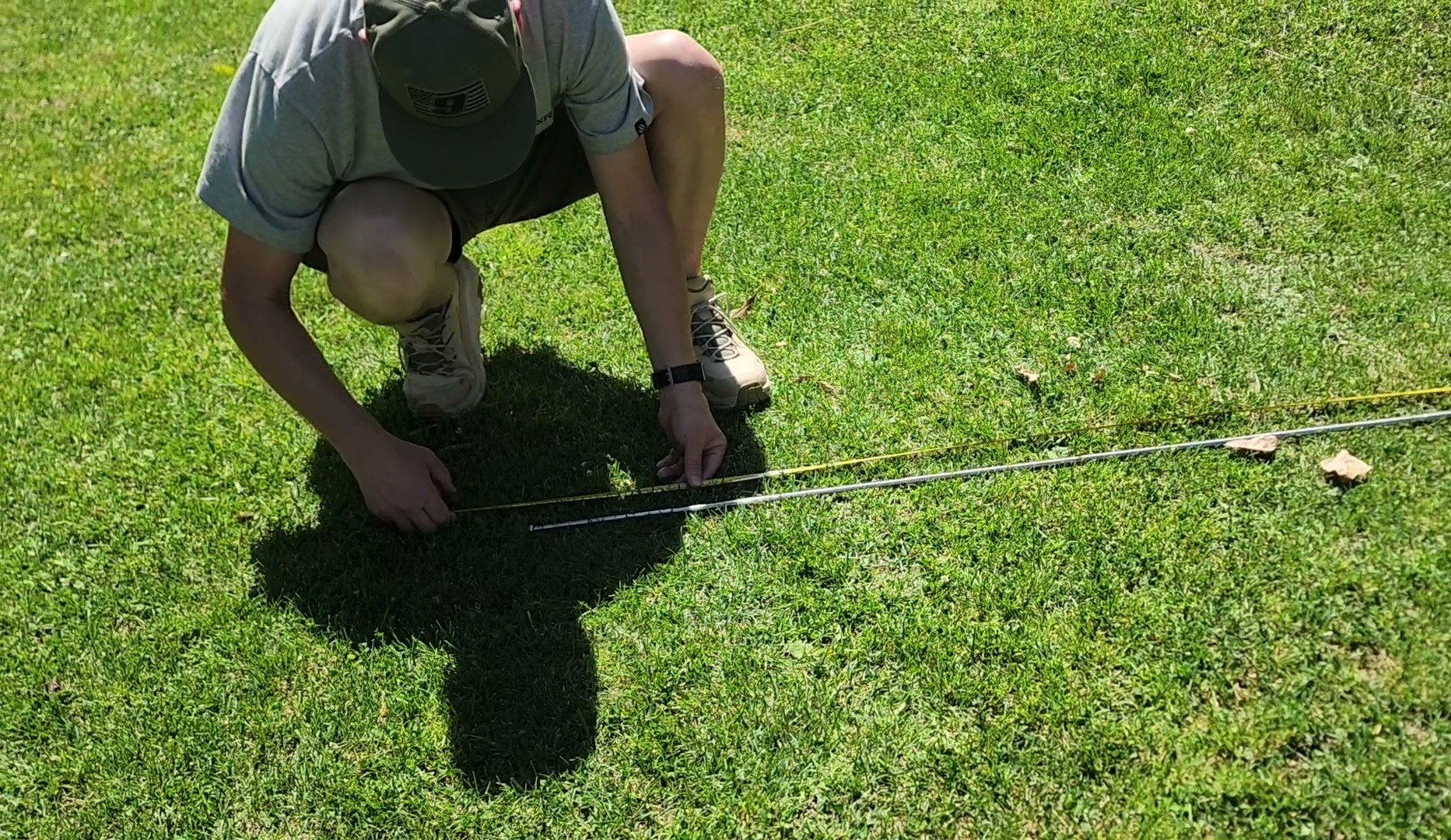
The whip is made of very high quality stainless steel. and is quite durable. I was expecting this whip to be delicate and flimsy like the Buddipole or MFJ whips I own. But this one is different - it will stand up to abuse. This one is going into the rotation with some of my other portable antennas.
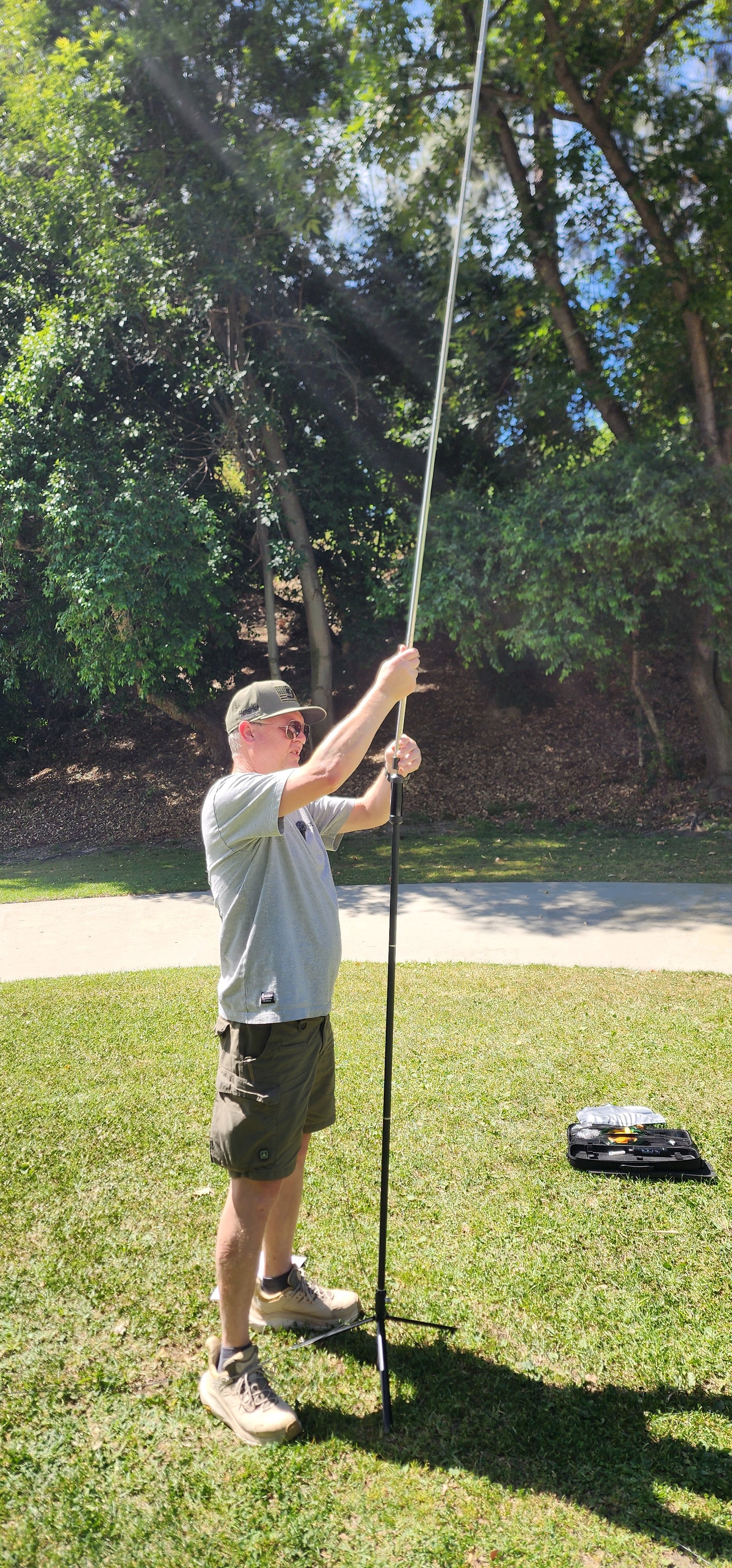
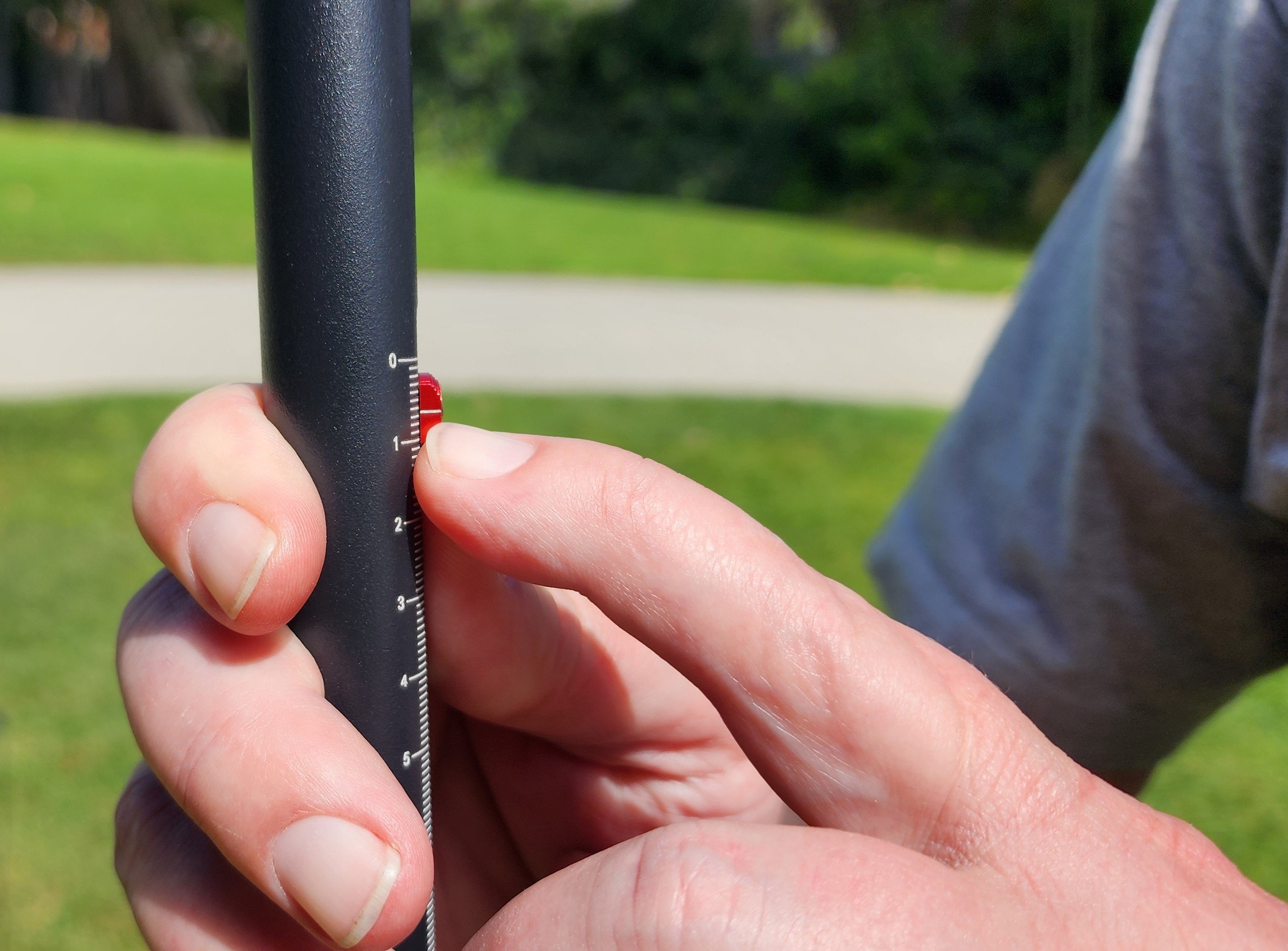
Now it's time to hook up the coax and dial the antenna in. I have to comment that the included coax reel is weird. I don't know quite how to describe it, but it's almost unusable. I will probably just ditch it and coil the coax with velcro. On the tuning coil, I didn't notice at first, but there is a painted white index on the adjustment slider to help you adjust the coil to the preset in the manual. This preset will get you close, but you'll still need to fine tune it.
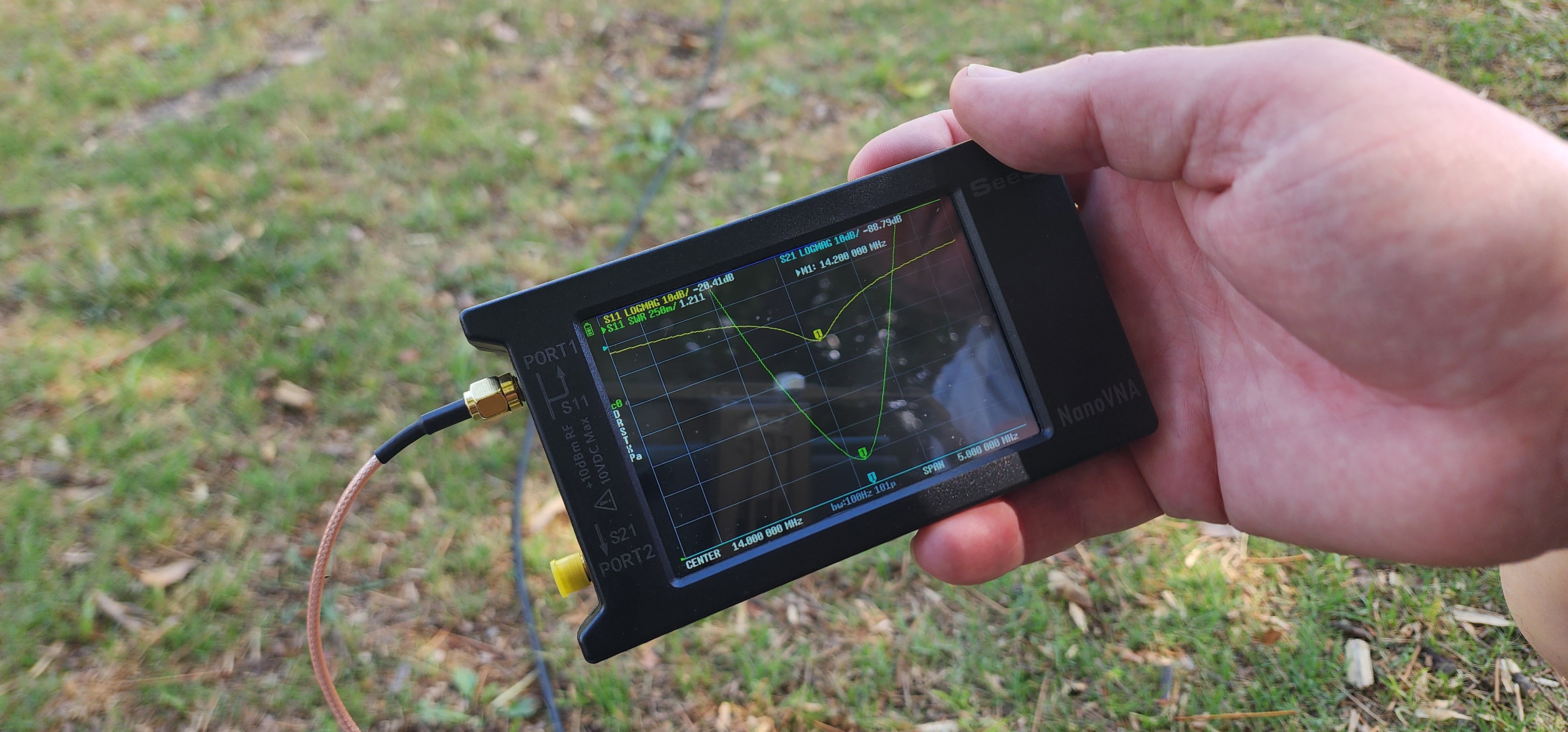
When I'm operating like this, I take the Aursinc NanoVNA with me. For about $100 on Amazon, you can get one of these with all the adapters and a little case. They're worth every penny. It makes quick work of tuning the antenna, although you'll need to make very fine adjustments. I was able to quickly get the antenna to 1.2 SWR on 14.2 Mhz to get to work on the radio. On 20 meters, the bandwidth curve was good enough to not require any antenna adjustments to cover the entire 20 meter phone section.
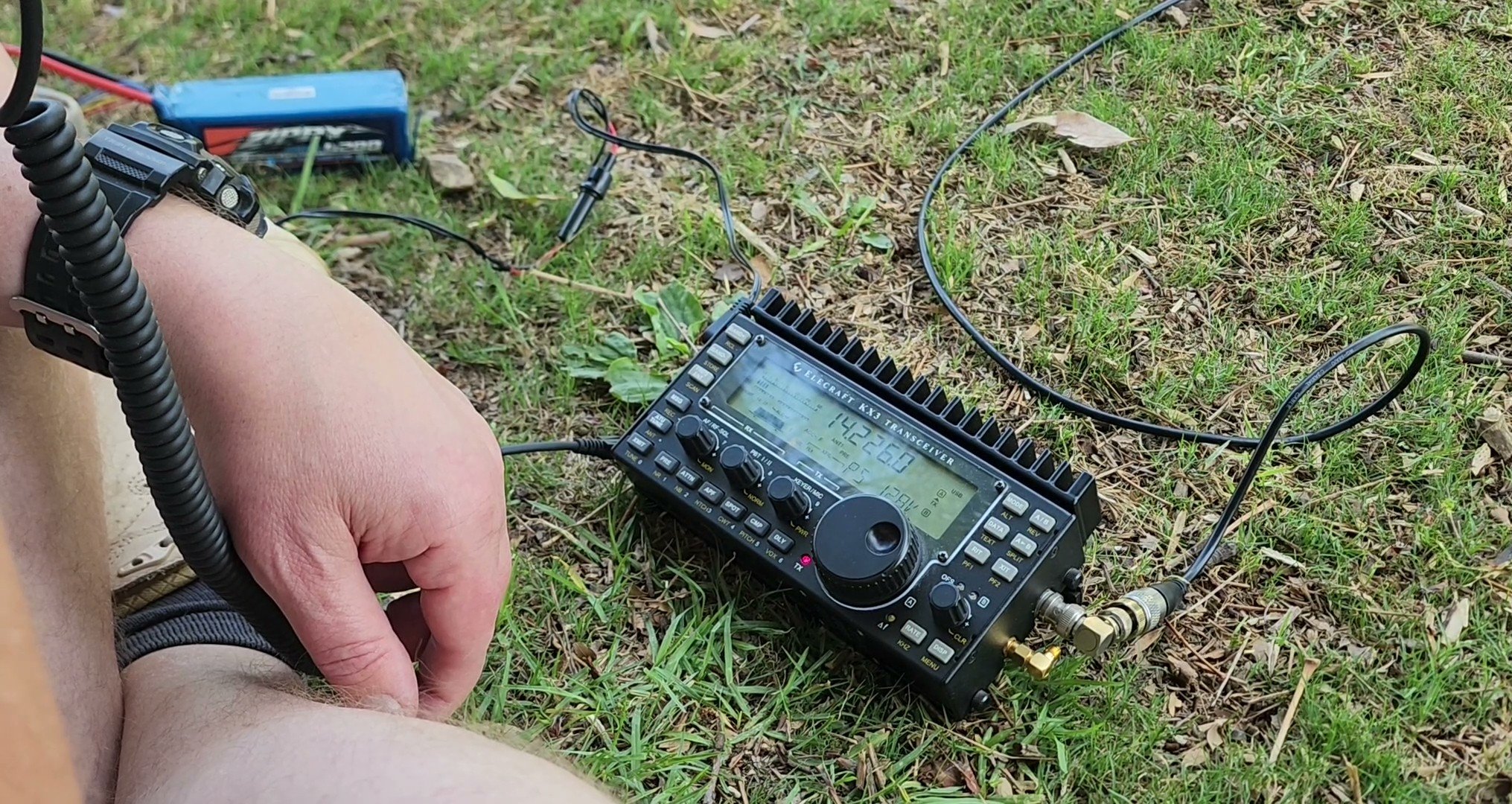
Since the SWR was so low, I just turned off the ATU on the Elecraft KX3 and got to work.....
On this day, I didn't have time to try the antenna on 40 or 80 meters. I will do a follow up post soon to see how easy (or difficult?) the antenna is to setup on the lower bands. But for now, I'm pretty impressed with the build quality of the HF-010. On 20 meters and higher, the antenna is essentially a no-compromise 1/4 wave vertical - there is very little load coil needed on 20 meters. On the lower bands, of course this antenna becomes a compromise, but every portable antenna is on those bands. The antenna is packed small enough that you can pack it into any vehicle and get on the air. I can even fit it in the top case of my motorcycle! I will probably try to figure out another method for weighting down the tripod for use on hard ground - some soft lead shot bags such as those used in diving might be the trick. If anyone has ideas, I'm all ears.
Radioddity also has an optional, rugged PL-259 to 3/28 adapter to use this antenna or other whip antennas on a mag mount. I have looked for a quality version of an adapter like this for years and it finally exists! You can use this for quick deployment in a fixed mobile scenario, but I'll cover that in another post.
For $240, I think this antenna is a bargain if you like to operate portable. I've spent WAY more on other antenna systems that aren't going to perform any better. For example, the Buddistick Pro (which I also own) is the same price once you add coax and you still need to buy the shock cord tripod legs for an additional $70. The advantage of the Buddistick Pro is that it is much more compact, but that is also a performance trade-off. If I'm going to a field site with any type of standard vehicle where I have a little extra room to pack stuff, I'd rather take the Radioddity HF-010 because it's a more efficient design and it goes together in minutes. If I'm backpacking, I'll make a different choice. One last thing: I like the 3/8-24 threads on the components (except the base) give me options for experimenting with other components. I wish they would do the same for the spike an coax base.
All things considered, I like this antenna. A lot. Check it out on their website:

 www.radioddity.com
And here's the link to the PL-259 to 3/8-24 adapter, which I will discuss in another post soon (I'll put a link to that post when available).
 www.radioddity.com
Stay tuned for a test on the low bands...
Edited: Here's part 2 for 40 and 80 meters:
Edited: Here's part 3, using the antenna with a mag mount and the mount adapter:
The antenna comes in a nice carry case with everything organized very well. The radials and coax come with winding reels for quick deployment and takedown (more on those later). They even put in a BNC/SO239 and 3/24 coupler to give you more flexibility. The manual gives you nearly exact tuning lengths for the coil and elements.
This new version of the antenna comes with both a ground spike for soil mounting, as well as a low tripod. You can use the spike with the tripod to add a bit of stability, which is what I decided to try:
Here's where there is an oddity about the antenna design: All of the parts above the coax connector use the 3/8-24 thread standard, commonly found in U.S. mobile and portable antennas. But the base of the coax connector and the spike are metric. Be aware of this design choice if you think you want to try the antenna base with other products.
Here's a better pic of the tripod, coax & radial base, and tuning coil shaft laid out on the grass. The threaded pieces are all stainless steel; these parts will hold up to abuse. The short sealed coil with the Radioddity label is the 80 meter load coil.
I would have liked to see the 80 meter load coil designed a little fatter to gain some efficiency, but then you're also trading off portability. In fact, portability is the exact reason why I don't take the Buddipole 80 meter load coils with me very often. So now I have options.
The main antenna goes together in minutes. You assemble the two lower shafts first
followed by the element with the adjustable load coil if you need it. On the higher bands, you'll skip this and just adjust the whip and the radials. On 17m-60m, you'll need the adjustable coil and on 80, you use that coil instead. Today I decided to play on 20 meters, so it got put to use.
If you want to use the antenna on a hard surface where the spike is not practical, you'll need to figure out a way to secure the antenna. The HF-010 comes with a donut that is intended to be placed over the tripod and over the coax connector that can be filled with water or sand. Obviously, you'll need to plan ahead if you intend to use the donut because you'll need to find a water source and pre-filling it will change the portability options. It's an interesting idea, but if your goal is ultra portability, it's not all that practical.
One of the very nice touches of the HF-010 is the banana plugs on the ground radials, making the deployment quick and easy. I really liked this!
The antenna uses 3 radials (if you want to use all of them). If you can't remember the 1/4 wavelengths for each band, the manual gives you the measurements to use with the included tape measure. The lengths are also pre-marked with a little piece of tape, which I didn't notice until i rolled the first one out. I will probably color code these with a sharpie for future reference.
The manual also gives the length to use for the whip on the various bands, so you'll need to use the tape measure to lay this out before attaching it.
The whip is made of very high quality stainless steel. and is quite durable. I was expecting this whip to be delicate and flimsy like the Buddipole or MFJ whips I own. But this one is different - it will stand up to abuse. This one is going into the rotation with some of my other portable antennas.
Now it's time to hook up the coax and dial the antenna in. I have to comment that the included coax reel is weird. I don't know quite how to describe it, but it's almost unusable. I will probably just ditch it and coil the coax with velcro. On the tuning coil, I didn't notice at first, but there is a painted white index on the adjustment slider to help you adjust the coil to the preset in the manual. This preset will get you close, but you'll still need to fine tune it.
When I'm operating like this, I take the Aursinc NanoVNA with me. For about $100 on Amazon, you can get one of these with all the adapters and a little case. They're worth every penny. It makes quick work of tuning the antenna, although you'll need to make very fine adjustments. I was able to quickly get the antenna to 1.2 SWR on 14.2 Mhz to get to work on the radio. On 20 meters, the bandwidth curve was good enough to not require any antenna adjustments to cover the entire 20 meter phone section.
Since the SWR was so low, I just turned off the ATU on the Elecraft KX3 and got to work.....
On this day, I didn't have time to try the antenna on 40 or 80 meters. I will do a follow up post soon to see how easy (or difficult?) the antenna is to setup on the lower bands. But for now, I'm pretty impressed with the build quality of the HF-010. On 20 meters and higher, the antenna is essentially a no-compromise 1/4 wave vertical - there is very little load coil needed on 20 meters. On the lower bands, of course this antenna becomes a compromise, but every portable antenna is on those bands. The antenna is packed small enough that you can pack it into any vehicle and get on the air. I can even fit it in the top case of my motorcycle! I will probably try to figure out another method for weighting down the tripod for use on hard ground - some soft lead shot bags such as those used in diving might be the trick. If anyone has ideas, I'm all ears.
Radioddity also has an optional, rugged PL-259 to 3/28 adapter to use this antenna or other whip antennas on a mag mount. I have looked for a quality version of an adapter like this for years and it finally exists! You can use this for quick deployment in a fixed mobile scenario, but I'll cover that in another post.
For $240, I think this antenna is a bargain if you like to operate portable. I've spent WAY more on other antenna systems that aren't going to perform any better. For example, the Buddistick Pro (which I also own) is the same price once you add coax and you still need to buy the shock cord tripod legs for an additional $70. The advantage of the Buddistick Pro is that it is much more compact, but that is also a performance trade-off. If I'm going to a field site with any type of standard vehicle where I have a little extra room to pack stuff, I'd rather take the Radioddity HF-010 because it's a more efficient design and it goes together in minutes. If I'm backpacking, I'll make a different choice. One last thing: I like the 3/8-24 threads on the components (except the base) give me options for experimenting with other components. I wish they would do the same for the spike an coax base.
All things considered, I like this antenna. A lot. Check it out on their website:
Radioddity HF-010 Portable HF Antenna | Ham Radio Antenna
Meet the Radioddity HF-010, the all-terrain portable HF antenna. Covers 80m-6m with a durable 304 stainless steel build & included tripod. Perfect for POTA.
www.radioddity.com
And here's the link to the PL-259 to 3/8-24 adapter, which I will discuss in another post soon (I'll put a link to that post when available).
Radioddity HF-010A Antenna Adapter | Ham Radio Antenna
Upgrade signal performance with Radioddity HF-010A Antenna Adapter. A UHF, HF and 150W antenna for ham radio, GMRS or two way radio setups.
www.radioddity.com
Stay tuned for a test on the low bands...
Edited: Here's part 2 for 40 and 80 meters:

In the first part of my review of the Radioddity HF-010 portable HF Antenna, I covered the basic setup, tuning and build quality of this antenna with some comparisons to competing products on the market. In my first outing, I did not have time to test it out on lower bands like 40 and 80 meters. Today I got a chance to head back out to the park to set it up to see how difficult it is to get going on these lower, much more tuning sensitive bands. I decided to start on 80 meters since this band is typically much more difficult to set up.
80 Meters Testing
As noted...
80 Meters Testing
As noted...

Edited: Here's part 3, using the antenna with a mag mount and the mount adapter:
I was able to get out this last weekend and try out the new Radioddity HF-010 antenna using a mag mount on my Jeep. In order to do this, you also need the PL-259 to 3/8-24 mount adapter sold on the website. I decided to try this first on 40 meters because I knew by experience that getting the lower bands to work well mounted as a mobile can be a bit challenging. The tuning was a bit touchy, but once I got it dialed in, it was good to go. FWIW, the body, frame, etc. on my Jeep has all been bonded extensively for use as an HF mobile station. Rather than make a lengthy post, here's the...
- Moleculo
- radioddity hf-010
- Replies: 0
- Forum: Amateur Radio Antennas
Last edited:


