
You are using an out of date browser. It may not display this or other websites correctly.
You should upgrade or use an alternative browser.
You should upgrade or use an alternative browser.
-
You can now help support WorldwideDX when you shop on Amazon at no additional cost to you! Simply follow this Shop on Amazon link first and a portion of any purchase is sent to WorldwideDX to help with site costs.
-
The Winners of the three Retevis radios 16 Anniversary giveaway are announced!! Click Here to find out if you won!
Reverse polarity diode ar 6666
- Thread starter TES
- Start date


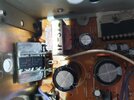
The diode itself is Probably easy. There is a chance something else was taken out if the diode was was blown from reverse polarity though.

Man, that's a good radio too!
Like @Shadetree Mechanic said, it could just be the diode but it could not just be the diode. Only one way to find out, show us the specimen and we'll point that guy out.
Like @Shadetree Mechanic said, it could just be the diode but it could not just be the diode. Only one way to find out, show us the specimen and we'll point that guy out.

We adopted the habit of soldering a 6-Amp rectifier diode across the posts inside the radio's power socket. The diode built into most radios is a "one-time" protector. It trips the fuse when polarity is reversed, but gets overloaded and shorts internally.
Back in the day, a slip-seat driver would have to play "Edison Roulette" with his gator clips to the posts on the doghouse of a tractor. The polarity marks had been rubbed off 200,000 miles ago, and if he guessed wrong the radio would be disabled, even if he had the right size fuse in line. A 6 Amp diode would happily pop a 2 Amp or 3 Amp fuse with no damage to the radio.
Makes me wonder if the protection diode in that model is a SMT part? Haven't looked inside one of those yet.
73
Back in the day, a slip-seat driver would have to play "Edison Roulette" with his gator clips to the posts on the doghouse of a tractor. The polarity marks had been rubbed off 200,000 miles ago, and if he guessed wrong the radio would be disabled, even if he had the right size fuse in line. A 6 Amp diode would happily pop a 2 Amp or 3 Amp fuse with no damage to the radio.
Makes me wonder if the protection diode in that model is a SMT part? Haven't looked inside one of those yet.
73
Take a look here

 www.on-radio-shop.eu
TVS-Diode „P6SMB“
TVS-Diode „P6SMB“; für diverse Geräte u.A. K.PO DX-5000+; CRT SS-6900 V; CRT- SS-7900; CRT SS.7900V; CRT-SS-8900; President George II, President Washington; S
www.on-radio-shop.eu

It sounds too sensible for Manufacturers to do it.We adopted the habit of soldering a 6-Amp rectifier diode across the posts inside the radio's power socket. The diode built into most radios is a "one-time" protector. It trips the fuse when polarity is reversed, but gets overloaded and shorts internally.
Back in the day, a slip-seat driver would have to play "Edison Roulette" with his gator clips to the posts on the doghouse of a tractor. The polarity marks had been rubbed off 200,000 miles ago, and if he guessed wrong the radio would be disabled, even if he had the right size fuse in line. A 6 Amp diode would happily pop a 2 Amp or 3 Amp fuse with no damage to the radio.
Makes me wonder if the protection diode in that model is a SMT part? Haven't looked inside one of those yet.
73
Galaxy started doing this in their mobile models by the late 90s. Some newer radios have a 3-Amp rectifier for this.It sounds too sensible for Manufacturers to do it.
73

Your links take me to a sign-in page with no other information.Take a look here
TVS-Diode „P6SMB“
TVS-Diode „P6SMB“; für diverse Geräte u.A. K.PO DX-5000+; CRT SS-6900 V; CRT- SS-7900; CRT SS.7900V; CRT-SS-8900; President George II, President Washington; S
73
Jeff

What does a transient voltage suppression (TVS) diode have to do with this thread? This is about reverse polarity, not voltage spikes.
Does the poster know anything about the components he is selling (if the page is even legit)? New member and not even a hello first, just an irrelevant part behind a login.
Does the poster know anything about the components he is selling (if the page is even legit)? New member and not even a hello first, just an irrelevant part behind a login.
He has been here for awhile
I believe he is from Germany and sometimes things get misinterpreted in translation if English is not a users first language.
On edit
The link looks to go to a radio shop, but it appears to be down.
73
Jeff
I believe he is from Germany and sometimes things get misinterpreted in translation if English is not a users first language.
On edit
The link looks to go to a radio shop, but it appears to be down.
73
Jeff
Last edited:
The reverse polarity diodes used by the rig manufacturers are almost useless,
even more so when they are installed on the pcb rather than directly on the power socket before the chokes,
you do often get blown pcb tracks or smoked filter chokes but they give piss poor protection to reverse polarity.
They are far too slow reacting too low in current rating & too high of a clamping voltage,
for many years I used fast 60a schottky diodes the size of a 2sc1969 soldered directly to the DC power socket before the chokes,
with about half the clamping voltage & much faster switching & not mounted on the pcb you get zero damage when using normal or even higher rated fuses & power cables & accidentally connect them ass backwards,
when I ran out of the schottky diodes I used what I had to hand,
surface mount "super barrier diodes" 2 of them in parallel on a small pcb,
faster & lower clamping than the schottkys, not as pretty or as simple to use as the schottky diodes but they give very good protection.
even more so when they are installed on the pcb rather than directly on the power socket before the chokes,
you do often get blown pcb tracks or smoked filter chokes but they give piss poor protection to reverse polarity.
They are far too slow reacting too low in current rating & too high of a clamping voltage,
for many years I used fast 60a schottky diodes the size of a 2sc1969 soldered directly to the DC power socket before the chokes,
with about half the clamping voltage & much faster switching & not mounted on the pcb you get zero damage when using normal or even higher rated fuses & power cables & accidentally connect them ass backwards,
when I ran out of the schottky diodes I used what I had to hand,
surface mount "super barrier diodes" 2 of them in parallel on a small pcb,
faster & lower clamping than the schottkys, not as pretty or as simple to use as the schottky diodes but they give very good protection.
Attachments
Someone here had a story about a customer who just could not wire it correctly, and repeatedly brought the radio back because it was hooked up backwards.
The solution was to install a bridge rectifier so it could be hooked up either way...
The solution was to install a bridge rectifier so it could be hooked up either way...

A series diode/rectifier works a treat but I don't like the volt drop,
If you can live with it its a perfect solution for folk that keep connecting stuff backwards.
If you can live with it its a perfect solution for folk that keep connecting stuff backwards.
Wow, voltage dyslexia! Mistakes happen but man!Someone here had a story about a customer who just could not wire it correctly, and repeatedly brought the radio back because it was hooked up backwards.
The solution was to install a bridge rectifier so it could be hooked up either way...