• You can now help support WorldwideDX when you shop on Amazon at no additional cost to you! Simply follow this Shop on Amazon link first and a portion of any purchase is sent to WorldwideDX to help with site costs.
  • Retevis is giving away THREE radios for their 16th Anniversary! Click Here to enter!

Share your useful testing apps, I'll start

Eldorado828

UDX-828 in the Lonestar state (WDX-828)
I Support WorldwideDX.com!
Feb 21, 2016
4,932
9,791
523
The Panhandle of Texas
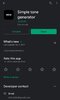
I know we all do some testing on our benches and not everybody has all the professional testing equipment. Either we're not on our well equipped bench or you need something on the fly so we at times have to improvise. With so much at our fingertips in this very technological age that wasn't at our disposal 15 to 20 years ago, I'm curious to see what some of you fellas have as quick smartphone or tablet tools. Share yours if you will. I'll start with one I've used a few times to put a test tone into a mic. 20200220_212241.jpg
 

Yeah a great subject. A quick and easy way to verify the audio amplifier circuit in a radio is to touch the center pin on the volume control, if you hear a hum or noise this verifies the audio circuit is working. Try not to touch any thing else in a tube radio as high voltages are in there. I use a screw driver that has black tape insulate the shaft exposing the tip.

Jay in the Grate Mojave Desert
 
Where I come from we call that the analog manual digital signal injector.

Poking it into the input of a radio's 455 kHz IF usually produces raucous noises. Used to have a AM radio station with a gospel format's transmitter a couple of miles away. Sure surprised a customer or two when I poked the output of the AM ceramic filter and a revival preacher came roaring out of the speaker.

Halleluia! The IF stage is working.

73
 
I have used the tone generator in a pinch. Normally I’ll use my Rigol on the bench.

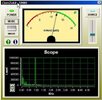
The other thing I’ve used is CommTekk’s SINAD. Unfortunately, it’s not a “smartphone” or “tablet” tool or ap. But, it does a good job as a receiver alignment tool. On my main bench, I’ll use my old SINADDER 3 and HP RF generator. Both can cost some dough and the Hp is Yuge. The software is cheap and takes a computer you probably already have.
 

Attachments

  • IMG_5264.jpeg
    IMG_5264.jpeg
    53.5 KB · Views: 20
I know we all do some testing on our benches and not everybody has all the professional testing equipment. Either we're not on our well equipped bench or you need something on the fly so we at times have to improvise. With so much at our fingertips in this very technological age that wasn't at our disposal 15 to 20 years ago, I'm curious to see what some of you fellas have as quick smartphone or tablet tools. Share yours if you will. I'll start with one I've used a few times to put a test tone into a mic. View attachment 34500
This isn't an "APP" but more of an old fashion piece of test equipment.
I took an old 23 channel radio and brought out a transistor socket to the outer cover from the final spot on the board to test finals without soldering in. Cheap! Pulled the radio final first of course.
Reason: Cheap fake ebay finals.

Monk
 
  • Like
Reactions: igmo
This isn't an "APP" but more of an old fashion piece of test equipment.
I took an old 23 channel radio and brought out a transistor socket to the outer cover from the final spot on the board to test finals without soldering in. Cheap! Pulled the radio final first of course.
Reason: Cheap fake ebay finals.

Monk
Just curious.... can you test different part numbers? I mean... does that method work well enough to show whether the "test transistor" works.... even though the original 23 channel radio MAY NOT have used that part? ( I hope I am making sense...)
 
Just curious.... can you test different part numbers? I mean... does that method work well enough to show whether the "test transistor" works.... even though the original 23 channel radio MAY NOT have used that part? ( I hope I am making sense...)
Yes. All of the CB finals, AM and SSB, use the same leg configuration. It can be also used for the MRF 477, 497 finals if you know the leg configuration and get the right legs in the right holes, EBC CBE..........Some of the older rigs used a different type of final but again if you know which leg is the base, collector, and emitter and get them in the right hole. This works as a quick go no go test along with a wattmeter. Things get hot in a hurry without a heat sink!
In testing a "real" 2sc2166 will show 4 watts, a fake less than 1 watt.
I have even tested amplifier finals in this. Soldered wires on the tabs and plugged them in. I don't do that anymore as I was at a swap-meet in the San Diego CA area 30~~40 some years ago and bought a 2sc2879 final type tester. It has a single amplifier board with adjustable caps, a cut out for the transistor to be pushed against the heat sink along with Teflon pads to make contact on the transistor connections to the board. It has a mechanism like a re-loader jig to hold it all in place when testing. The adjustable caps make it so it will test all different transistors, MRF455.........2290....It will even test the old stud mounted ones by turning up side down. There is a hole in the ram for the stud to go into. Someone thought this out when it was made. Being in the San Diego area where I bought it I suspect the guy's name was Merit.....

 
Yes. All of the CB finals, AM and SSB, use the same leg configuration. It can be also used for the MRF 477, 497 finals if you know the leg configuration and get the right legs in the right holes, EBC CBE..........Some of the older rigs used a different type of final but again if you know which leg is the base, collector, and emitter and get them in the right hole. This works as a quick go no go test along with a wattmeter. Things get hot in a hurry without a heat sink!
In testing a "real" 2sc2166 will show 4 watts, a fake less than 1 watt.
I have even tested amplifier finals in this. Soldered wires on the tabs and plugged them in. I don't do that anymore as I was at a swap-meet in the San Diego CA area 30~~40 some years ago and bought a 2sc2879 final type tester. It has a single amplifier board with adjustable caps, a cut out for the transistor to be pushed against the heat sink along with Teflon pads to make contact on the transistor connections to the board. It has a mechanism like a re-loader jig to hold it all in place when testing. The adjustable caps make it so it will test all different transistors, MRF455.........2290....It will even test the old stud mounted ones by turning up side down. There is a hole in the ram for the stud to go into. Someone thought this out when it was made. Being in the San Diego area where I bought it I suspect the guy's name was Merit.....
THanks much for the reply! I have always thought about using an old radio like that but figured that various finals might all be so "different" that ONE radio wouldn't work to test them all. I guess you are proving that this IS a viable way to test!!!!! Thanks.
 
I was messing around with some ideas I have about how to possibly use AI and I thought maybe a good place to start would be to ask AI to design a CB around the 10, 11 meter band below are the results I will let you all decide what GPT came up with.

This was the extent of the response:
using the most advanced integrated circuits available design a fully functional 10, 11 meter band transciever and make it as small as possible also be sure it will produce at least 25 watts PEP power on SSB and the same on AM Amplitue Modulation modes.

I had to attach it as a file as it was to large for to post. Have fun
 

Attachments

Last edited:
Ok you can tell I'm bored my wife and daughter went shopping I asked how long they said 4 hrs which means 6 hours so I'm 2 hundred miles from my workbench and this is the results.

But I was asked by a Youtube'r what would it cost him to get into repairing in the least costly fashion with respect to equipment and work bench and what better cost effective equipment could he afford saying that it would be less than $2k that he could afford below is the result. NOW we can all argue about the equipment ability or disability but cost well this was the least expensive and most capable I found and actually would love to try all this out to see just how incapable or good it may or may not be.

1789155327565.png
 
  • Like
Reactions: TM007
Using the AI for designing a radio is an interesting AI rabbit hole. Given the AI prompt at the end about what's next you may be able to use the tools available on PCBway or similar sites to help take the idea further.

I can't help thinking that the designers in PRC are already hammer various AI models to help them design cheaper products with greater margin. just look at the glut of these tiny AM/FM/SSB mini radio's hitting the market all over the planet.
 
Here is my submission for what I am using to drive tones in when I am working on a radio.

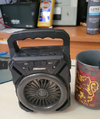
The top image was something a nephew gave me about 3 years ago as a birthday present. It is not a particularly spectacular unit... but it was given to me and I very much appreciate this token from him. HOWEVER..... I don't think I FULLY realized how much I appreciated it until about March or so of this year (if I recall accurately!). I saw this thing where I had put it... and a thought occurred to me....

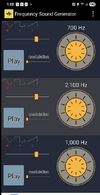
This is a "Bluetooth" speaker ...(truly... just like any other small Bluetooth speaker). When the thought settled in... I went searching and found the app in the Google Play Store on the bottom... "Frequency Sound Generator". It has three separate/independent tone generators that can be "set and left". It also has "Memory" capability. So I used two of the generators to configure a Double Tone and the third for a 1 Khz Tone and saved the setup in the app.

SO when I need to use it I turn on the speaker and pair it to the phone. Then I bring up the app, load the configuration and punch on the 2 generators for DBL Tone OR the third generator for 1 Khz. I lay the speaker on its back and just press the microphone against the speaker and use it just as I would use A BK 1040 Servicemaster's "acoustic coupler" and it works like a charm.

One day I will get off of "dead center" and go find an appropriate piece of foam to cut/fit and adhere to the ring around the speaker to act as an isolating cushion, again like the BK 1040.

I was happy to tell my nephew that his gift found a prominent spot on my test bench and would DEFINITELY be used frequently!!!!!!

Just thought I would pass it on!!!!

BobBluetoothSpeaker.pngFrequencySoundGeneratorApp.png
 
  • Like
Reactions: TM007

dxChat
Help Users
  • No one is chatting at the moment.