• You can now help support WorldwideDX when you shop on Amazon at no additional cost to you! Simply follow this Shop on Amazon link first and a portion of any purchase is sent to WorldwideDX to help with site costs.
  • A Winner has been chosen for the 2026 July 4th Retevis RA89R Giveaway! Click Here to see who won!

Yet another Pride DX300 gets retreaded.

nomadradio

Analog Retentive
I Support WorldwideDX.com!
Apr 3, 2005
8,804
14,736
698
Louisville, KY
www.nomadradio.com
Why is it so hard to find a good 1978 Firebird I can just use as a daily driver?

Aside from how many of them were totalled by adolescent or drunk (or drunk adolescent) drivers in the last 48 years, you'll need to basically rebuild one that isn't a genuine "barn find" with low mileage. 48 years takes its toll, even on a barn find.

And this Pride DX300 is kinda like that. Parts is parts, and once it has enough of them replaced it will perform like it was built to do.

But only after a few parts get replaced.

Maybe more than a few.

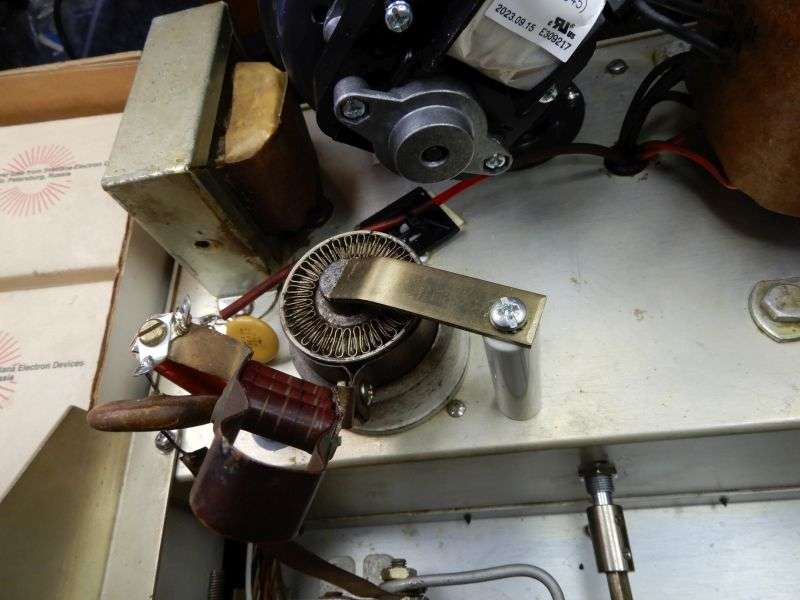
The relay board is dated 1977 in pencil.

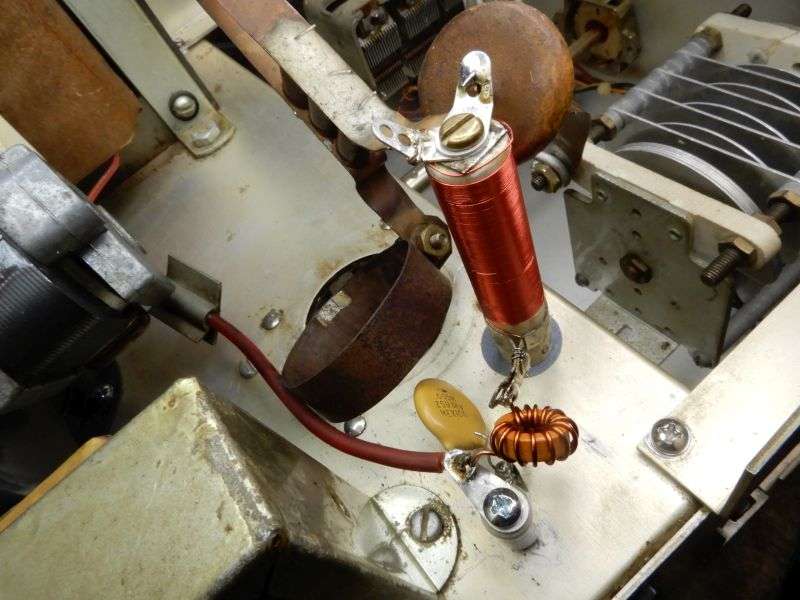
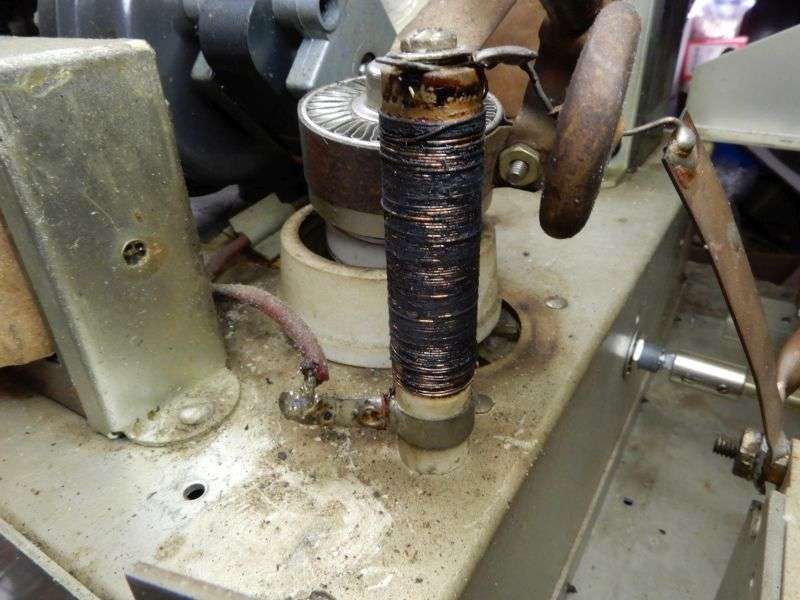
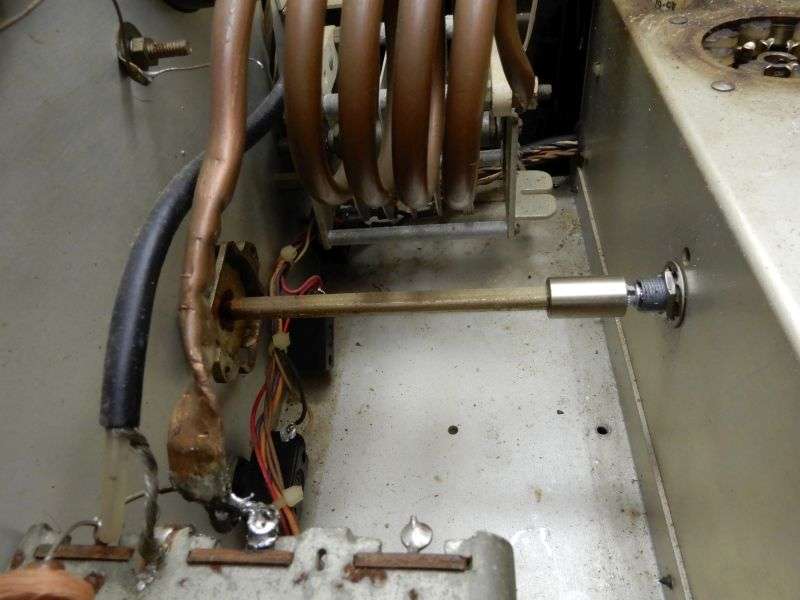
It's kinda dirty, but that's to be expected. The burned plate choke is not so rare, but there's no bypass capacitor where the HV wire feeds into it at the bottom of the winding.
g8rptw.jpg


Makes me wonder if the missing cap has anything to do with the burned winding? Not a dumb trick I ever tried.

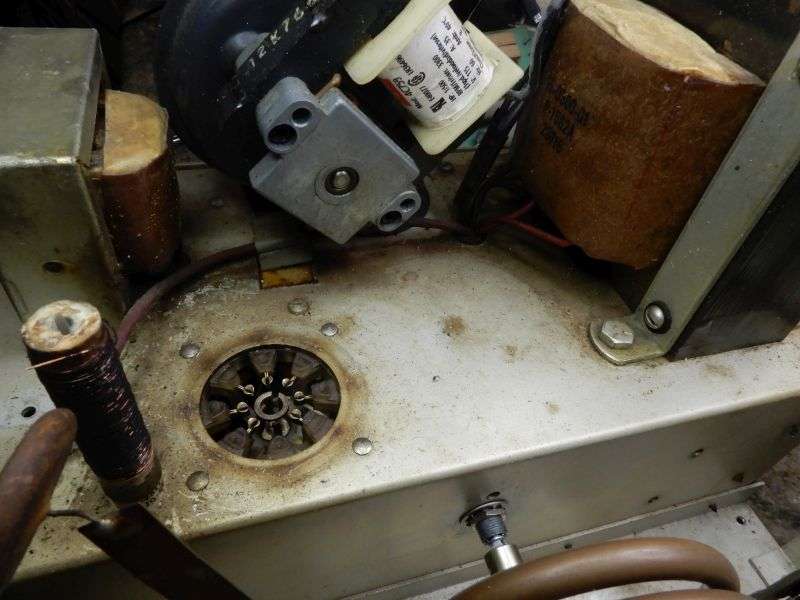
At least the blower has been upgraded. One less headache.
E0l1xO.jpg


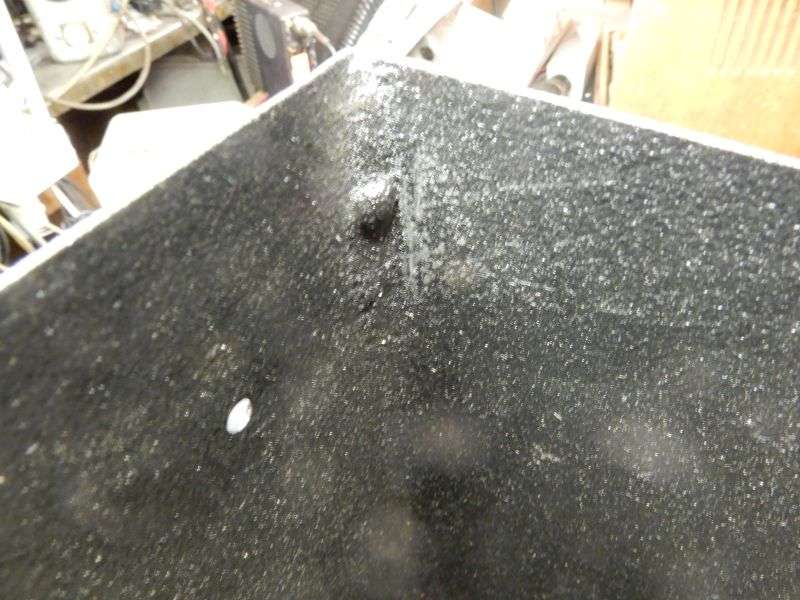
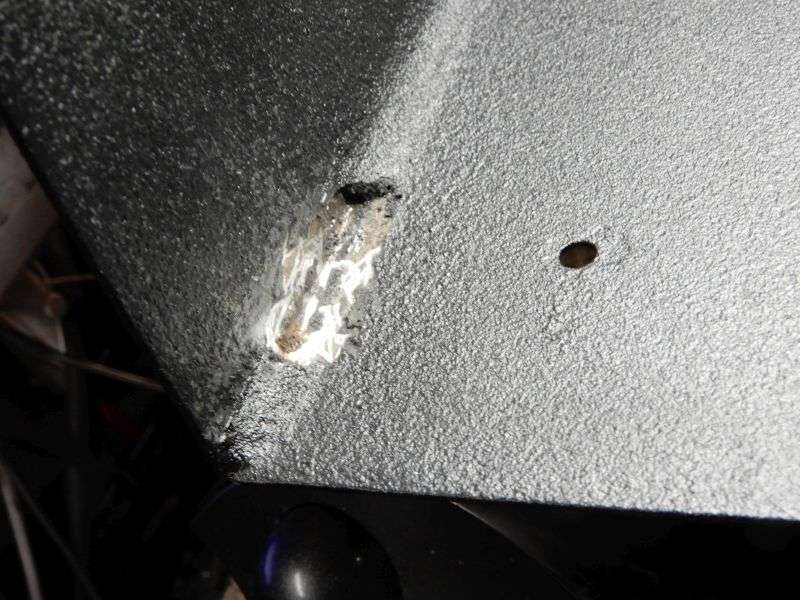
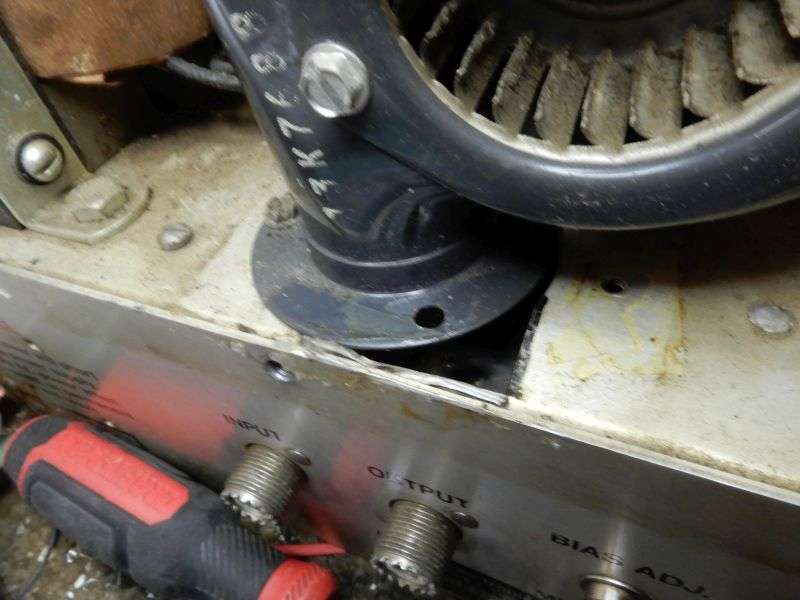
This gap was covered with black electrical tape. I'll need something more permanent to meet my standards.
cl62vn.jpg


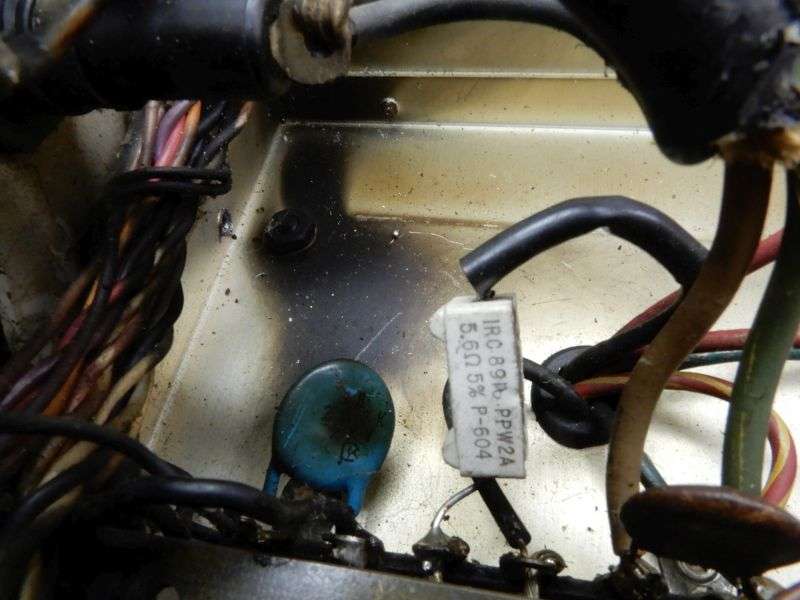
The blue disc cap is not original. It has been replaced, probably after the factory cap became a black smudge on the chassis surface. It's all too common for an amplifier to encounter at least one lightning surge from the power line in 48 or 49 years. The ceramic disc bypass cap does serve as a sort of demented surge limiter.
LSZk5e.jpg


The white ceramic resistor is the one we used as a fuse to protect the small transformer decades ago.

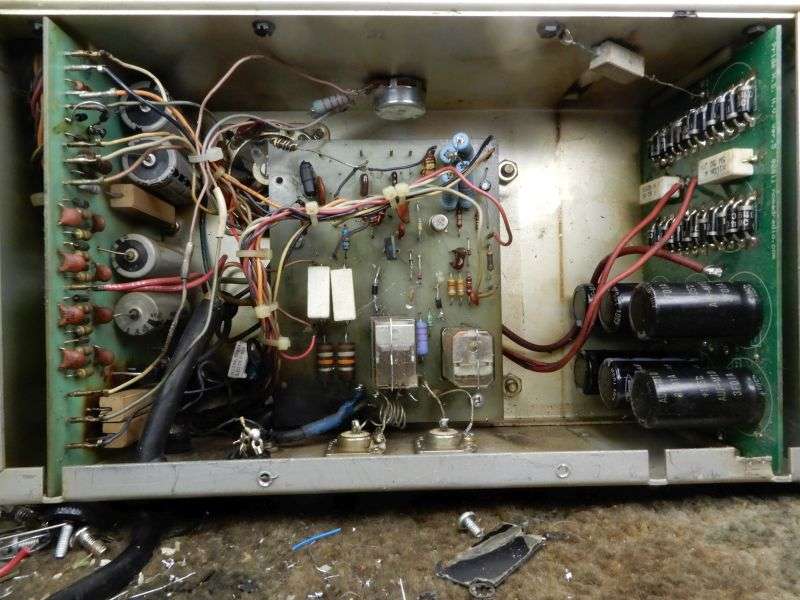
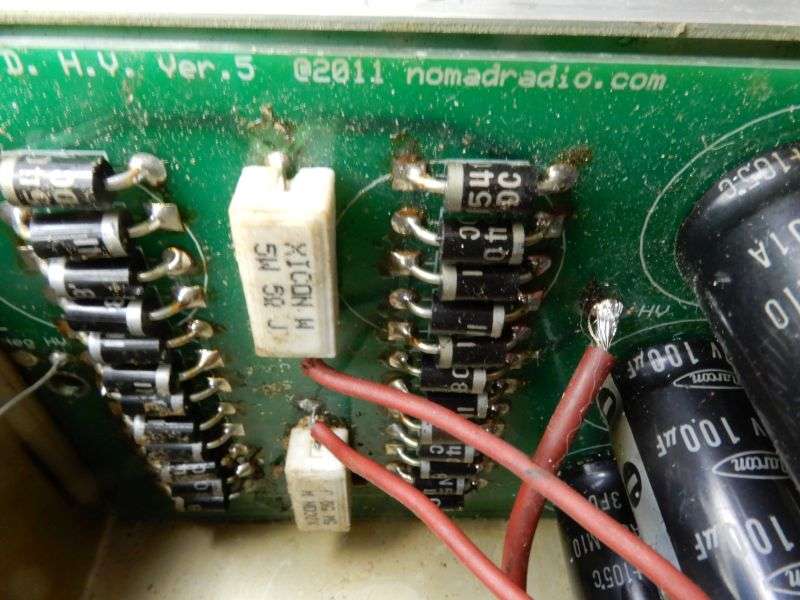
Sure enough, we rehabbed this amplifier about 15 years ago. Has our parts on the relay board, and our high-voltage board.
Y3egno.jpg


uxqk2G.jpg


Must have been a low-mileage specimen in 2011, since the low-voltage power supply board is still original. And now the worse for wear. It will get upgraded this visit.


The center "band" knob on the front had already been converted to a "rollback" or carrier-control knob. Turning the control-grid bias below cutoff lets you reduce the carrier to a safe level even if your radio doesn't have that knob on it. Even a small radio drives this tube pretty hard, so you don't lose modulated peak power, just the carrier. One less detail on the list.

nkjPQD.jpg


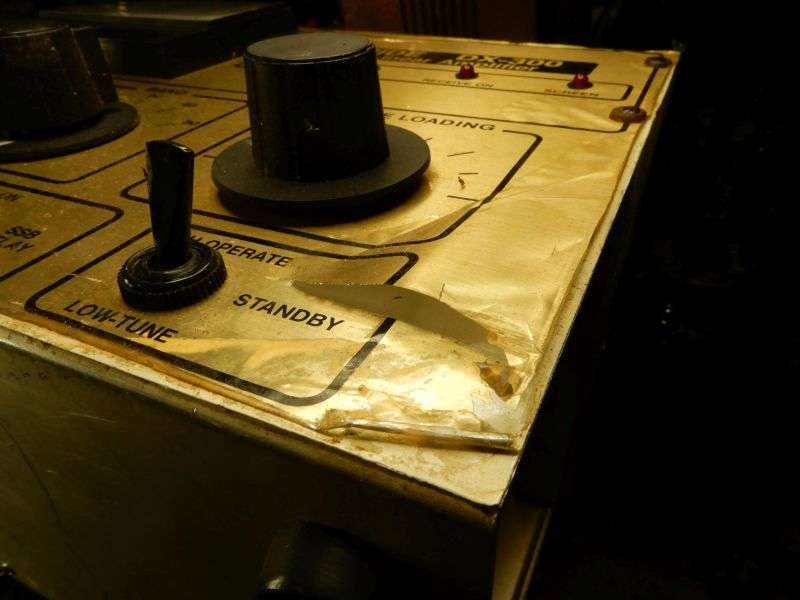
It's gonna need some cosmetic attention. Lucky for me I know a guy who produces new face decals.
7KQbog.jpg


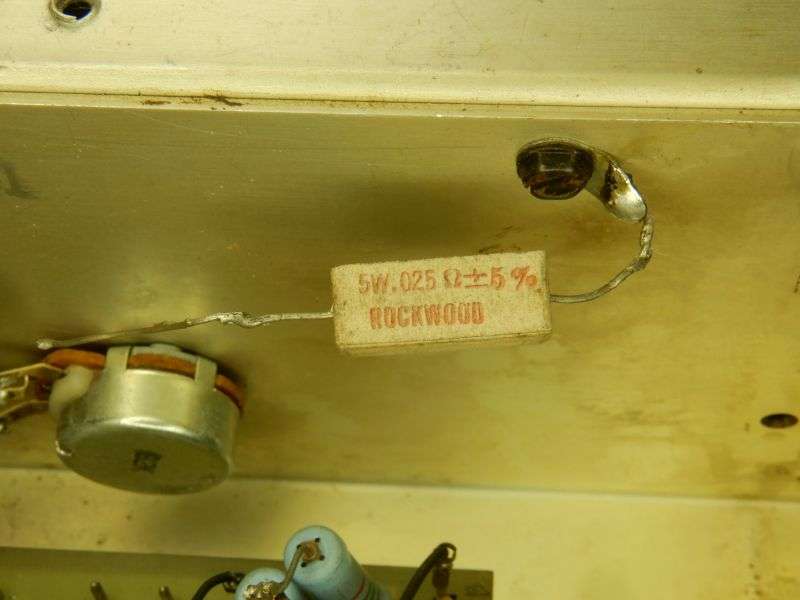
Definitely had someone using a radio that was too big sometime since 2011. This resistor is 5 ohms when we install it. Found that it will open up like a fuse if you drive it with a Saturn, a 2517 or similar two-final radio. This zero-point zero two five ohm part should serve as a "no-blow" fuse.
DpV4g3.jpg


Got in the habit of calling the 5-ohm 5-Watt resistor the "Saturn fuse". Typically blows before the tube. Not always, just usually.

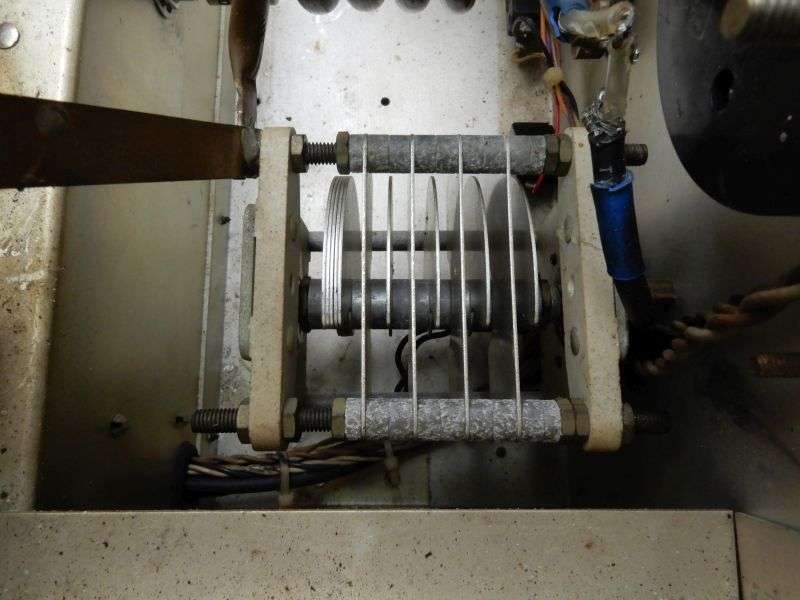
There's some crustiness on the plate tune capacitor, but that's cureable with air-conditioner coil cleaner. Really shines up non-ferrous metal surfaces.
PvLvE1.jpg


This one cleaned up just fine.

The circuit board behind the meter is AWOL. The coaxes that feed into and back out are just solder-spliced together. Turns out RF Parts had that board to sell me, so I won't need to build one.

This amplifier is already spoken for. The guy it's promised to might turn it down, and the second guy in line could as well.

If so it will turn up for grabs, but probably not. There's another one of these hiding in the back room that I haven't cracked the cabinet to look inside. Got both of them in trade for a really-big amplifier project that was never going to get completed. Two broken amps for one big broken amp. My kind of deal. No idea yet what I'll find inside the other one.

Like a box of chocolates.

Film at 11.

73
 
Last edited:

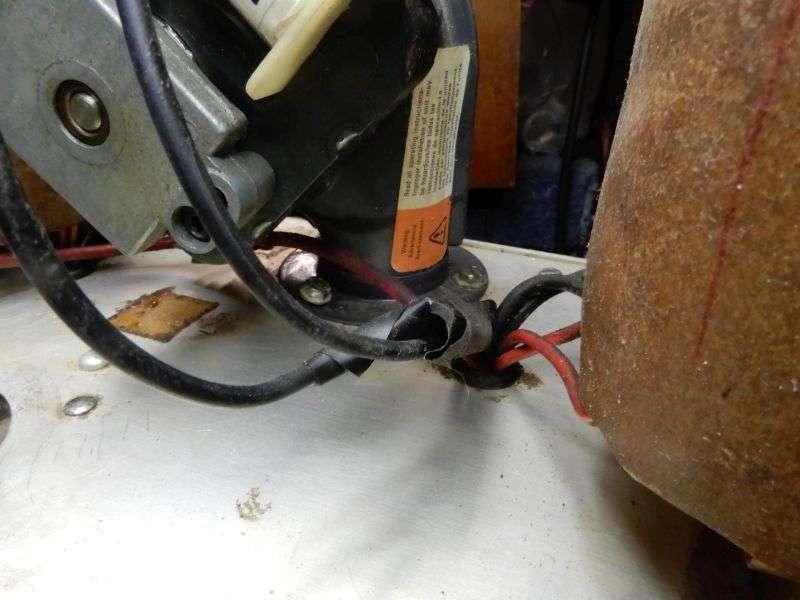
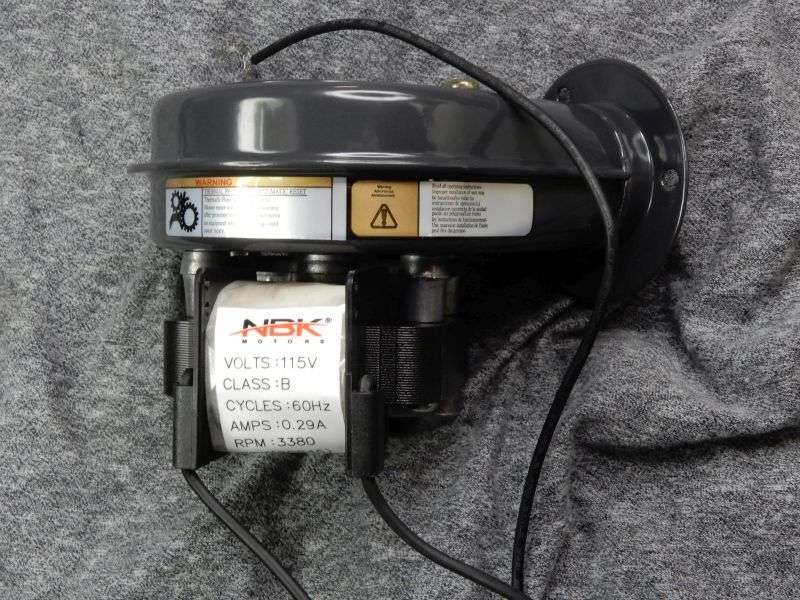
The rebuild continues. Whoever installed the new blower wasn't too slick getting it hooked up.

Be6GFF.jpg


Not a big deal, just another detail.

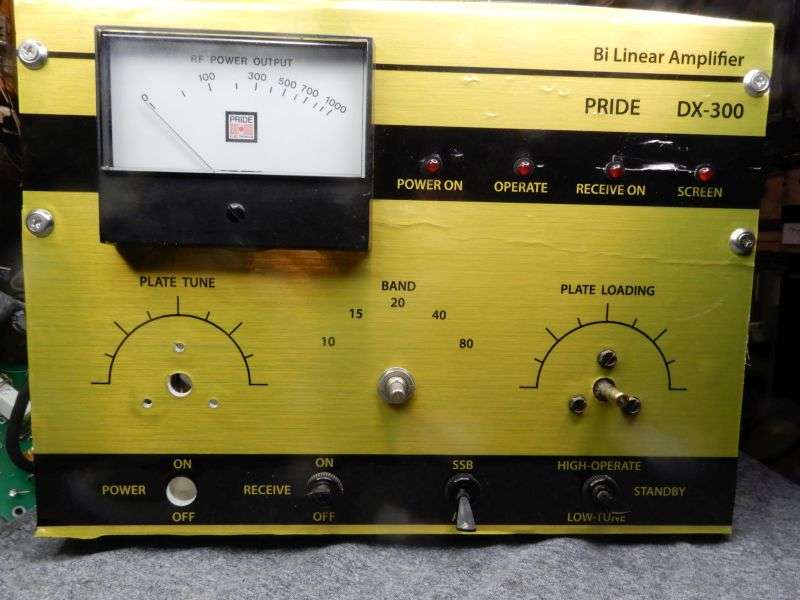
The new face sticker is an improvement, but it serves to prove body work is not my life's calling. I'll try some super glue on the rough spots where it kinked between the preamp and screen LEDs.

uB2u0T.jpg


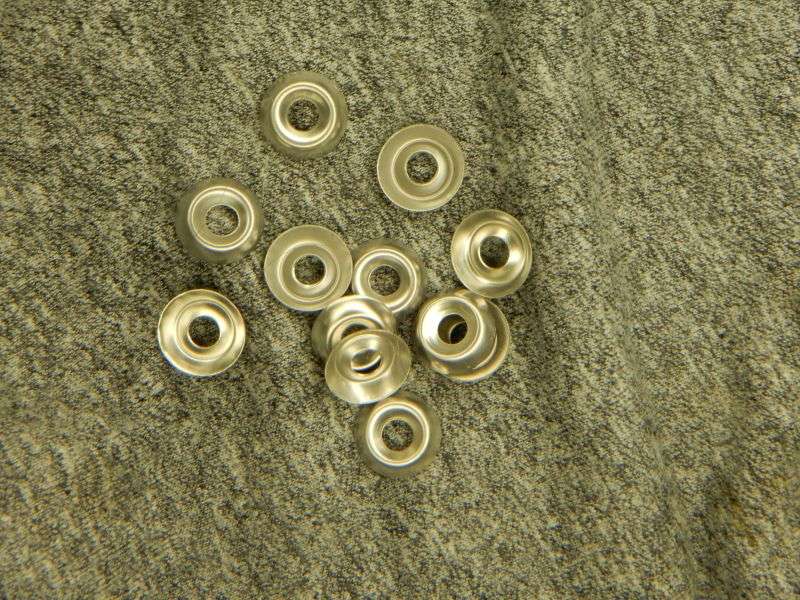
The four screws have trim washers under them. The originals were rusty, but it turns out the local hardware store has them. And in stainless, no less.

tyWR0M.jpg


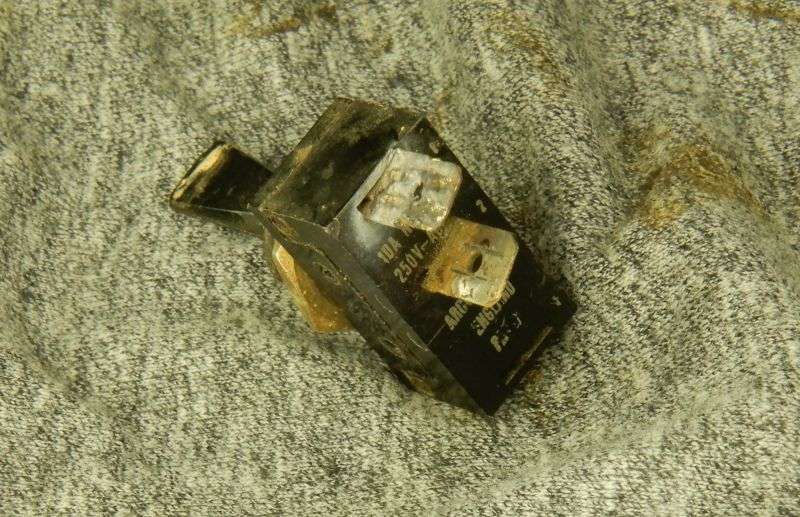
The power switch won't be getting reused.

W8S9kL.jpg


The replacement has a metal bat handle, not the black plastic paddle. But it's rated at 20 Amps. This one says ten.

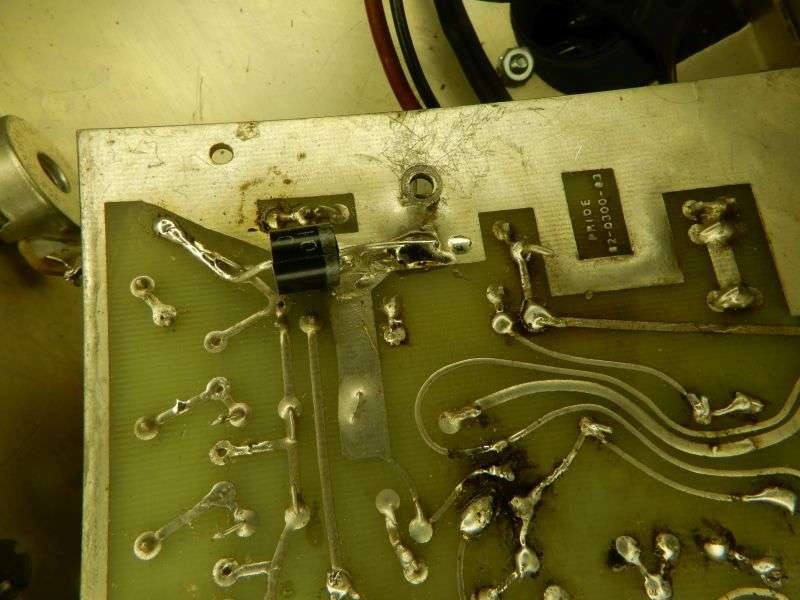
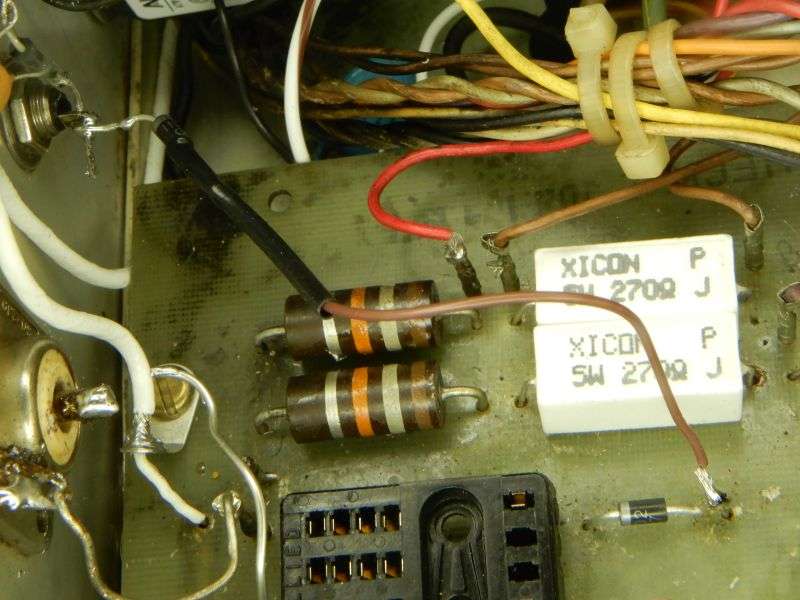
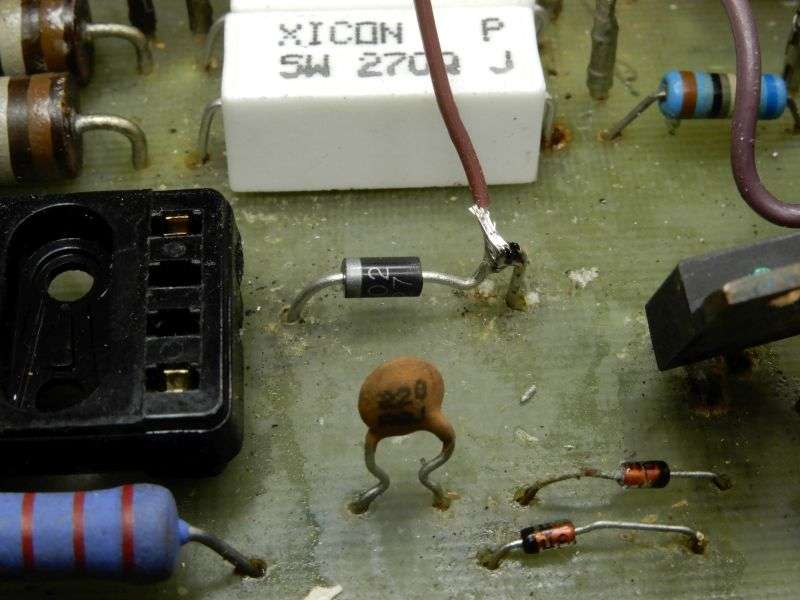
Here's an upgrade we made standard a while back. This is a 6 Amp 1kV rectifier diode. It's wired from the control-grid bias RF choke to ground. Kinda like the reverse-polarity protection diode across the DC power input to a mobile radio. Does nothing so long as the polarity is correct. Acts like a dead short if it's backwards. When a tube arcs over inside, a positive DC voltage comes shooting out of the tube's grid pin into the negative-polarity bias circuit. This diode does nothing until that spike of positive DC comes along. Serves to protect the bias control, L14 and whatnot. The bias pot is a famous point of failure in the original design. It's attached to the foil trace under the front-most end of L14.

rf3zUj.jpg


I really prefer for the amplifier to survive a tube fault without damage.

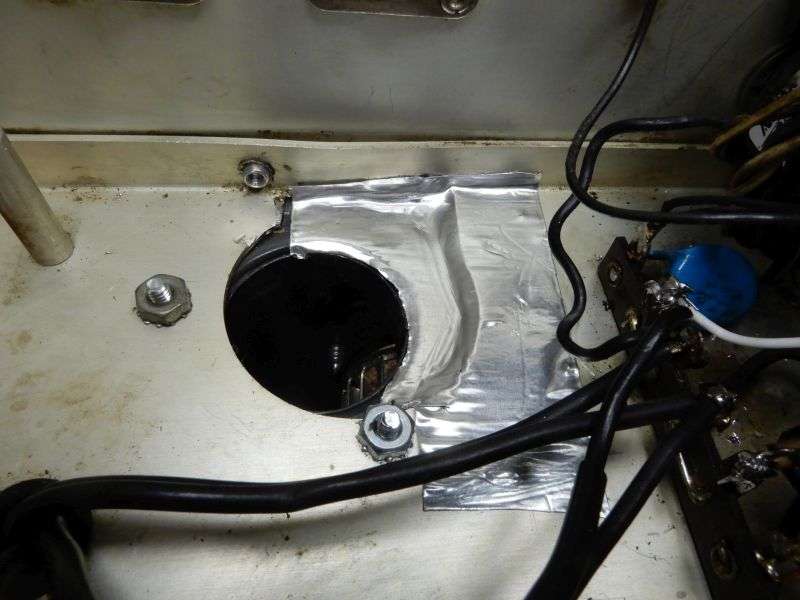
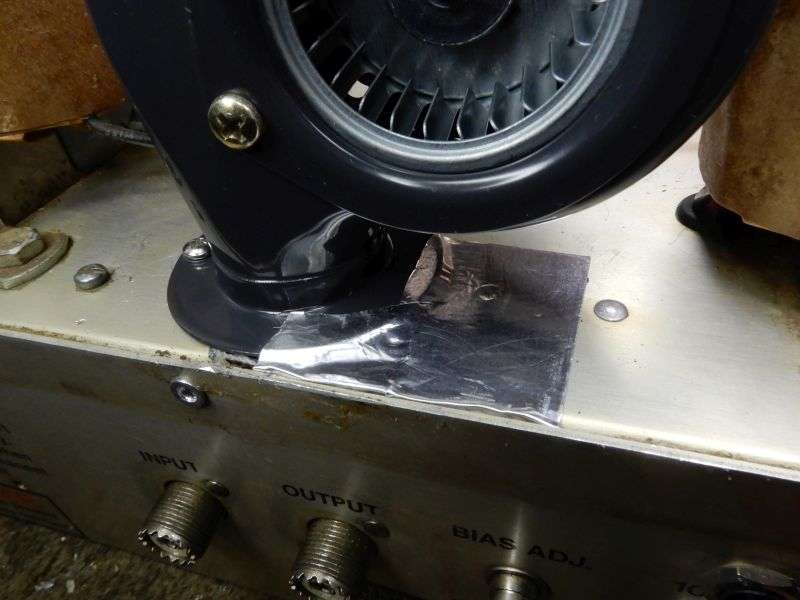
I copped out and skipped fabbing a metal plate to plug the gap around the blower outlet.

adgAP9.jpg


This stuff is fairly thick aluminum foil with an aggressive adhesive. Burnish it and it won't come away on its own.

fiPvTo.jpg


Better than the hunk of black electrical tape I found here.

Kinda like the commercial-break card from the Johnny Carson show, more to come.

Progress slows when paying work needs to get done.

73
 
Why is it so hard to find a good 1978 Firebird I can just use as a daily driver?

Aside from how many of them were totalled by adolescent or drunk (or drunk adolescent) drivers in the last 48 years, you'll need to basically rebuild one that isn't a genuine "barn find" with low mileage. 48 years takes its toll, even on a barn find.

And this Pride DX300 is kinda like that. Parts is parts, and once it has enough of them replaced it will perform like it was built to do.

But only after a few parts get replaced.

Maybe more than a few.

The relay board is dated 1977 in pencil.

It's kinda dirty, but that's to be expected. The burned plate choke is not so rare, but there's no bypass capacitor where the HV wire feeds into it at the bottom of the winding.

g8rptw.jpg


Makes me wonder if the missing cap has anything to do with the burned winding? Not a dumb trick I ever tried.

At least the blower has been upgraded. One less headache.

E0l1xO.jpg


This gap was covered with black electrical tape. I'll need something more permanent to meet my standards.

cl62vn.jpg


The blue disc cap is not original. It has been replaced, probably after the factory cap became a black smudge on the chassis surface. It's all too common for an amplifier to encounter at least one lightning surge from the power line in 48 or 49 years. The ceramic disc bypass cap does serve as a sort of demented surge limiter.

LSZk5e.jpg


The white ceramic resistor is the one we used as a fuse to protect the small transformer decades ago.

Sure enough, we rehabbed this amplifier about 15 years ago. Has our parts on the relay board, and our high-voltage board.

Y3egno.jpg


uxqk2G.jpg


Must have been a low-mileage specimen in 2011, since the low-voltage power supply board is still original. And now the worse for wear. It will get upgraded this visit.


The center "band" knob on the front had already been converted to a "rollback" or carrier-control knob. Turning the control-grid bias below cutoff lets you reduce the carrier to a safe level even if your radio doesn't have that knob on it. Even a small radio drives this tube pretty hard, so you don't lose modulated peak power, just the carrier. One less detail on the list.


nkjPQD.jpg


It's gonna need some cosmetic attention. Lucky for me I know a guy who produces new face decals.

7KQbog.jpg


Definitely had someone using a radio that was too big sometime since 2011. This resistor is 5 ohms when we install it. Found that it will open up like a fuse if you drive it with a Saturn, a 2517 or similar two-final radio. This zero-point zero two five ohm part should serve as a "no-blow" fuse.

DpV4g3.jpg


Got in the habit of calling the 5-ohm 5-Watt resistor the "Saturn fuse". Typically blows before the tube. Not always, just usually.

There's some crustiness on the plate tune capacitor, but that's cureable with air-conditioner coil cleaner. Really shines up non-ferrous metal surfaces.

PvLvE1.jpg


This one cleaned up just fine.

The circuit board behind the meter is AWOL. The coaxes that feed into and back out are just solder-spliced together. Turns out RF Parts had that board to sell me, so I won't need to build one.

This amplifier is already spoken for. The guy it's promised to might turn it down, and the second guy in line could as well.

If so it will turn up for grabs, but probably not. There's another one of these hiding in the back room that I haven't cracked the cabinet to look inside. Got both of them in trade for a really-big amplifier project that was never going to get completed. Two broken amps for one big broken amp. My kind of deal. No idea yet what I'll find inside the other one.

Like a box of chocolates.

Film at 11.

73
Heartbreaking pics.
 
The topside is looking a lot more legit.

BWANS0.jpg


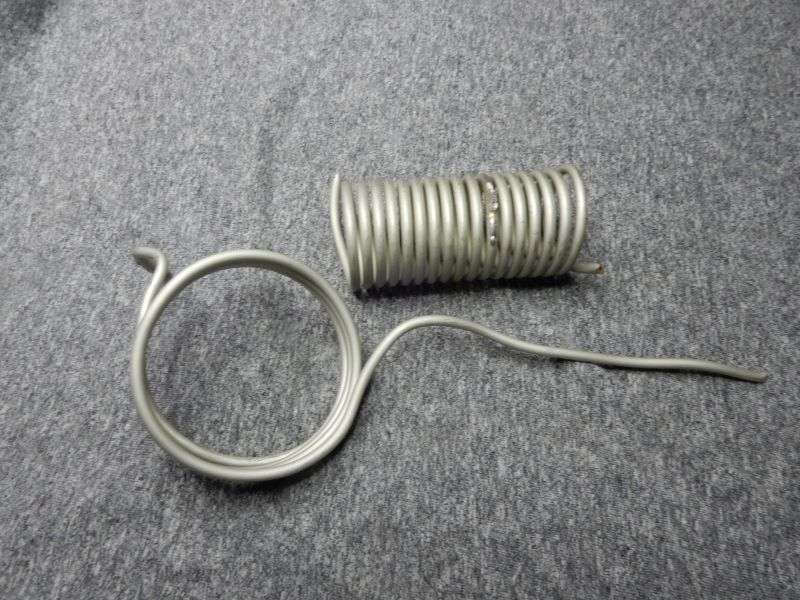
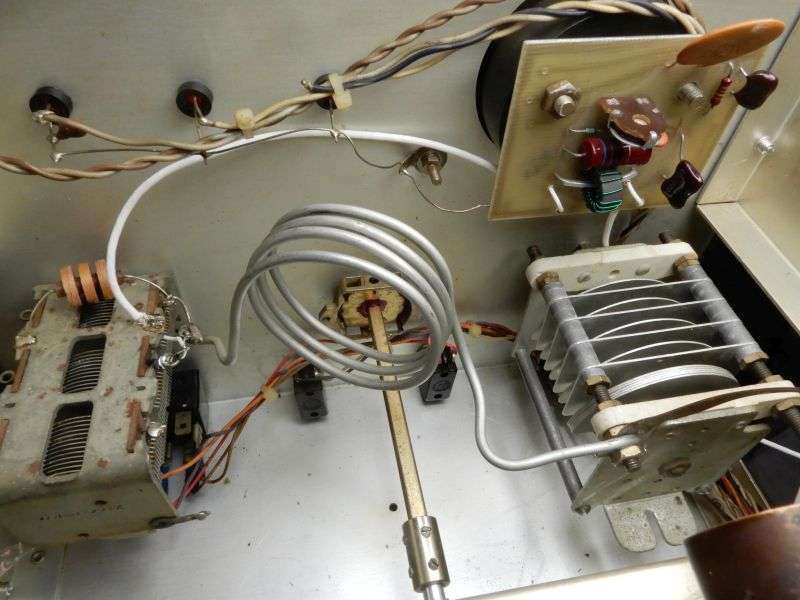
The pi-network tank coil it came with did not appeal to me. I have lots of D&A plated copper tubing. Removing the bogus ham-band coverage and band selector improves reliability in a Phantom or Maverick.

HQToyk.jpg


And EET'S ALIYEEEV!

r2MEnf.jpg


Got lazy and bypassed the receiver preamp.

Just one problem. Puts out power, but the front-panel meter is totally dead. Won't budge when it's putting out good power.


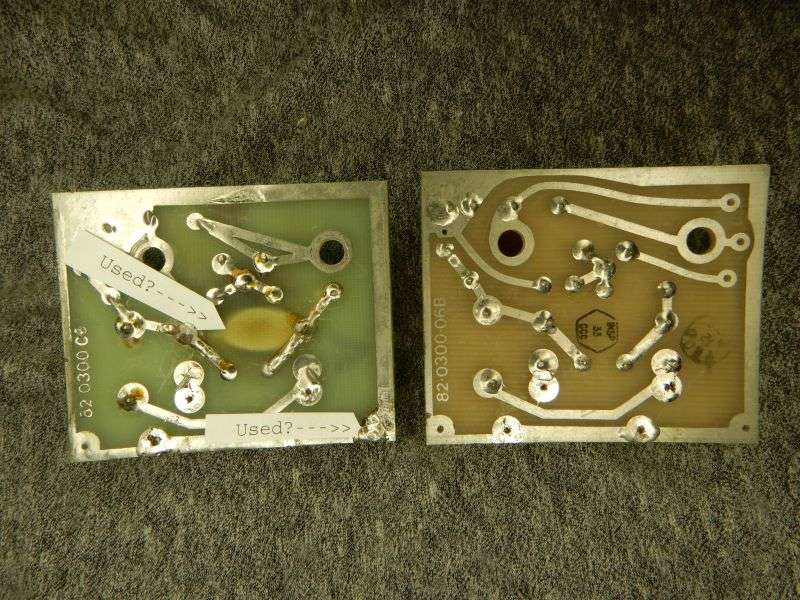
Turns out I missed a detail when comparing the two meter boards from RF Parts.

AlePcg.jpg


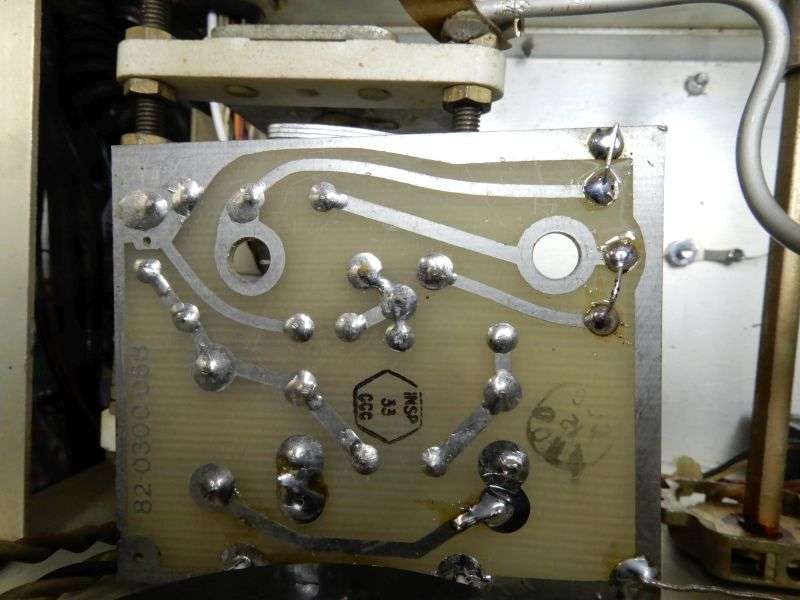
Clearly they're not exactly the same. The one on the left appears to have been removed from an amplifier with mileage. The one on the right is clearly new and unused. But the part number on the left is not exactly the same. Turns out the new one is for a KW-one model. The part number on the left edge of each board has a different suffix letter. The DX300 has only the wattmeter function. The KW-One is switchable between RF power and plate current. Sure enough, I needed a couple of jumper wires to take the place of the RF/Plate current switch.

Wt2aNK.jpg


Hey hey, the meter works, now that it's connected to the wattmeter circuit.

Time to do some torture testing. Some touch-up on the front-panel sticker would be nice. There are some bottom-side details that might bear mentioning, but not tonight.

And if the customer who has first refusal on this one flakes out it could end up looking for a new home.

73
 
Two steps forward, one step back.

After running for about a half hour, the blower developed a rattle sound. Didn't matter what caused it. I had bought blowers for this project and have them on hand. The new one is quieter.

pyir37.jpg


Came from Amazon.

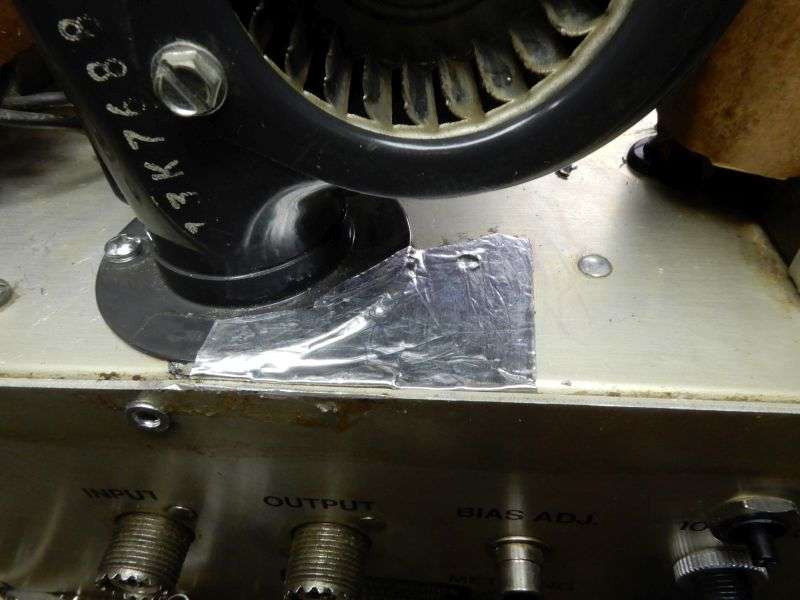
Copped out and skipped making a metal bracket to cover the gap around the flange. The adhesive foil tape won't come loose.

4G4EH3.jpg


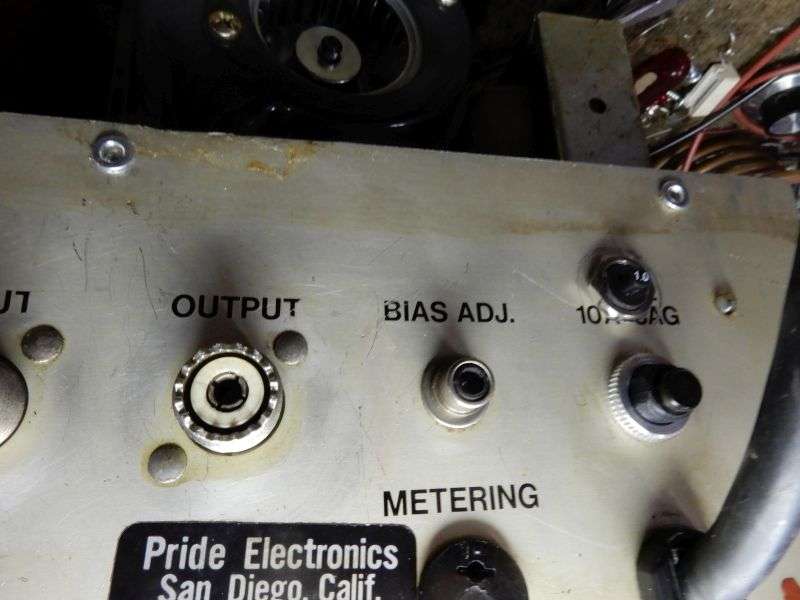
Since the bias control is now located at the "band" knob on the front panel, this hole on the back is available. I'm fond of having a "hard key" jack, like a real ham linear. Anyone who wants to use it on sideband should either get a foot switch or put a relay in the radio to key it with a patch cord. Never cared for the "SSB" switch delay method. Too much relay clatter for me. This also simplifies setting bias for sideband. Gotta key it with no drive to do that.

IEmRPr.jpg


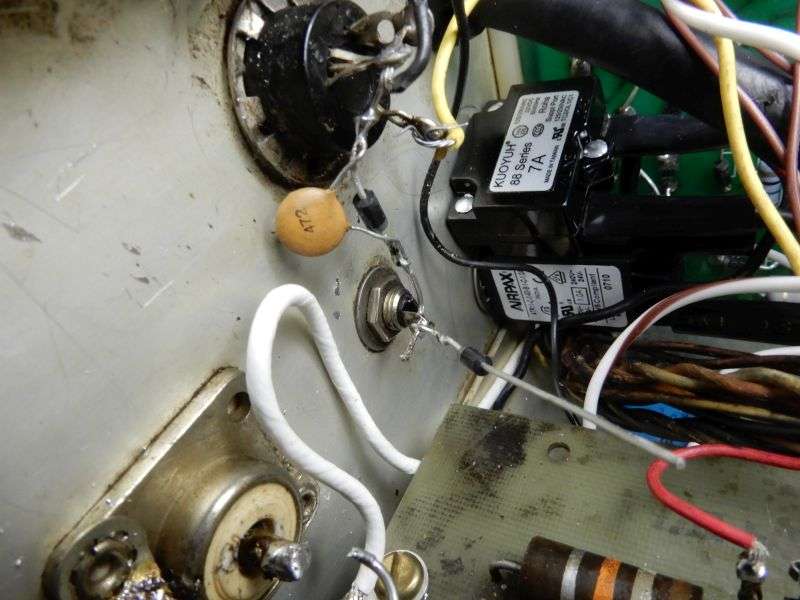
Maybe I'm paranoid, maybe I'm just over cautious. I install two diodes on a hard-key jack. The one with the bypass disc cap is grounded to the meter jack's black wire. It's there for reverse-polarity protection. If the other end of your patch cord was plugged into, say, a Heathkit SB200, you would have negative 100 Volts DC feeding into the 12-Volt keying circuit. Bad juju. Just like the reverse-polarity "protection" diode in a mobile radio, it will conduct if negative DC gets accidentally fed into this jack. And it will key the SB200, if that's what happened. The other diode is there for a positive DC voltage. Anything higher than about 15 Volts will reverse-bias this diode, and block any unwanted current flow into the Pride's relay circuit. Like would happen if the far end of the patch cable was plugged into a Heathkit SB220. Better safe than sorry. Cheap insurance. Might not be visually clear, but the banded end of both diodes go to the center pin of the keying jack.

TOgkut.jpg


h8so9J.jpg


The brown wire lap-soldered to the anode (front) end of the relay's spike diode D30.

4e4Bja.jpg


I called the guy who is first on the list. Told him the last picky details will be finished in a week. He said call him then. Looks like he'll want it after all.

Once I get paid I can afford to fix up the next one.

73
 

dxChat
Help Users
  • No one is chatting at the moment.
  • @ BJ radionut:
    Scheduled for Jul 4, 2026 Saturday Live Streams:
    To celebrate the 250th birthday of our great nation. We are giving away not just one, but multiple antennas! The Grand prize is the CaHR-Tenna Hydra Antenna, along with several other antenna prizes that will be announced throughout the giveaway. Whether you're a new ham, portable operator, POTA activator, or an experienced HF operator, this is your chance to upgrade your station. Prizes Include: HRA Hydra Antenna (Grand Prize) Additional antennas from HRA More prizes may be added during the giveaway!
  • @ BJ radionut:
  • @ BJ radionut:
    CQ Worldwide VHF SSB/CW Contest: 1400Z, Jul 4 to 1400Z, Jul 5