• You can now help support WorldwideDX when you shop on Amazon at no additional cost to you! Simply follow this Shop on Amazon link first and a portion of any purchase is sent to WorldwideDX to help with site costs.
  • A Winner has been selected for the 2025 Radioddity Cyber Monday giveaway! Click Here to see who won!

Black Cat JB2000. Make the Dracula sign.

nomadradio

Analog Retentive
I Support WorldwideDX.com!
Apr 3, 2005
8,379
13,924
698
Louisville, KY
www.nomadradio.com
Hmm.
JB2000. Wasn't stored well. Brings to mind the old wisdom "just because you can doesn't mean you should".

But the HV winding on the transformer passed the leakage/breakdown test, and the owner wants it fixed. Several decades of experience working for this guy makes me confident he is serious. Besides, he'll come up with tubes. This one has a bum tube that won't light the filament.

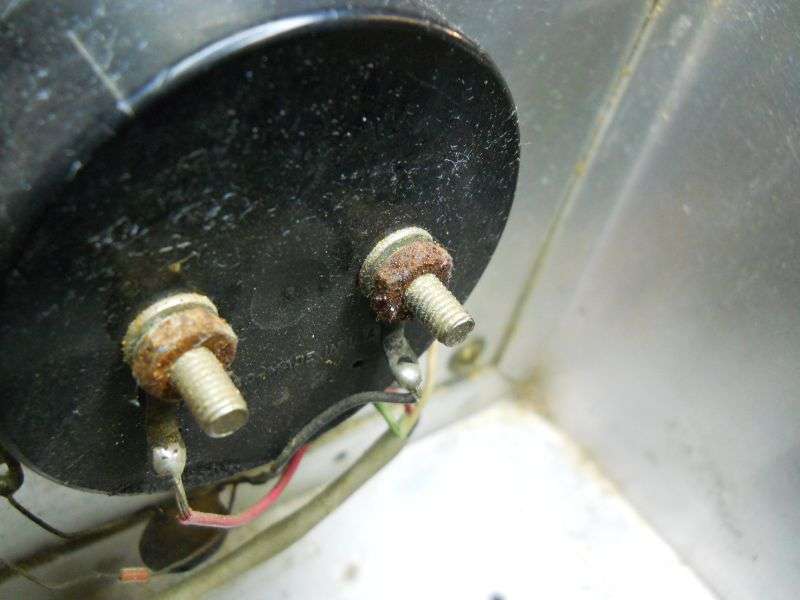
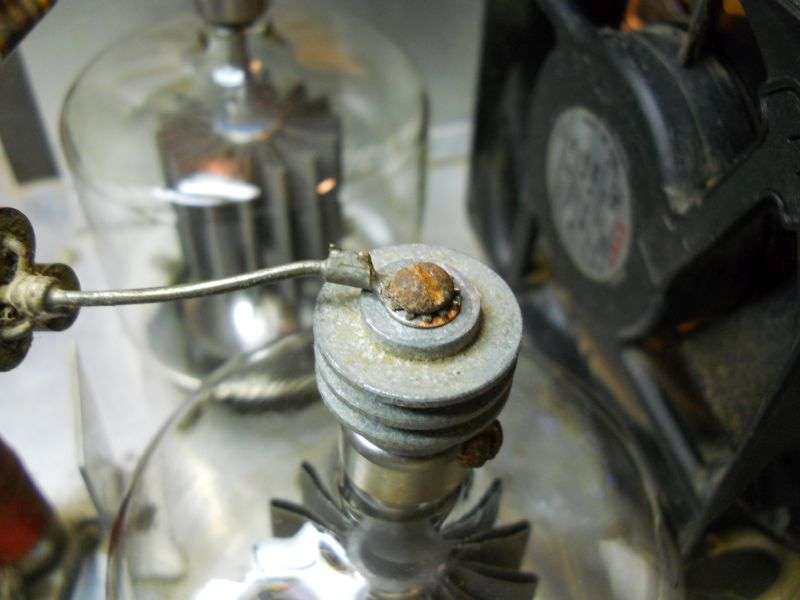
And it's crusty.
2N5tl8.jpg


MtVHSA.jpg


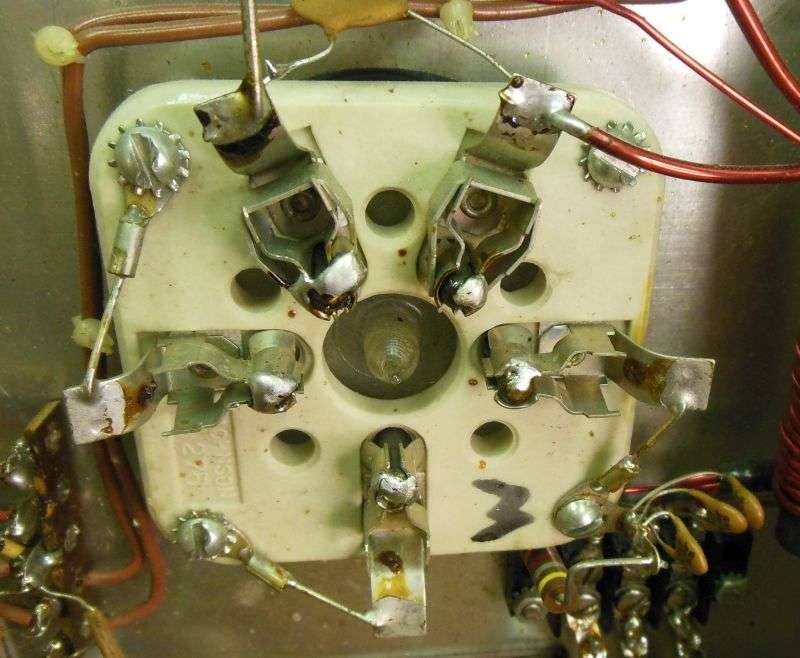
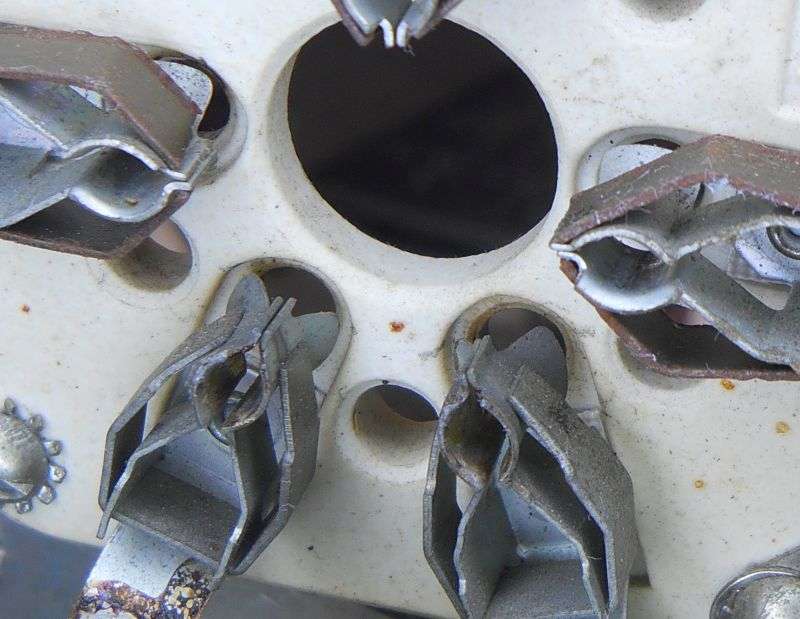
This tube socket is grungy enough the heat from the poor connection is probably what melted the solder from the bad tube's filament pin.

Just don't plug a good tube into a socket that looks like this. It won't be good for long.
q2FVny.jpg


Bit by bit the question comes to mind "How many boats did you anchor with this amplifier?"
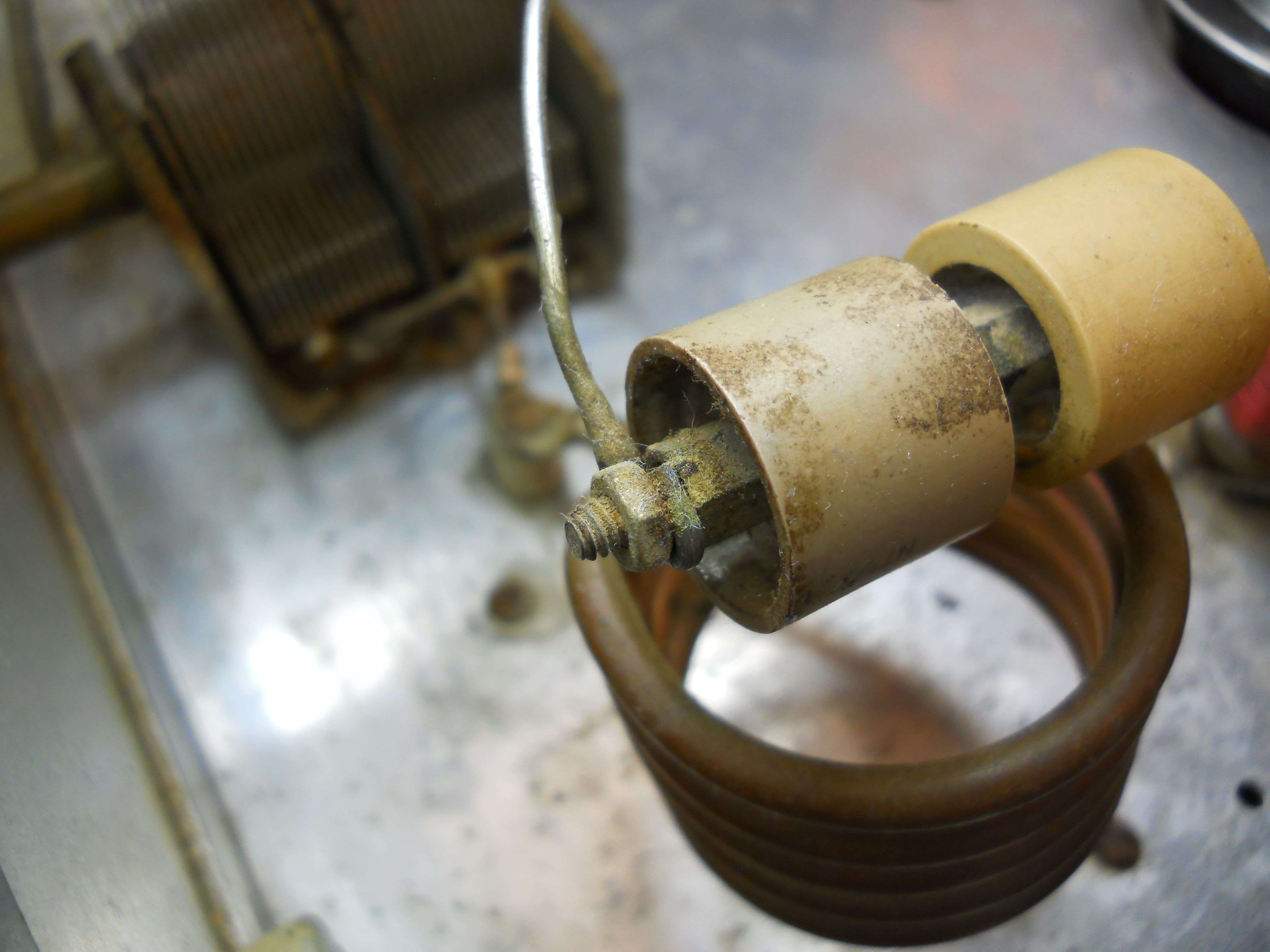
2adZbp.jpg


But wait: There's more.

lCjNVa.jpg


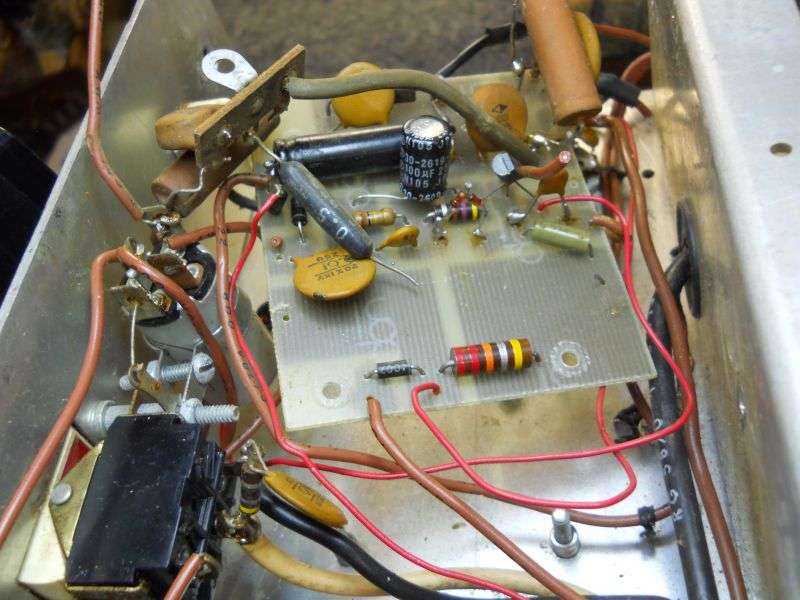
The owner thought this was a low-drive JB. Someone had added a second 8417 driver tube alongside the original socket. But it wasn't hooked up. The drive had been routed directly to the cathodes of the 3-500Z tubes. And the old low-drive input circuit was gone. A big relief, that. Every one of this model we have fixed for decades has been converted to high (direct) drive to the big tubes. The built-in driver is just a bad idea. Never mind why. How do I count the ways?

So the old driver-tube circuit board goes away.
xn2bSc.jpg


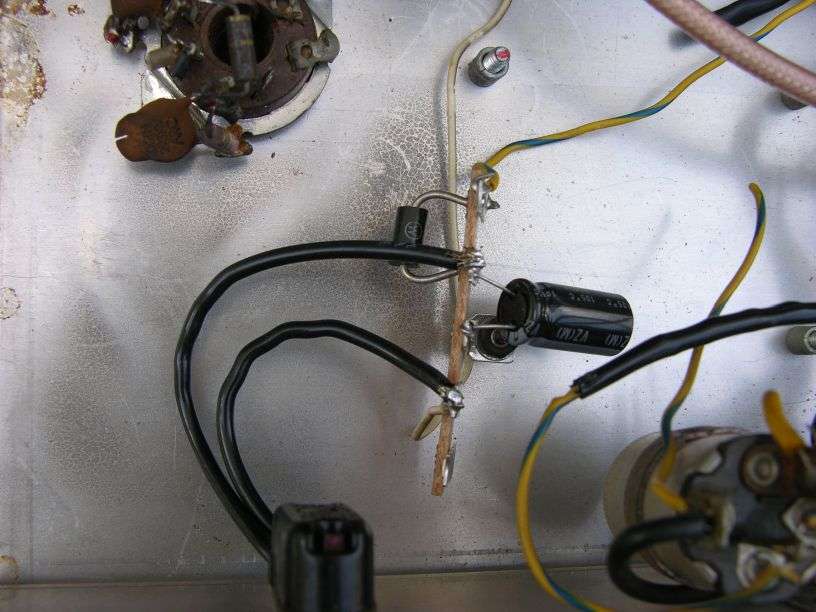
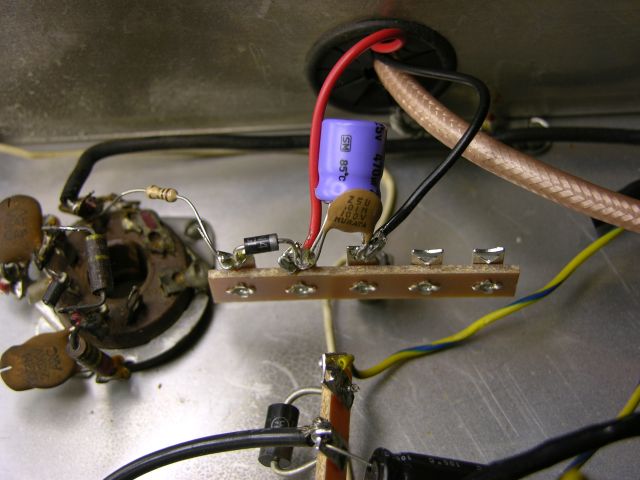
The 12 Volts DC for the antenna relay will come from a rectifier and filter mounted on a tie strip. The keying circuit will be bolted to the rear panel alongside the relay. Not sufficiently interesting to merit a pic.

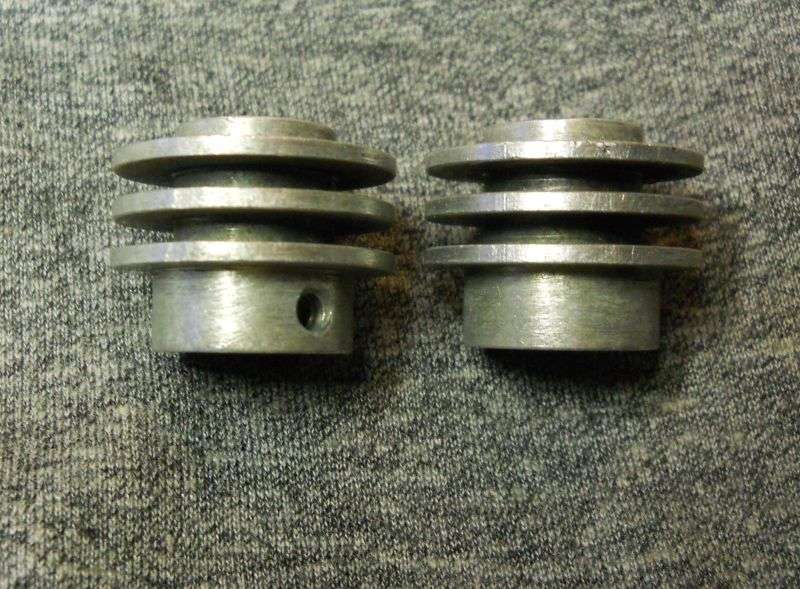
Air conditioner coil cleaner is mostly phosphoric acid, water and blue dye. But soaking the plate caps in it, and a stainless-wire brush got them presentable again.
lzQZ8W.jpg


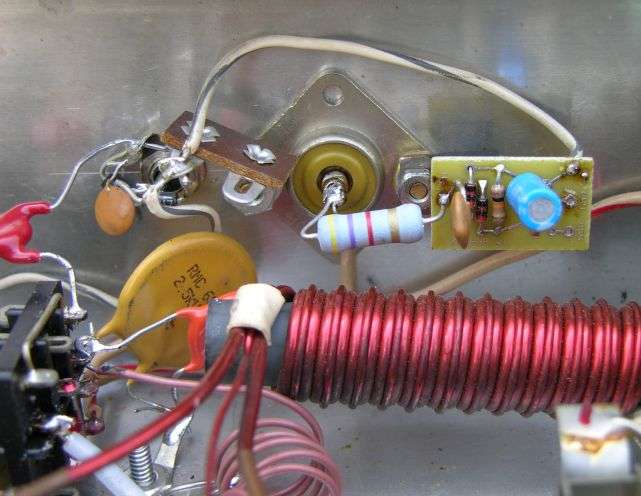
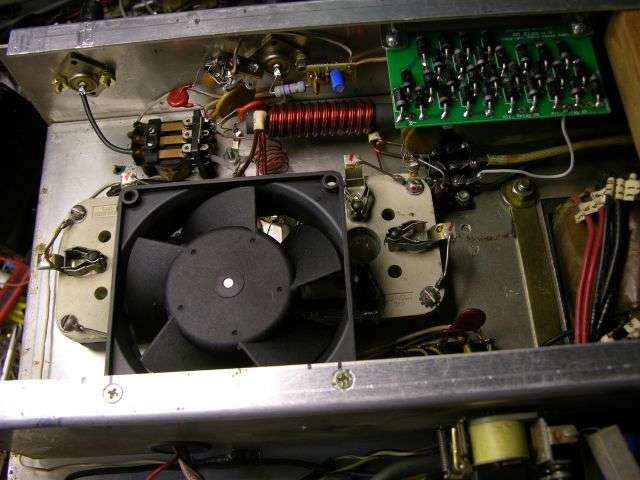
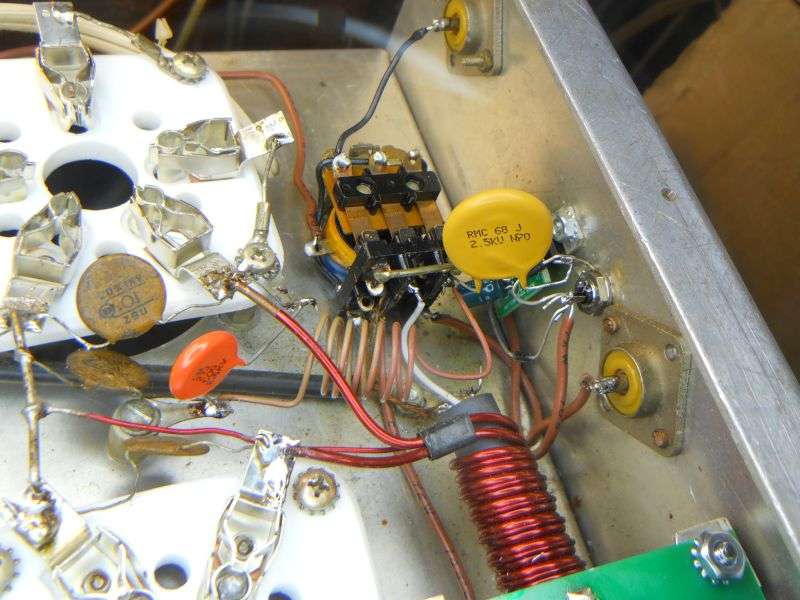
The tubes get a tuned input circuit. The coil is wound on a half-inch form, 68pf to ground on the input side, 27pf to ground on the tube side. The tiny glimpse of green at the bottom of the pic is our diode-bias board, but with only 25 diodes in series. This amplifier runs on 2500 Volts to the plates, so we could use the same HV board that puts a full-wave doubler into a Pride. Not interesting enough for a pic.
6UTnC4.jpg


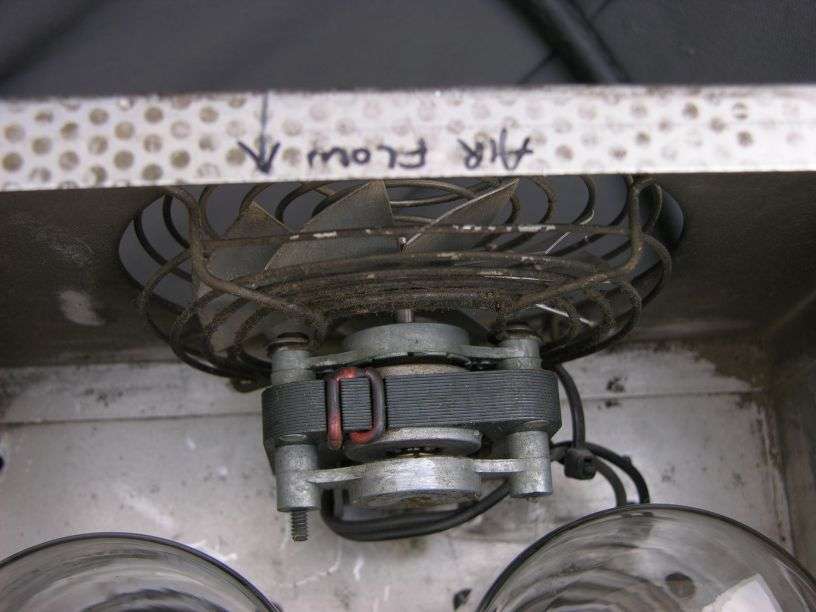
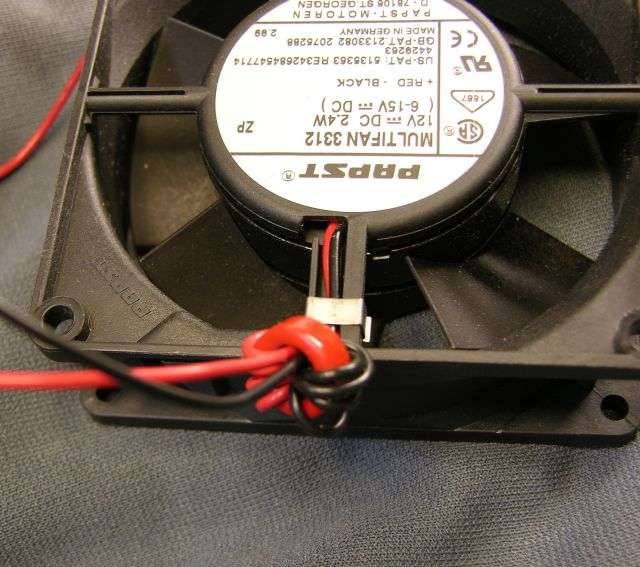
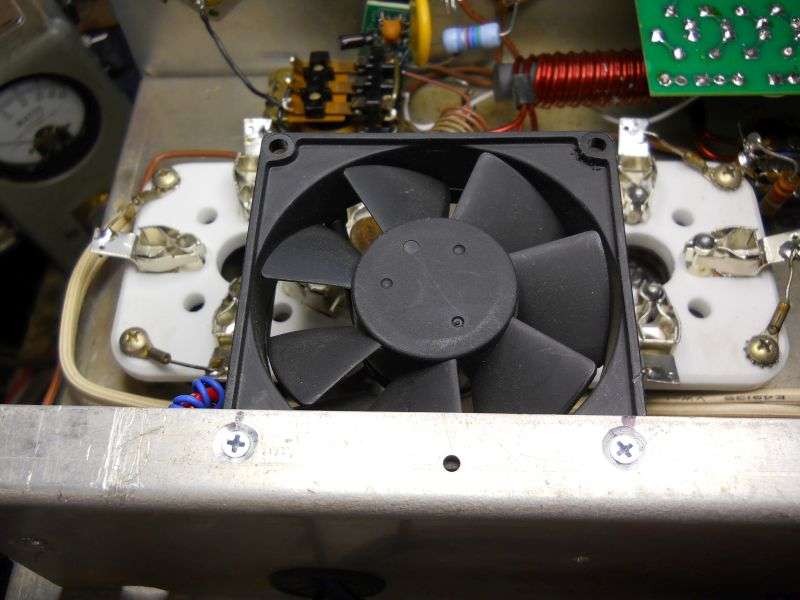
The new tube sockets will last longer with a breeze on the undersides. Doesn't take much. This fan runs from the 12 Volts DC that powers the relay.
UDQsgB.jpg


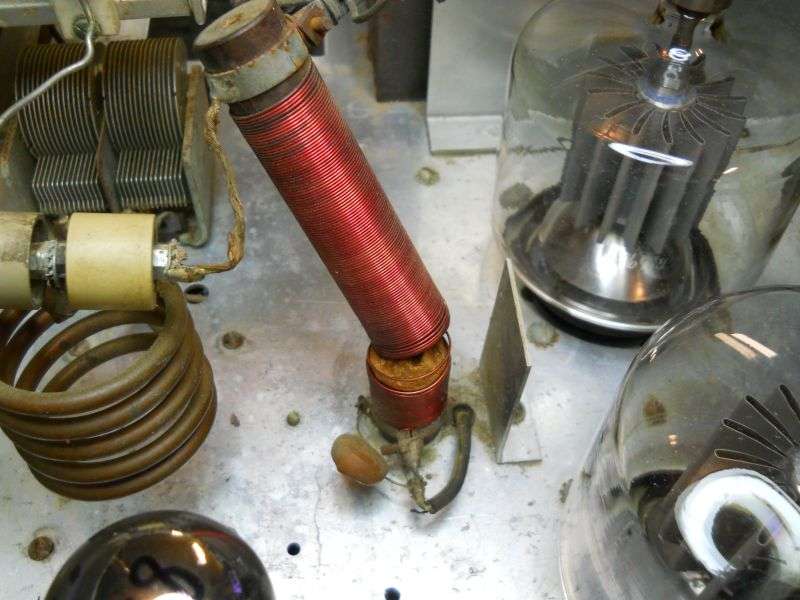
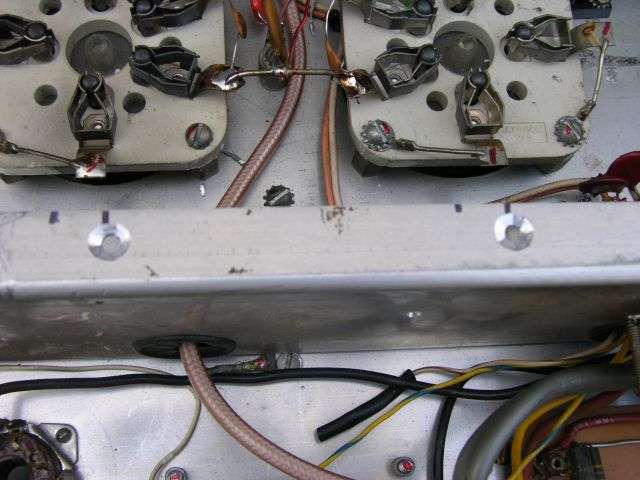
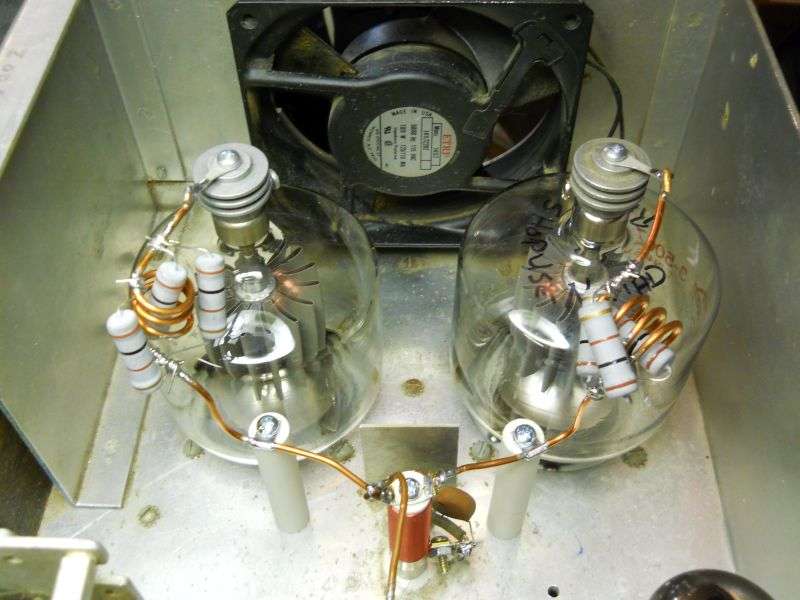
The new plate choke is one we make for the Heath SB220, Pride DX300 and others. But it's a bit short compared to the original. The solution is to take two of the ceramic pillars we use to make the choke and anchor the long parasitic-choke leads separately from the choke's connections. Should be more durable when tubes get changed. If I had anchored each parasitic directly to the top of the plate choke, the leverage would have destroyed it before long.
viQfDk.jpg


This sure seems like a long post, but I left out a lot. And yes, I did get paid for this job. Anyone who has done this sort of work will have horror stories of orphaned jobs that had good money spent to finish them and never got taken home.

But if you bring me one of these that looks like this one I'll probably make the Dracula sign and tell you not to bother.

73
 

Yes, a few months ago, I got one of these monsters to work.
It had many hands in it. has a nice newer Dahl HV transformer.
but all messed up. screwed up to the max!!
found problems with the 8417 driver tube wiring. the resistor
at the screen was incorrect. I took out the
high/low switch and wired it up for "high" power.
I could then drive it with 4 wattts.
the 10 ohm resistor on the negative side of the HV capacitor bank
was bad. dirty contacts on the antenna relay. also the RF key-up circuit
to that relay was wrong. bad RF wiring to the RF to key up circuit.
resistor at the RF input from the driver was burnt.... and so fourth!!!

but I finally got it working !!!!

,,
 
  • Like
Reactions: NZ8N
Chris -

What do you use to clean the tube sockets ?? Or ... do you just replace them. I've been using TARN-X that I've reduced about 50% or so. 100% is too tough on the plating.
- 399
 
Chris -

What do you use to clean the tube sockets ?? Or ... do you just replace them. I've been using TARN-X that I've reduced about 50% or so. 100% is too tough on the plating.
- 399
Wear gloves. Tarn-x is one of those things that everyone had and everyone thinks is safe, but this one is actually bad to get on you. Some of the ingredients are cancerous, some are bad for your thyroid and iodine uptake, some bad for your swimmers, its quite a coctail of bad stuff.

Its a very useful product though, not trashing tarn-x. Hydrochloric acid, tin and thiourea (tarnx ingredient, can use tarn-x here) makes a solution capable of tinning copper boards!!
 
  • Like
Reactions: unit_399
Wear gloves. Tarn-x is one of those things that everyone had and everyone thinks is safe, but this one is actually bad to get on you.
Agree 100%. Half of the text on the TARN-X label is disclaimers and warnings. Stuff is really strong. Still cleans almost as well even when reduced 50-50 with distilled water, but no damage when soaking items a little too long.

- 399
 
  • Like
Reactions: brandon7861
What do you use to clean the tube sockets ??
We use CRC brand "QD" cleaner, or 99% isopropyl. The sockets got replaced in this amplifier. Plating on the socket contacts is thin, and excess heat just removes it. No amount of cleaning will put it back. Fortunately the sockets are still made in China.

73
 
  • Like
Reactions: unit_399
The best part is when they don’t realize it has a driver so they dump a 4 transistor amp into it. . Needless to say that didn’t end well. And I hate the filaments being in series.
 
  • Like
Reactions: linearone
The series filament setup was used by Henry Radio. Cuts the current rating needed for the cathode choke in half. Cuts the wire size needed for the filament secondary in half. So long as both filaments light up, it works just fine. I have used this trick with six and eight tubes to make the size of the filament choke more manageable. Only problem arises when one filament goes open. Throws it all wockerjaw. A small B- only RF choke connected to the mid point between filaments will get roached, typically.

Just an incentive to keep from melting the solder in the tubes' filament pins.

73
 
  • Like
Reactions: NZ8N
that picture reminds me, on the JB2000 I worked on, one problem was
them screws, star washers, and tube socket standoffs were not making
a good contact with chassis ground. So took them all out, cleaned it up.
put back together then had grounded-grid again.
 
  • Like
Reactions: Danzik
So here is my post from the CBTricks forum in 2013. I haven't updated it, just copied from my archive. One addition would be that we sell the complete HV rectifier/filter circuit board on fleabay now. Naturally, the 2013 post makes no mention of this.


The only rational thing to do with a JB-2000 is to remove the driver tube and hook it up to use with "high" drive, between 100 and 150 Watts PEP. The original built-in driver is just a bad idea, unless you can still get the driver tubes for six bucks. That's what they cost 50-plus years ago when this "Jimmy Brown" was made. Nobody cared if a driver tube lasted only a week or a month. Those days are gone forever, and I have not seen a good solution for upgrading the dependability of a built-in driver stage. Just get rid of it and use an external driver.

First issue will be cooling air. The original fan sucked hot air out the back of the unit. This will never put enough air onto the glass tube envelopes. The fan must be modified or replaced to blow inwards. Below the deck, there was never any airflow to speak of. That's what makes this one famous for melting the solder from the tubes' pins. This also ruins the sockets before long. Put a good tube into a damaged socket, and the solder will melt out of the pins even after you have installed a fan underneath. The airflow problem has two parts, upstairs AND downstairs. And if the socket contacts look dark or burned, (especially the two filament pins) you need new sockets, too. Good news is that chinese suppliers on fleabay are really cheap. Bad news is you'll wait a couple of weeks or more for them to arrive from China.


Next issue is operating bias for the 3-500Z tubes. They are originally operated with zero bias for a reason. This gets you maximum carrier power with the very least carrier drive wattage from the driver tube. Since the driver is busting a gut to give you a 5 or 8-Watt drive carrier, you don't want it turned up more than that. The original design walks a thin tightrope, and it just snaps too easily. The 3-500Z tubes will EACH be pushing 150 to 200 Watts of heat with NO drive at all. Cutting this down to 50 Watts or less just makes them breathe easier. And your external driver won't have a heart attack if it has to supply 20 Watt or 30 Watts of carrier to the tubes instead of the original 8 or 10. Installing fixed bias on the Zs is a bad idea if you want to KEEP the internal driver.

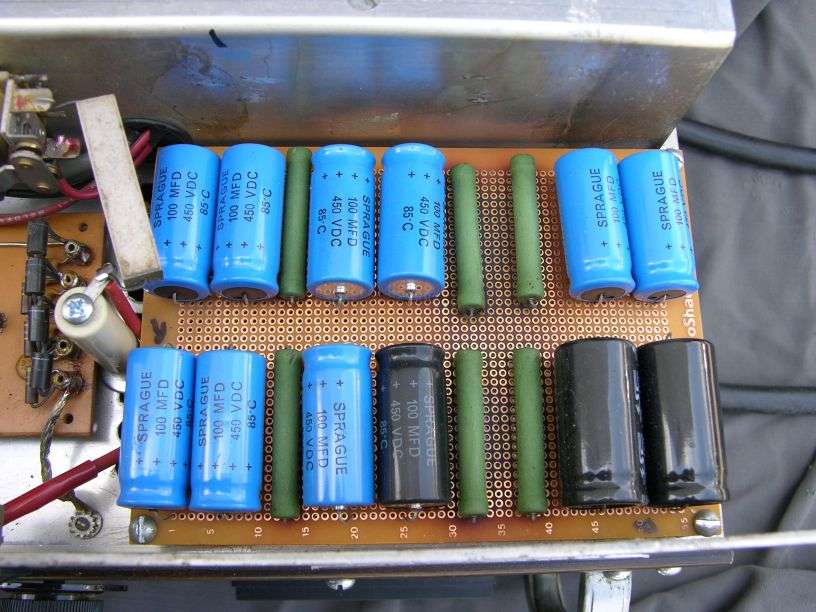
Naturally if the high-voltage filter capacitors are original, you MUST update them. But this unit already had this done to it before we first saw it. I'll cover that another time.

n5wq.jpg


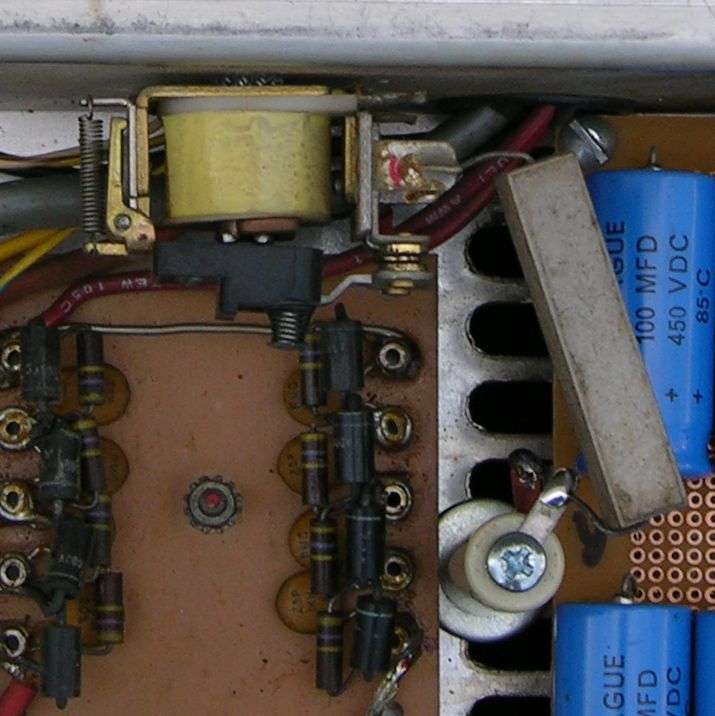
Don't remove the warmup-delay timer and relay that delays turn-on for the HV. This also serves as a sort of "soft start". You will need a new power switch fairly soon if you remove that delay relay. We no longer need to wait 30 or 60 seconds for the driver to warm up. You can always modify the HV relay to kick in sooner if you like. Just don't remove it entirely. Power switches won't last long that way.

The round thing next to the power switch is the delay timer.

w9iy.jpg


This is the relay that energizes the high voltage, controlled by the delay timer. The 10-Watt surge resistor had been dangling, lap-spliced to the red HV wire. I added the ceramic pillar for support. Hopefully you won't find any parts in the high-voltage section just dangling by one lead wire.

a53d.jpg


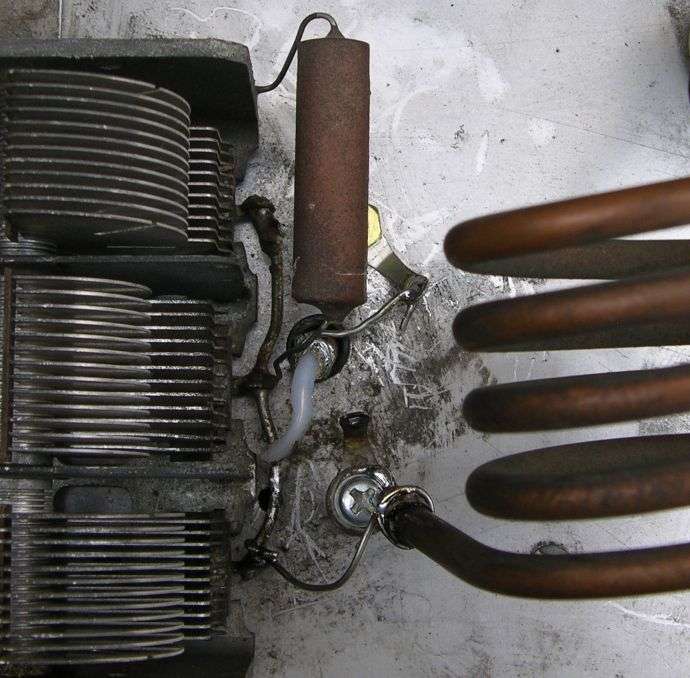
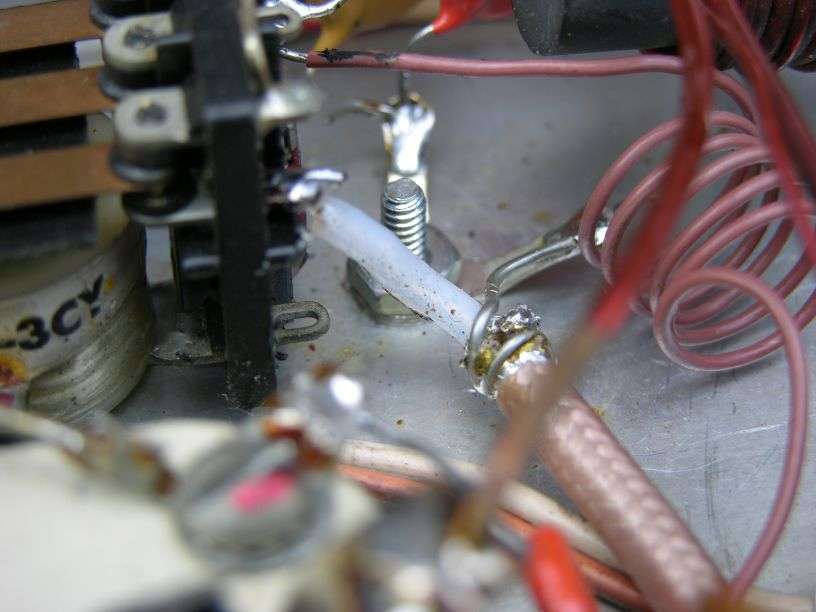
The output coax that runs from the Load control to the relay should get updated with teflon coax. If your output coax looks good, maybe you don't need to replace it. The teflon coax with a roughly quarter-inch outside diameter is plenty large enough. The "thin" stuff that is about one-eighth inch thick probably is not.

The original RG-58 coax in this unit had been resoldered and molested a few times. It was just too ragged to trust.

qafc.jpg


1ngq.jpg


Just make sure the shield is grounded at BOTH ends. Don't use a ground lug that's held under a ceramic pilar. It can't be trusted to stay tight. If necessary, drill a new hole and use a ground lug with lockwasher teeth. These will penetrate the surface of the aluminum plate and make good contact with the metal under the surface patina.


The fan was already turned around in this one, didn't have to mess with it.


68sv.jpg


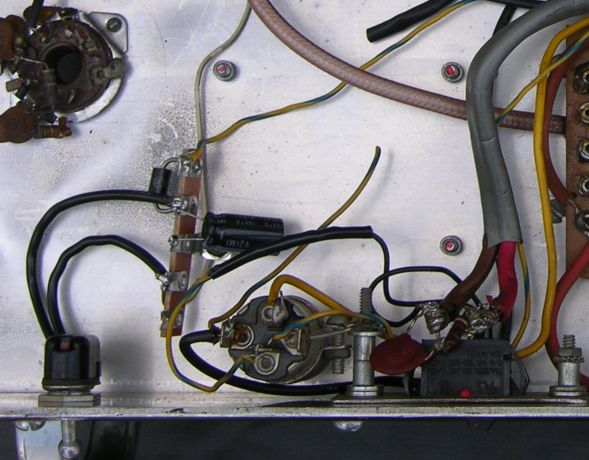
The original RF-sensing circuit was on the small pc board next to the driver tube. Make a note of which wire was attached to the rectifier diode that fed 12 Volts DC to the keying circuit. Mark it when the old driver board is removed. This wire will go to a new rectifier and filter. The old High/Low switch is the ideal choice to use as a standby switch.

es7e.jpg


The coil of the main relay had two long wires on it that led to the old driver pc board. One of them goes to the new standby switch. The other one will go to a single tie-strip lug next to the RCA jack. The hole left where the original carrier-level control was mounted will serve for the new keying jack.

1e27.jpg


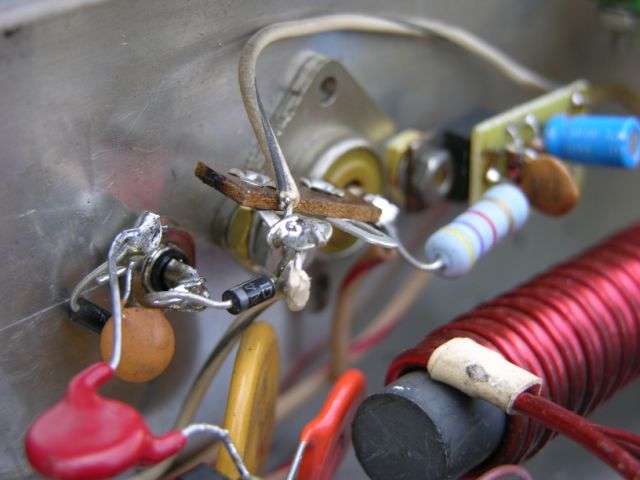
The jack has a disc capcitor from the center pin to ground, so RF won't sneak out the keying cable. A rectifier diode is in parallel with this disc cap, unbanded end (anode) to ground, the cathode to the jack's center pin. A second diode goes from the center pin of the jack to the single tie point. Cathode (band) to the RCA socket center pin, anode (no band) to the tie point. These diodes serve to protect the relay and keying circuit from accidental voltages. If you plug the wrong jumper into this socket, these two diodes will protect the new keying circuit, relay and its supply from damage. The collector of the new PNP keying transistor is grounded by bolting it to one side of the radio jack.

q90b.jpg


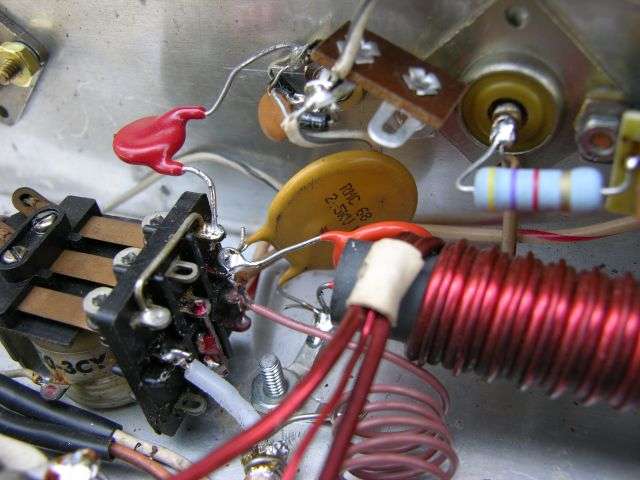
A word about the red disc capacitor. It's a 47pf disc soldered to the bypass jumper wire on the relay. The other end is grounded. This serves to reduce the "bump" in SWR that the radio will see when the JB is put in line. All the unshielded wire that carries your barefoot signal from the radio jack to the antenna jack will cause the radio to "see" a higher SWR than you would with a barrel connector in place of the amplifier. This capacitor serves to reduce this down to about 1.2. We use a cap rated for 2.5 kV, but 1000 Volts is probably okay.

xjho.jpg


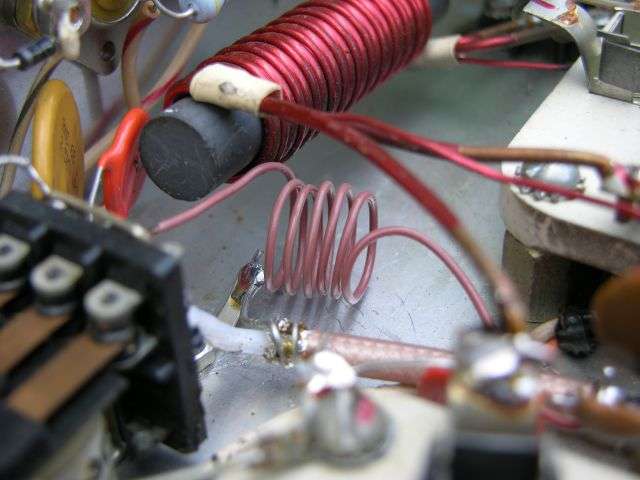
It's probably time to discuss the input matching. The skinny coax that used to feed the radio's drive power up front to the driver tube has been removed, along with most of the other driver components. The normally-open lug on the relay's input side now gets one end of a coil soldered to it. A capacitor with about 95 pf of capacitance also goes from this lug to ground. We used a 27pf(orange) and a 68pf(yellow) cap in parallel here.

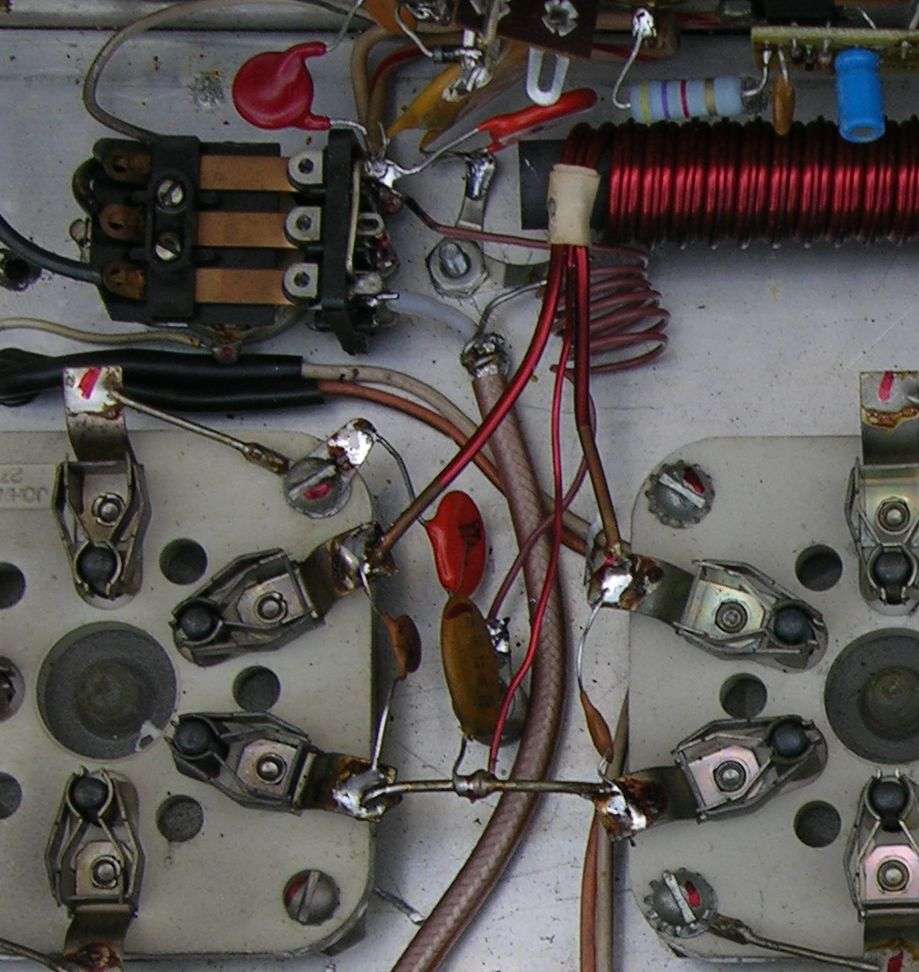
The coil extends from the relay's NO input lug to the disc cap that feeds the tube cathodes. It's on a short ceramic pillar on the deck between the tube sockets. Unfortunately I didn't get a good pic of that. You'll have to take my word for it. Six turns of insulated #20 wire a half-inch diameter worked for this unit.

ensz.jpg


This isn't such a clear image, it's cropped from a wide shot, but you get the idea. You can barely see one more of the orange 27 pf disc caps from the tube end of the input coil to ground. Again, you may find that a different capacitance value gets the lowest input SWR measured between the radio and the JB's radio socket.


9giy.jpg


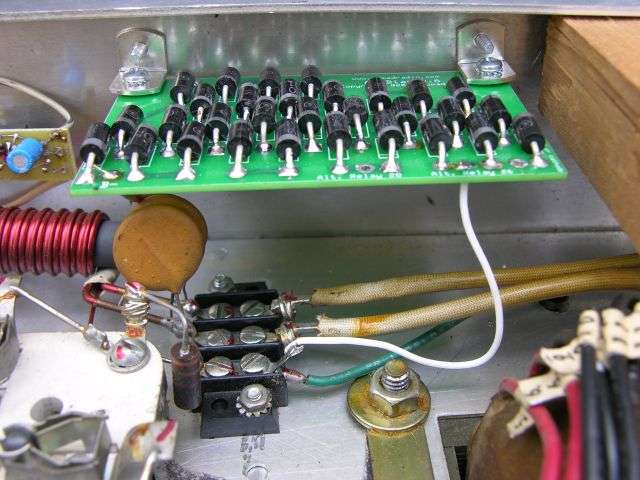
Operating bias can be obtained with a zener diode. Trouble is, zener diodes are prone to fail from surge stresses, and big ones aren't cheap. But 1N5402 rectifier diodes ARE cheap and plentiful. We use 26 of them in series for this model, installed on a pc board (we have them for sale, BTW). A piece of perfboard from RatShack works fine, too. Each diode will behave like a zener, but with only about 2/3 of a Volt each. Put 26 of them in series and you have a 17-Volt zener that's much tougher than a single zener diode could ever be. This will reduce the heat on the tubes from your AM carrier and allow you to run up to about 300 Watts carrier safely. The original instructions tell you 100 Watts, and even that much was pushing it.

79s3.jpg


The black barrier strip at the center has a wire leading from the front-most lug to the center pole of relay. Take that wire loose and put it onto the cathode (band) end of your series string of rectifier diodes. Add a wire from the anode (no band) end of the string to reach the spot where it was attached before. We added a solder lug under the screw for this. You could just solder the wire directly to the standby resistor where it attaches to the same spot.

There is more than one way to put a fan under the tube sockets. This example works, and there is plenty of room for creativity here. A fan that runs from 120 Volts AC is probably best, since the RF won't 'bleed' it and cause it to stop or slow down. Brushless-DC fans are plentiful and cheap, but if they stall when you key the mike, what was the point? A couple of simple precautions will usually prevent a DC fan from shutting down with RF overload.

The mount holes are countersunk, to use a flat-head screw. This prevents the screw heads from hanging up on the cabinet edge when you reassemble it.

sht2.jpg


Placing a RF choke on BOTH wires as close to the body of the fan has worked best for us. This one has had the wires wound in opposite directions around a type "2" powdered-iron toroid core. Keeping the fan wires short helps, too. This one is powered by a separate half-wave rectifier and filter cap powered from the 7-Volt AC heater supply on the socket of the old driver tube. We won't get quite 12 Volts DC, but this keeps the fan quiet. Since it's so close to the sockets, reducing the speed won't reduce its effectiveness at keeping the sockets below melting temperatures.

3dkc.jpg


yn17.jpg


Mounting the fan's supply here keeps the power leads short. Don't leave off the .01uf disc cap across the electrolytic. Might make a difference, might not. It's just cheap insurance.

rpmx.jpg


A 120-Volt AC powered fan can be slowed down to a lower noise level with a 10-Watt resistor in series with it, but that's not how we did this one.

The original circuit breaker for this model is rated at 20 Amps. This is about right to use 120-Volt AC supply. You really should use a 240-Volt outlet to run an amplifier this large. Trouble is, now your breaker is about TWICE the safe size for 240-Volt operation.

Oops.

The new 10-Amp breaker was installed along side the original one, just in case someone wants to hook it back up for 120 Volts later on.

7ta5.jpg


These are just the highlights of what it takes to convert a 1970-era bandit box to use with a 10-meter ham radio (grin), or with a small (150-Watt PEP) driver for 11-meter AM. The unit shown here was pretty much all original as it arrived here. There are multiple versions of this amplifier and what you will find inside any one specimen is anybody's guess. This unit dates to around 1970, judging by the date on the transformer fan.

bq8n.jpg


Couldn't get a clear shot of the faded date codes on the tubes, but they both said 1970. Can't imagine the amplifier is much newer than that.

Just be safe working on this deathtrap. There are more ways than you can count to kill yourself working inside one of these.

Be safe and always observe ALL high-voltage safety rules. You can't put one of these on the air if you're dead.

73


Parts list:

1) 10-Amp circuit breaker like P&B W58XB1A4 or equ.
2) .01uf 500v disc ceramic
1) 95pf disc cap or equivalent parallel values, at least 2000 Volt
(edit) Um, yes we used a pair of 47pf in parallel.
1) 27pf or appropriate value disc cap, at least 2000 Volt
1) 47pf (or so) disc cap, 1000 Volts or more to reduce standby-side SWR
2) 1000uf 25-Volt electrolytic caps. Can probably use 470uf okay
1) 4700pf disc cap, 500 Volts or more. Can use smaller capacitance value.
1) input coil, 6 or 7 turns #20 or so wound on half-inch form. Insulated wire works fine.
4) 1N4001-type rectifiers. Larger 1N5400 types are fine, just clumsier to work with
1) single-lug tie strip for the keying jack
2) 3-lug (or more) tie strips for fan and relay rectifiers/filters
1) chassis-mount RCA socket
2) small 1/4-inch inside-tooth washers for the RCA jack
1) RF-keying circuit if desired. A TIP125, 2 diodes and two capacitors is all we used.
1) Cathode-bias zener made from 26 3-Amp rectifiers in series. You could buy our
board to do this, or just build it on perf board. Works the same.
1) 12-Volt DC fan, body thickness preferably 1 inch or less, diameter preferably
80 mm or more.
1) 250-Volt AC power plug, NEMA type 5-15P or 5-20P. Don't waste your time running it
from a 120-Volt circuit.
 
Last edited:

dxChat
Help Users
  • No one is chatting at the moment.