
You are using an out of date browser. It may not display this or other websites correctly.
You should upgrade or use an alternative browser.
You should upgrade or use an alternative browser.
-
You can now help support WorldwideDX when you shop on Amazon at no additional cost to you! Simply follow this Shop on Amazon link first and a portion of any purchase is sent to WorldwideDX to help with site costs.
-
The Winners of the three Retevis radios 16 Anniversary giveaway are announced!! Click Here to find out if you won!
+5 -5 %
- Thread starter 1iwilly
- Start date
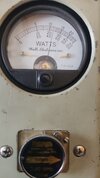
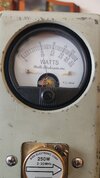
Here is my view on meters. All have a +/- factor to some degree, but some are more accurate than others. The important part is to match the scale as close as you can to the output. Reading 100 watts on a 200 watt scale will be more accurate than 1000 or 2000 watt scale. If you were anticipating 450 watts with an amp but are using a 1000 watt meter, your reading won't be very accurate no matter who made the meter. The closer your wattage is to the top end on the scale, the more accurate it will be. As for your pics I would expect the higher reading to be on the lower scale. But that's just my experience with meters.


is this where the +5 -5 % comes in? 50 watts on the 250 slug and 46 on the 100 slug
The accuracy is based on the full scale reading. If you have a 100 watt slug the meter will read 100 watts at full scale however if the accuracy is +/- 5% then you can expect to see anything from 95 watts to 105 watts when hitting it with exactly 100 watts. If you put that same 100 watts thru a 500 watt slug you can expect to anything from 75 watts to 125 watts. This is why it is always best to have the meter reading as close to full scale as possible.

What Captn Kilowatt said about using full scale readings is true with just about any good meter out there. This is why other type meters like analog needle have different power scales. The most accurate (or close enough) reading should be when the power measuring is at least 3/4 scale or more towards the max of the scale on a true peak reading meter.
I use the LP-100A which is a digital readout and will give an accurate readout at any input power from 50 milliwatts to 3k due to auto ranging input power. I like these meters and are supposed to be accurate as any other test equipment out there and has other measuring capabilities that Bird and other don't have. I also use their remote software so I have the meter values displayed on my PC.
I still like needle meters and I have a Ameritron AWM-35 cross needle in line because I can judge speech processor settings with a peak reading needle meter.
This meter at 1/2 scale or more seems to be really close to the LP-100A.
I use the LP-100A which is a digital readout and will give an accurate readout at any input power from 50 milliwatts to 3k due to auto ranging input power. I like these meters and are supposed to be accurate as any other test equipment out there and has other measuring capabilities that Bird and other don't have. I also use their remote software so I have the meter values displayed on my PC.
I still like needle meters and I have a Ameritron AWM-35 cross needle in line because I can judge speech processor settings with a peak reading needle meter.
This meter at 1/2 scale or more seems to be really close to the LP-100A.
I have several elements / slugs but I do not have a 2000 watt element / slug. I have a 5000 watt element / slug and it indicates 1800 PEP watts out of my 10-pill amp. How accurate is that? Should I have a lower watt element / slug to get an accurate PEP? $417.00 for a 2500 watt element.The accuracy is based on the full scale reading. If you have a 100 watt slug the meter will read 100 watts at full scale however if the accuracy is +/- 5% then you can expect to see anything from 95 watts to 105 watts when hitting it with exactly 100 watts. If you put that same 100 watts thru a 500 watt slug you can expect to anything from 75 watts to 125 watts. This is why it is always best to have the meter reading as close to full scale as possible.
Last edited:

2500I have several elements / slugs but I do not have a 2000 watt element / slug. I have a 5000 watt element / slug and it indicates 1800 PEP watts out of my 10-pill amp. How accurate is that? Should I have a lower watt element / slug to get an accurate PEP? $417.00 for a 2500 watt element.
$417.00 sure is a lot of money for one element and I'll have to think about it. The dead-key out of the ten-pill is 200 watts which produces the 1800 PEP watts. Using the 25 watt per pill formula, a 250 watt dead-key would be the maximum dead-key out of the amp.2500
Look here, this is where i buy mine from=https://www.nm3e.com/HElements.htm#H$417.00 sure is a lot of money for one element and I'll have to think about it. The dead-key out of the ten-pill is 200 watts which produces the 1800 PEP watts. Using the 25 watt per pill formula, a 250 watt dead-key would be the maximum dead-key out of the amp.
Thank you. Martin RF Supply has a Coaxial Dynamics 2500 watt element for much less than the Bird element. It's a tough call if I should buy the 2500 element for one use only or trust the 5000 watt Coaxial Dynamics which indicates 1800 PEP watts.Coaxial Dynamics elements are exact drop-in replacements for the more expensive Bird elements.
Been fifty years since I read the model 43 manual, but it says to choose an element that puts the needle in the top one-third of the scale.
73
73
Great explanation and logic. I've spent enough money of Bird elements and this time I'll buy and try a Daiwa CN-901HP3.Here is my view on meters. All have a +/- factor to some degree, but some are more accurate than others. The important part is to match the scale as close as you can to the output. Reading 100 watts on a 200 watt scale will be more accurate than 1000 or 2000 watt scale. If you were anticipating 450 watts with an amp but are using a 1000 watt meter, your reading won't be very accurate no matter who made the meter. The closer your wattage is to the top end on the scale, the more accurate it will be. As for your pics I would expect the higher reading to be on the lower scale. But that's just my experience with meters.
Great explanation and logic. I've spent enough money of Bird elements and this time I'll buy and try a Daiwa CN-901HP3.
Wow! Thank you and I'll cancel the order.
dxChat